


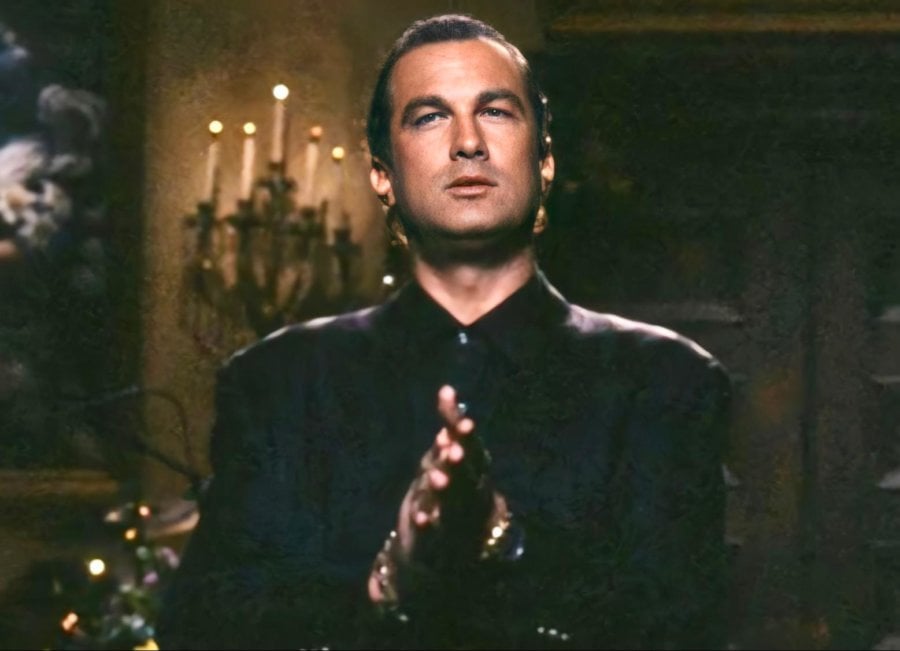
What made Steven Seagal record two simply awful albums?

Since the dawn of Hollywood, actors and musicians have been no strangers to each other’s trade. Whether it’s Marilyn Monroe and Frank Sinatra in the 1950s or Lady Gaga and Harry Styles in the present day, our most celebrated entertainers often strain to straddle both media. Frequently, the merged arts make for worthwhile material since the arts depend on specific traits, such as creative urge, artistic value, vocal skills and heaps of self-confidence. However, some artists might have been better off staying in their lane, and Steven Seagal is one such artist.
Of course, there’s nothing wrong with actors following their musical passion. In fact, it should be actively encouraged, but one just has to hope the results aren’t too damaging on the more profitable side of the artist’s career. Fortunately, most of these side careers rarely make it close to our consciousness.
For instance, until very recently, I had no idea that Jackie Chan, known for his action movies and stunt work, had released over 20 studio albums in which he sang over 100 songs in over five languages. Neither did I know that Robert Downey Jr released The Futurist, an album of self-written tracks, in 2004 before his acting comeback in 2008’s Iron Man.
These albums have escaped most ears because taking some actors’ musical tangents seriously is difficult. In a rare success story, what would be forecasted as a recipe for meme-worthy disaster, Bruce Willis recorded his first and most memorable album in 1987, The Return of Bruno. Released on Motown, the album involved top-flight backing musicians, including Booker T. Jones, The Pointer Sisters, and The Temptations. Upon release, The Return of Bruno was an unexpected success, reaching number 14 on the Billboard 200 in the US and number four on the UK Albums Chart.
While Willis got away with his pride intact, Steven Seagal entered the musical fray in 2005 with his risible debut album, Songs from the Crystal Cave. Granted, Seagal is a talented guitarist, but the album was an incoherent mix-match of cheesy hits to match the candid album cover shot.
Spanning a range of genres, as if this was his one shot at making an album, the record swirled with blues, reggae and country influences. Sadly, even with the collaborative backing of Stevie Wonder and Lady Shaw, the album was a critical and commercial disappointment.
Unfortunately, Seagal appeared only to listen to the 1% of positive reviews and proceeded to record a follow-up, 2006’s Mojo Priest. If possible, this album sunk to still lower levels of disappointment. Following the 2005 debut, what Mojo Preist gains in coherence as a blues focussed album, it loses in creative appeal.
Yes, Seagal can play, but the album comes across as a banal 60-minute pub set of nameless blues fantasies and covers with no real character. Fortunately for Seagal, he can depend on his acting and martial arts endeavours to keep bread on the table.
Listen to the two albums below and see what you think of Seagal’s musical voyage.
