


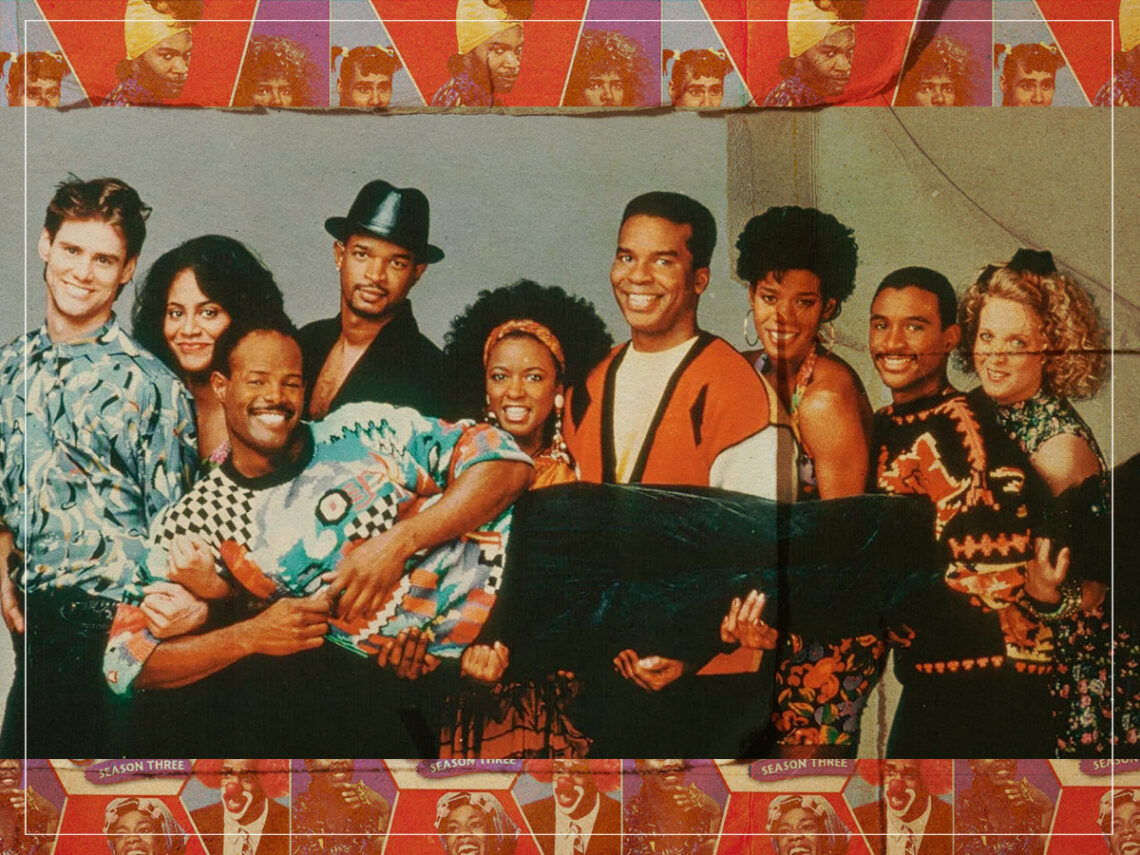
‘In Living Color’: The TV show that took on the Super Bowl and won

Headlining the Super Bowl halftime show has become one of the most coveted gigs in the music industry, with a mind-blowing array of icons, legends, and bestsellers having taken to the stage at the midway point of the game for a mini concert that reaches an audience of hundreds of millions.
However, that wasn’t always the case, and one sketch comedy series that launched the careers of several future stars is to thank. That’s not to say the Super Bowl came and went without any halftime entertainment, but it was hardly a must-see television until the early 1990s.
Some of the earliest acts to take the field and try to keep up the enthusiasm of the viewers at home and those in attendance included figure skaters Brian Boitano and Dorothy Hamill, boyband New Kids on the Block, impersonator and magician Elvis Presto, Mickey Rooney, and an assortment of marching bands.
There was a definite lull during halftime, but nobody dared to counterprogramme the Super Bowl because it was guaranteed that nobody would be watching anything else. There was a small gap in the market, though, one In Living Color creator Keenen Ivory Wayans sought to exploit.
The sketch comedy was a ratings hit throughout its run and was famed for launching not only the careers of the extended Wayans family but also that of Jim Carrey—who became the show’s biggest breakout star by far. In addition, it handed Jamie Foxx his first recurring role on the small screen and gave Jennifer Lopez her first taste of mainstream fame as part of the ‘Fly Girl’ dancing troupe.
Sensing opportunity in the air, it would have been easy for Wayans and network Fox to accept the inevitable when the show’s pre-agreed timeslot coincided with the Super Bowl. Instead, In Living Color ingeniously marketed itself as not only a direct alternative but also let viewers know that they could watch the whole thing without missing a single second of the game.
Featuring a mix of live sketches and pre-recorded segments, the third season’s 16th episode, ‘Homeboy Shopping Network’ aired on January 26th, 1992, and featured a timer in the corner of the screen informing audiences of how much time was left, convincing them to stick around for the entirety of In Living Color safe in the knowledge they didn’t have to sacrifice any of the Super Bowl.
Not only did Wayans’ pioneering plan siphon 11% of the viewership away from the Super Bowl, but the 28.9 million who tuned into In Living Color wasn’t just the highest number the show ever enjoyed across five seasons and 127 instalments, but it was over five million more than the second most-watched edition ever, with the series only clearing 23m viewers once during its run.
It was a wake-up call for the established ‘Big Three’ of CBS, NBC, and ABC, who realised that counterprogramming was more than capable of stealing away the Super Bowl audience. The very next year, the halftime show underwent a drastic overhaul and debuted under its current guise when Michael Jackson was drafted in as the headline act.
“The NFL didn’t acknowledge this for years,” Wayans once told ESPN. “They really just huddled up and said, ‘Let’s get Michael Jackson, and let’s make sure this never happens again.’ They just kept getting big names, like Prince and Madonna.” The organisation’s stance has since softened, with In Living Color officially listed as one of the 100 most game-changing moments in NFL history, where it’s rightfully credited as the moment that “sparked changes to the Super Bowl halftime show moving forward.”
