


A fine line between fact and fiction: the truth behind ‘Picnic at Hanging Rock’

Although it never claimed to be anything other than a work of fiction, Picnic at Hanging Rock managed to create such interest in both its literary and movie forms that people began diving down the rabbit hole to see if the story had any basis in fact.
Viewed as one of the great Australian novels, Joan Lindsay’s historical tome may have been born entirely from her imagination, but within the context of the story, it was present as being entirely true. The narrative features corroborations of sorts from by using pseudohistory as a pretence, which led many to believe at the time of its publication in 1967 that it must have had at least some basis in the truth.
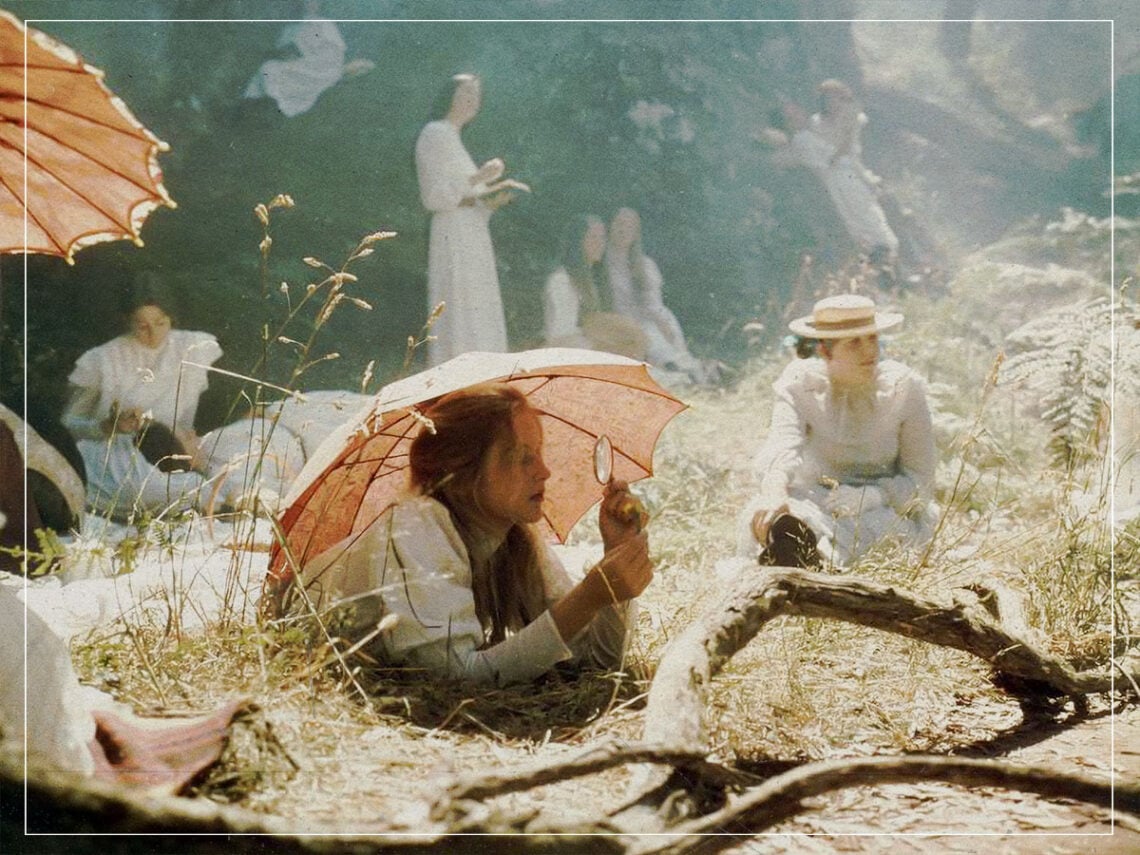
On page and screen, Picnic at Hanging Rock follows the students of a girls’ boarding school who take a field trip to the titular volcanic formation in Victoria. Despite being instructed not to go wandering off on their own, several of the girls do the exact opposite and end up mysteriously disappearing for their troubles.
The third feature from director Peter Weir, it was instrumental in putting the ‘Australian New Wave’ on the map and letting the world know there was booming industry in the country that was about to go global, with Weir himself becoming one of its leading lights.
One issue readers, audiences, and even studio executives had with Picnic at Hanging Rock was its open-ended and unresolved finale, which refused to tie up its overarching mystery into a neat little package. Suffice it to say, because it was a period piece set against a very real backdrop locals were familiar with, the quest began to see if the blurring of fact and fiction prevalent in both the book and the film had any connections to actual events.
The short answer is probably not, because the timelines don’t even match. The tale takes place on Valentine’s Day in 1900 which is said to fall on a Saturday, except it was really on a Wednesday. Easter Sunday was also on April 15th that year, and not March 29th as mentioned in the writing.
The boarding school wasn’t real, either, but it was inspired by the all-girls grammar school Lindsay attended in Melbourne. Although the institution wasn’t linked to any disappearances or unsolved crimes, it didn’t prevent scholars, academics, alumni, and would-be detectives from digging into its history to try and see if there was evidence to the contrary.
On the other hand, Lindsay’s biographer Janelle McCulloch discovered that several former students of the school were adamant there were unexplained disappearances that may have inspired the author. Connections to a missing persons case involving two young girls in the late 1800s were also singled out as potential inspiration.
None of it has been proven, right enough, but even the slightest hint of a basis in truth has been enough to continue enhancing the legend that’s continued growing around Picnic at Hanging Rock.
