


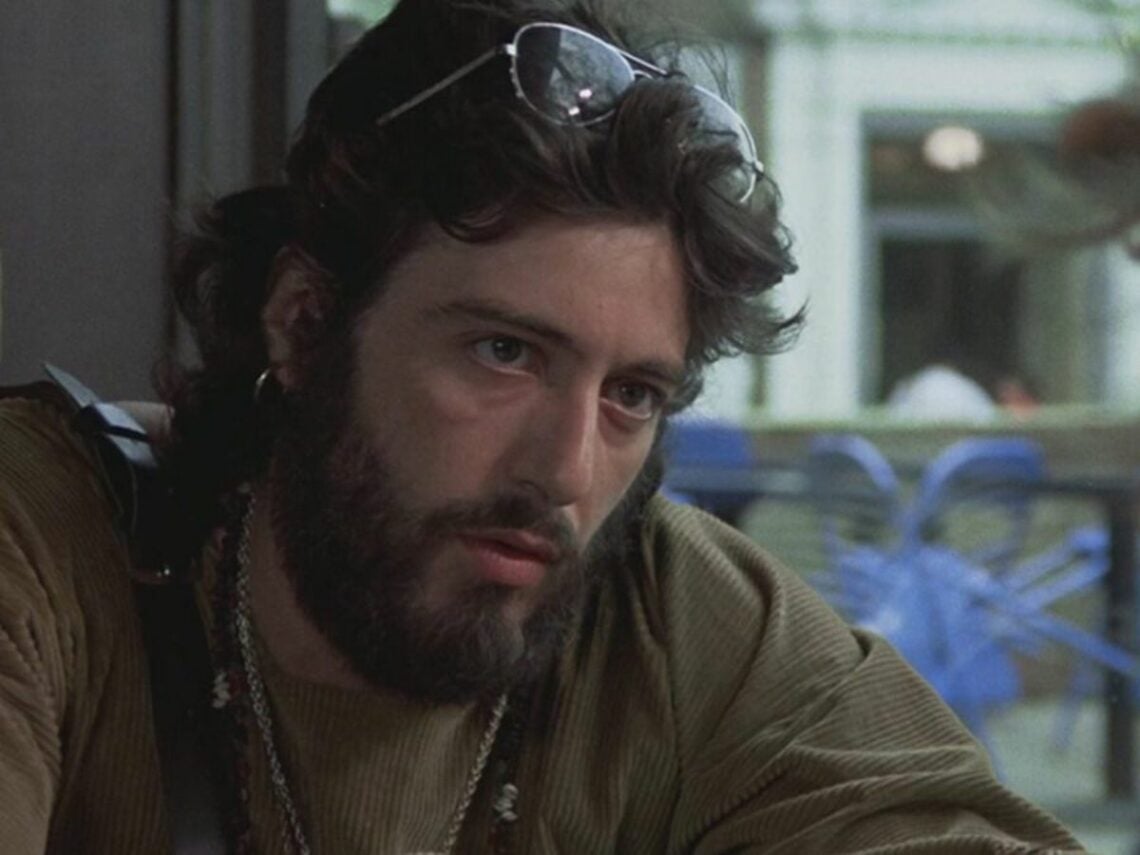
The harrowing true story behind ‘Serpico’

One of Hollywood’s best-ever crime thrillers, Serpico was always going to apply at least a small amount of creative and artistic liberties to its story despite being firmly rooted in genuine events.
As the feature-length adaptation of a non-fiction book written by an author who was being regaled with the story by its subject, the dramatisation of Frank Serpico’s career as a law enforcement officer was never expected to be 100% accurate to the experience of its subject, but it was pretty close nonetheless.
That doesn’t mean it treated its own additions as a flight of fancy, though, with Al Pacino’s idealistic title character getting set up to fall by his colleagues after repeatedly making it clear he wasn’t interested in being on the take, forcing him to go public with allegations of corruption as a result.
Pacino closely modelled his performance on the real Frank Serpico, who was often accused of having an aloof nature that didn’t endear him much to his colleagues before he’d even aired out the force’s dirty laundry. According to Serpico himself, the film is a highly accurate representation of what actually happened during his years serving between 1960 and 1971, right down to the minutiae of Pacino’s work.
After graduating from the police academy, Serpico went bright-eyed and bushy-tailed into his career of choice but always carried a clearly defined sense of right and wrong, which didn’t apply to everyone in his line of work. He didn’t go out of his way to see other officers arrested, proven by his refusal to wear a wire because he didn’t see himself as a rat who would run to the requisite authorities without a good reason.
His aim was to expose corruption at the highest levels, with that determination and doggedness an integral part of Pacino’s characterisation. Both internally and externally, he was viewed as an outsider due to his Italian heritage in a New York Police Department still dominated by Irish-American cops. Combining that with his idealism made him a figure of suspicion and mistrust among his cohorts long before his exposé.
At the beginning of Serpico, Pacino is rushed to the hospital, having been shot in the face, with the narrative unfolding as an extended flashback from then on out. As well as his near-fatal injuries, it was true that not only did his partners flee the scene in a raid supposedly gone wrong, but there was no call made on the radio for an officer in need of assistance.
Serpico maintained that the assassination attempt was pre-planned to silence him permanently, with his survival throwing a spanner into the works, tipping him even further over the edge in his determination to let the world know just how rampant the corruption really was in the NYPD.
Whereas the epilogue broadly states he moved to Switzerland following his resignation in 1972, it wasn’t until the movie was released that he upped sticks and left the United States, thanks in part to the ex-officer being wary of the increased visibility and publicity that came with Pacino starring in a feature releasing the very next year.
