


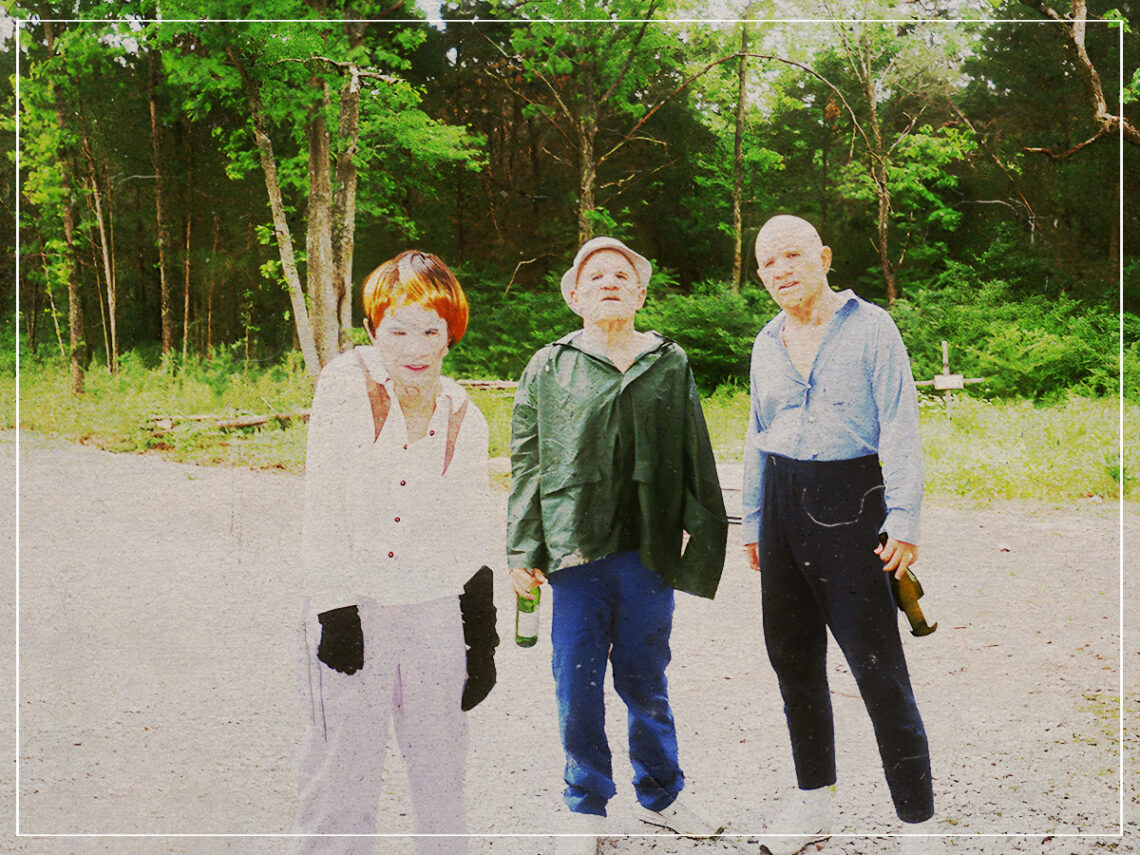
‘Trash Humpers’: Harmony Korine’s forgotten ode to destruction

Upon the release of the movie Kids, critics were polarised by its frank depiction of teenage sexuality, with some labelling it as borderline child pornography. Directed by photographer Larry Clark, Kids was written by 19-year-old Harmony Korine, who was recruited to tell an authentic story about adolescents and the AIDs crisis after meeting Clark in a skate park.
The highly controversial movie set the tone for Korine’s career, which continued in a similar direction with his first feature, Gummo. Released in 1997, the film, written and directed by Korine, is a low-budget experimental look at the lives of inhabitants of an economically deprived Midwestern town. The director used mainly non-actors, centring his lens on bizarre characters who engage in disturbing behaviour, such as drowning cats and chair wrestling.
Gummo earned Korine a reputation as one of the 1990s most contentious filmmakers. However, it is now considered a cult classic, with images from the movie, such as a bleached eyebrowed Chloë Sevigny found on streetwear and skateboards. Korine followed Gummo with Julien Donkey-Boy and Mister Lonely, which contained more established casts, with acclaimed director Werner Herzog even starring in both.
Mister Lonely was Korine’s most expensive movie at the time, costing $8.2million, with some critics labelling it his most accessible, too. Subsequently, Korine ensured no one could forget his penchant for pushing boundaries and repulsing his viewers and released Trash Humpers two years later, the strangest entry in his filmography.
Filmed entirely on VHS cameras, the movie is a low-quality fictional documentation of a gang of elderly delinquents who have a particular love for, as you can probably guess, humping trash. It’s a bizarre film, with the actors donning cheap masks to make themselves look old, making for an incredibly unsettling and uncanny watch. There is no strict plotline, rather, the characters are filmed engaging in concerning behaviour and mumbling very little dialogue.
Describing the influence behind the movie, Korine told Vulture that while walking his dog, “Sometimes I would see these trash bins propped up against garages or lying on the ground”.
He continued: “The trash bins began to resemble human forms to me — almost like a war zone where the trash bins had been molested and beaten up and stuff. Sometimes, the way they were propped, they looked very humpable.”
Korine also explained his ideas behind the characters’ odd behaviour. He said: “It’s an ode to vandalism and the creativity of the destructive force. Sometimes there’s a real beauty to blowing things up, to smashing and burning. It could be almost as enlightening as the building of an object. I wanted these characters to almost be like artists — artists of bad. Like they transcend vandalism and turn it into something creative, and they do it with such glee. There’s no sense of morality in the film, they just do whatever they want.”
Trash Humpers is undoubtedly an acquired taste that might alienate some of Korine’s most dedicated fans. Still, his dedication to low-budget, DIY filmmaking is at the heart of Trash Humpers, an ethos that Korine has never lost despite his increasing reputation as a cult director.
