


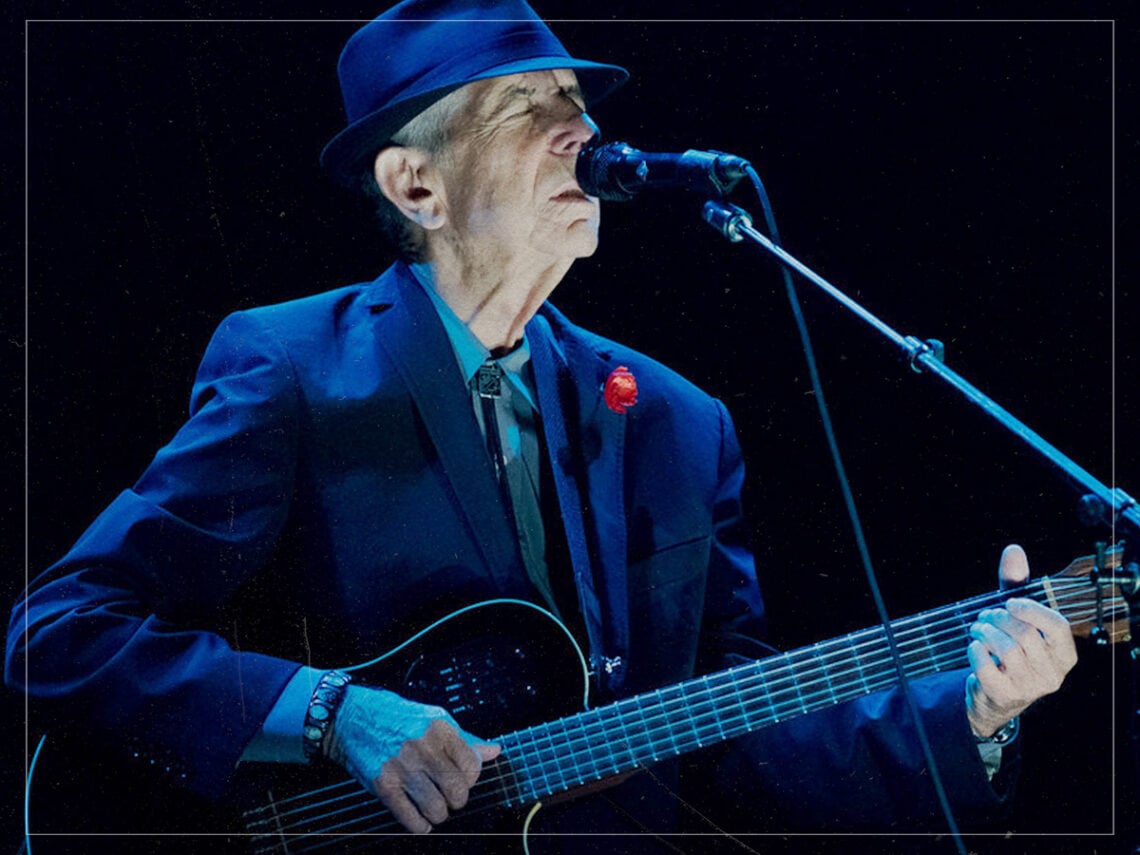
The tragic story of a guitarist who gave Leonard Cohen everything: “All my songs, all my music”

Late in his life, Canadian poet and songsmith Leonard Cohen gave an insight into what may have been the most foundational experience that sparked his road to music.
There was always a sage worldliness that shaped his work. Alongside his lyrical canvas of black humour, religious iconography, and mortal musings was Cohen’s storied, cracked voice speaking his artful reverie with a weathered authority. This special quality reached its fine wine apex in 1988’s I’m Your Man, but would mature and coarsen with ruminative depth as the years ticked by to 2016’s You Want It Darker eulogy, a recognition of life’s sand timer nearly out embedded in each of its cuts.
Cohen was a latecomer to the whole music career. 33 years old when his Songs of Leonard Cohen debut dropped in 1967, the budding songwriter already had a semi-successful literary hustle behind him, boasting published poems while still a student, and later living on the Greek island Hydra, where he wrote The Favourite Game and Flowers for Hitler. Around the time of 1966’s Beautiful Losers, Cohen found himself the subject of a CBC-TV Seven on Six segment, declaring to the host and the world his new ambitions to pursue songwriting.
The music bug had been bitten long before, however. When receiving Spain’s prestigious Prince of Asturias award in 2011, in recognition of his achievements in the arts, Cohen recounted just how important the country was to his creative awakening, crediting his guitar skills to a chance encounter with a Spaniard when growing up in Montréal.
“He was playing a flamenco guitar, and he was surrounded by two or three girls and boys who were listening to him”, Cohen recounted in his acceptance speech, recalling the deep impression that had been left on him. “I loved the way he played. There was something about the way he played that captured me.”
Feeling bold, the young Cohen asked for lessons, and the two met at his mother’s house to begin practice, teaching him key progressions that much flamenco guitar leans on. “It was those six chords… it was that guitar pattern that has been the basis of all my songs and all my music.” Tragically, the planned lessons were cut short, as Cohen’s brief guitar tutor took his own life the next day.
“I knew nothing about the man,” Cohen lamented. “I did not know what part of Spain he came from…. I was deeply saddened, of course…” From then, Cohen switched from acoustic to classical guitar, and inspired by his other myriad Spanish influences from Federico García Lorca’s poetry to the singer Enrique Morente, Cohen was spiritually and creatively never too far away from a Latin affinity and sensibility.
It’s a heartbreaking affair. The troubled flamenco player would never know just how much of an impact his act of generosity would have on the world of music and the broader arts, and, perhaps, a commitment to bestow his flamenco gifts to the young Cohen is what kept him on this planet another day.
