


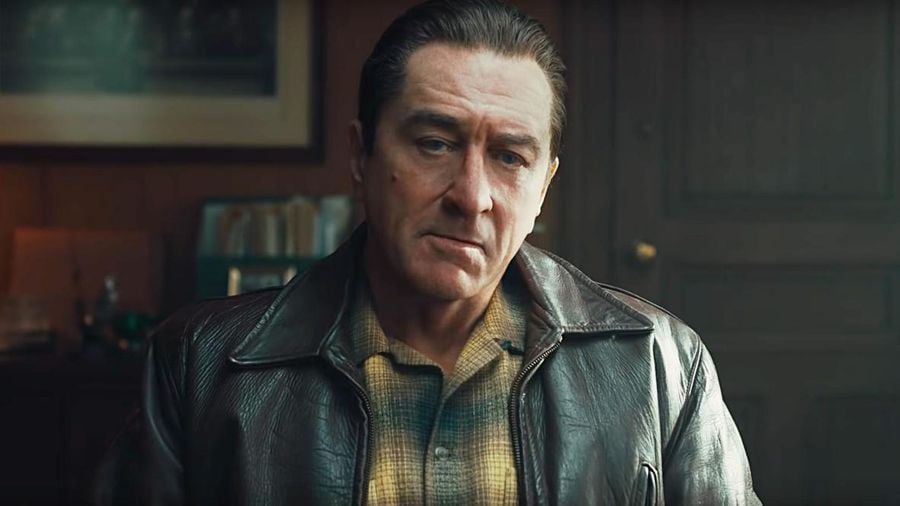
The tragedy of Frank Sheeran in Martin Scorsese movie ‘The Irishman’

There’s a scene in The Sopranos in which Tony has been looking for a guy to kill Johnny Sack, and Uncle Junior recommends a group of gangsters in Rhode Island, The Atwell Avenue Boys, a bunch of “sick fucks” who brutalise their prey. Christopher and Silvio show up at a decrepit old house to find a group of barely-there old men falling apart physically and talking about cutting people’s heads off with hacksaws. Though I don’t think Martin Scorsese has ever watched an entire episode of The Sopranos, his final effort in the mob movie genre takes the haunting aura of that scene and extends it to a jam-packed three-and-a-half hours.
The Irishman is a sombre and somewhat dour film. Throughout his long and distinguished career, Scorsese has directed six movies centred around organised crime, many of which have faced criticism for allegedly glamorising the criminal lifestyle. However, it’s hard to imagine anyone making that argument about The Irishman.
The character at the core of this story is Frank Sheeran. As a film about ‘the man who killed Jimmy Hoffa’, this is essentially speculative fiction. It acts more as Scorsese’s farewell to the genre that he was most known for.
Sheeran paints houses. That is to say, with a bullet and some blood. The home he’s made for himself is made of the same kind of stuff. Its bricks are bones. The door doesn’t work. Nobody can get out. The man spends five decades working his way up in the mob and the union, amassing what one can only imagine is a great deal of wealth. He rubs elbows with iconic figures like Jimmy Hoffa, Russell Bufallino, Tony Pro, and even Howard Hunt.
Every crime, from pushing taxis into a lake to killing a close friend of 20 years, is portrayed with less bombast and more workmanlike efficiency. He dedicates his life to the mob. He gets nothing back. It’s just a job, the cost of which is your soul, as personified through a ‘deal with the devil’ conversation with Keitel’s Angelo Bruno. The light shines into his pupils, creating sharp slits that make him appear less like a man and more like Satan himself. Despite all your riches, it isn’t even worth it because everything ends, and life’s too short to spend it, making everyone around you suffer.
So as this character makes his bread, doing every single thing he can for the people that put him where he is, he lives in the same shitty house for his entire life. He has a family that rarely speaks to him and a daughter who grows unable to stand in the same room as him for more than a few minutes after witnessing a pathetic act of unnecessary violence outside of the butchers as a kid. He dies alone in a nursing home, reminiscing to nurses and pastors who don’t even remember who Jimmy Hoffa was.
Unlike most Hollywood protagonists, Frank showcases little motivation beyond just doing his job. Henry Hill’s voiceover in Goodfellas is audacious, hilarious, and impassioned. Frank is practically lifeless – there is very little emotion in how he describes events. They just are what they are. He’s recounting them at the very end of his life – there’s not much joy or much regret because there just isn’t much of anything. The Irishman uses Sheeran as a dour reminder of mortality. It is the story of a man who wasted his life away for nothing – there’s no ‘redemption’ at the end of the road.
In The Irishman, one subtle yet striking foil to Frank’s character is Anthony ‘Tony Jack’ Giacalone. Although only given a passing mention, his introduction is accompanied by text noting that he was “well-liked by all” and died of natural causes on February 23rd, 2001. Unlike the fates of most mob characters, marked by violence and betrayal, Tony Jack’s peaceful end stands in contrast. Scorsese seems to suggest that perhaps the best we can hope for in life is to leave the world a little better than we found it, and to be remembered fondly, even if just for a brief moment.
