


Is traditional music theory grounded in white supremacy?

For decades, music has spoken to different cultures, seeking to diversify spaces through powerful lyricism and rallying cries for change. At the same time, however, the music theory it is built upon has remained conservative, not only in terms of those who practice theory but also in the predominantly white musicians who benefit from its paradigms.
Trying to fathom the reasons why music theory is still fundamentally entrenched in “whiteness” is as complex as the question itself – after two decades of diversity efforts seeking to change the inherent one-dimensional state of music theory, it comes as a surprise that these spaces still remain incredibly lacking in people of colour.
According to Philip Ewell, a black professor of music theory, the subject operates under a “white racial frame”, where composers and theorists are given privileges over people from other cultures. Heinrich Schenker, for instance, dominates music theory with his tonic chord analysis, positing that a single chord takes dominance over all others in any given piece. What many forget – or neglect – to acknowledge, however, is that Schenker, according to Ewell, is also “an ardent racist and German nationalist”.
According to Ewell, the industry is in need of allowing more spaces for other genres to be studied alongside the usual European classical music and addressing the industry’s “pro-white” tendencies. Unfortunately, however, while such offerings vow to change the course of common thinking in the heat of a moment, any real, tangible change is a difficult feat to achieve. Not many people are aware of Ewell’s criticism, much less take steps to change the patterns he calls out.
Usually, contributions like this will only come up during debates about broader societal topics – it takes a lot to change tradition, and, particularly in the cold, firm grip of educational institutes, challenging teachings isn’t going to be an easy campaign. At the same time, more people coming forward to discuss structural racism within the arts and humanities – namely music – can start the domino effect and provide vital steps in journeying towards a more fair and representative music industry. But how do you change unwavering minds?
It’s liberating to recognise the fact that words like “woke”, “cancel culture”, and “free speech” are often a result of nothing more than linguistic pretence invented by those who oppose, who sit on the outside without any real, serious interest in departing from the status quo and challenging the supremacy of whiteness in cultural practices.
Broadly speaking, the media – and a lot of the public – are more than happy to go along with what’s expected or accepted without the discomfort of engaging in conversations about diversity. Structural racism in music theory has never become an issue because it’s always been there: it’s even harder to change something when the characteristics you wish to alter are ones intrinsic to its very existence, but nonetheless, it’s possible.
So, what does white supremacy look like in music theory? In Ewell’s works, he draws on a lot of works from the sociologist Joe Faegin, who defined the “white racial frame” as an “overarching white worldview that encompasses a broad and persisting set of racial stereotypes”. In music theory, decisions about which theorists get studied and which topics are included have always been chosen by predominantly American white people. In short, these are the subjects that tell students, ‘This is what’s worthy of your time’.
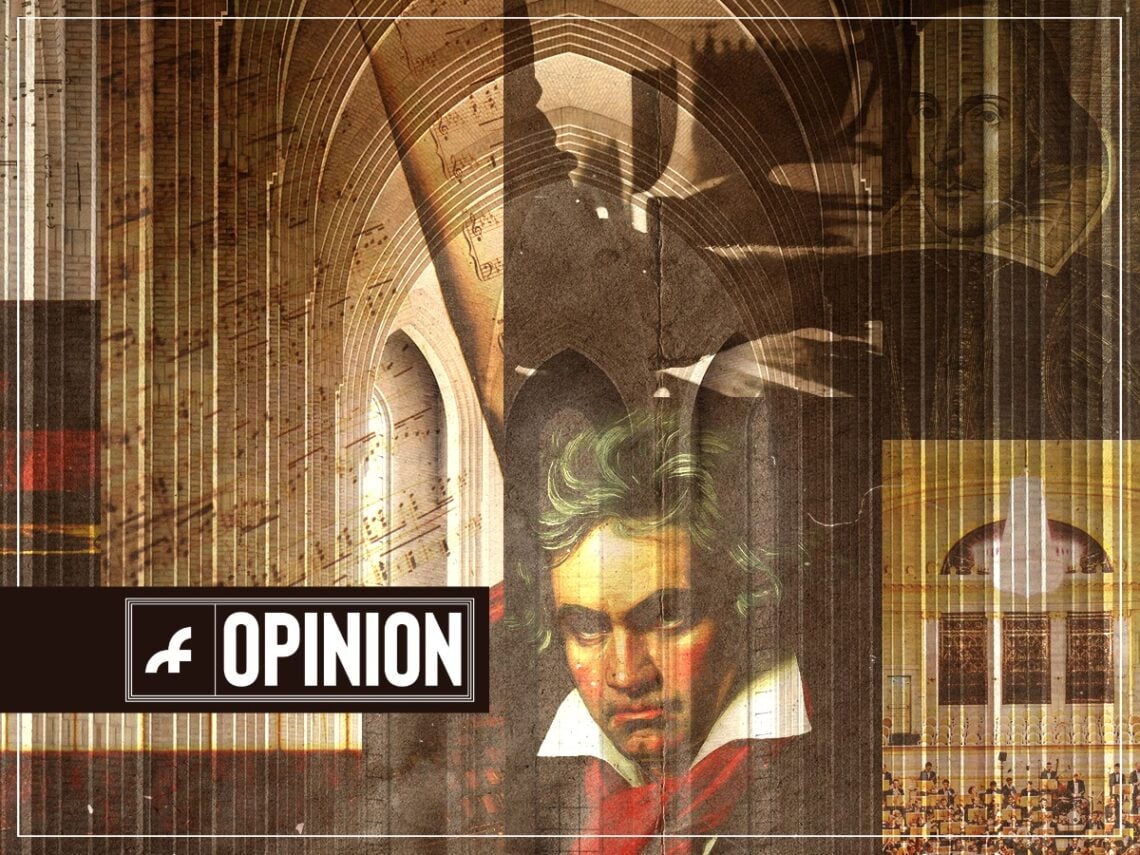
Music theory continues to be regarded as the standard of what’s taught and is often dominated by – as mentioned – European classical music. When you think about all the musicians that may come under this umbrella, it doesn’t take long to realise that they’re all white Western artists. The theory that underlines these works teaches that, essentially, one logic applies to all music, alongside the view that education on such topics is related to “high culture” (for example, Shakespeare, Plato, and Beethoven).
This also neglects to realise the musical validity of other genres, like rap and hip-hop, which naturally lends itself to the erasure of other culturally important music styles. If someone seeks to pursue studies in music theory, even if they’re from a different background and have interests in different genres, they’ll almost always become an expert in classical music theory. In short, the meritocracy of music theory is defined within a structural set of norms and parameters that are racist, classist, and elitist.
Naturally, therefore, the people who choose to participate in studies end up being white or privileged in some other way, contributing to the self-perpetuating vicious cycle that music theory has trapped itself in. The only way to completely change the course of history would be to keep bringing these subjects to the fore – in the past few years, things have slowly shifted, and music theory has become aware of its inherent issues.
More attention is starting to be given to scholars who work in more diverse spaces, and more summits and conventions give adequate air time to discussions about these topics. However, real change will only happen when those within the system fight to expand curriculums and argue the importance of diversifying the structure of the entire industry. The music landscape itself is filled with people from all walks of life, and differences are often celebrated rather than quashed. It’s time music theory caught up, too.
