


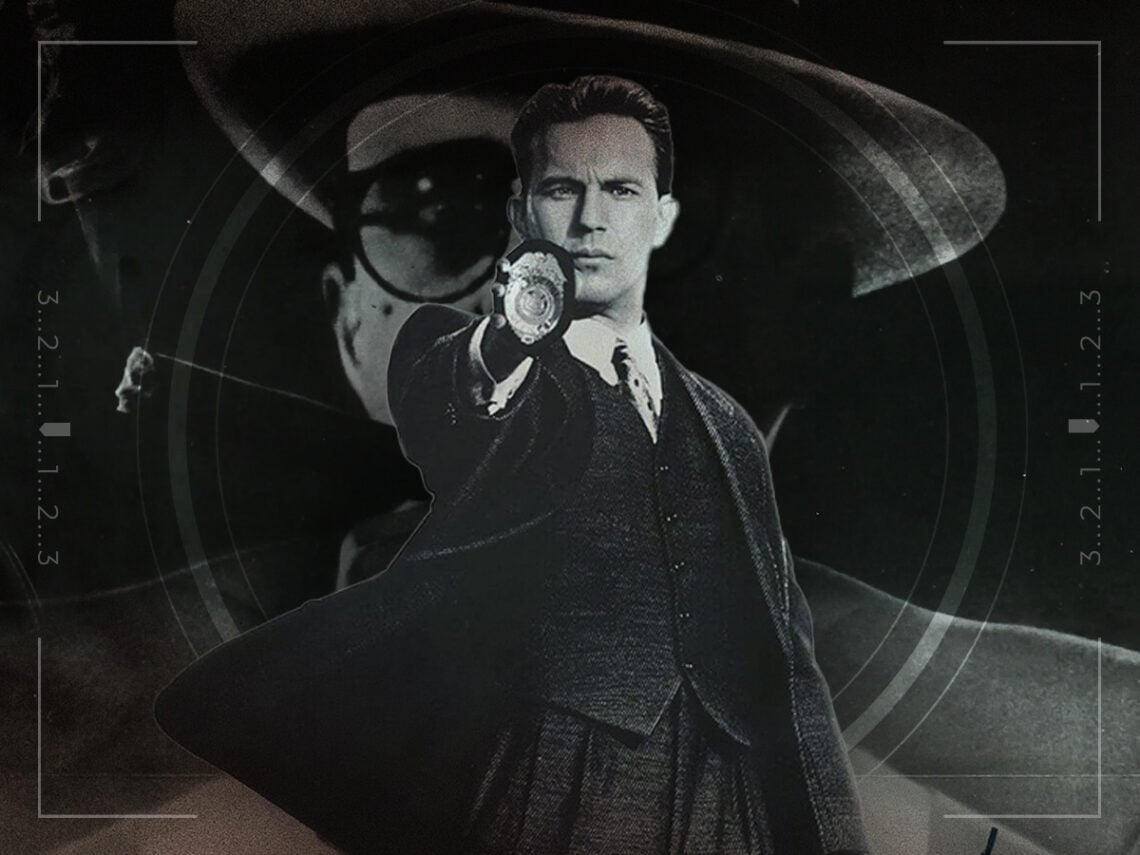
‘Torso’: the unmade ‘Untouchables’ spiritual sequel that pitted Eliot Ness against a serial killer

Did you know that after helping to take down Al Capone, Prohibition agent Eliot Ness went on to investigate a string of grisly murders carried out by the so-called Cleveland Torso Murderer? If not, you’re not alone as most people haven’t a clue, but this long-forgotten true crime case is well overdue a bit of attention.
These days, when people hear Ness’ name, they picture the legendary lawman in Brian De Palma’s pulpy old-timey gangster picture, The Untouchables. That movie told the story of Kevin Costner’s Ness assembling a squad of similarly incorruptible cops to take down Al Capone, the Chicago Mafia boss who ran a bootlegging operation that thrived thanks to the inaction of the city’s corrupt authorities.
In the film, Ness is depicted as a morally absolute Boy Scout who realises he’ll have to bend the rules to put Capone behind bars, and that leads to the truly magical ‘Chicago way’ speech by Sean Connery’s tough Irish cop: “They send one of yours to the hospital, you send one of theirs to the morgue”.
Anyway, even though The Untouchables was a huge hit in 1987 and was nominated for four Academy Awards, there has yet to be another big-screen outing for Ness. It’s hard if not bloody astonishing when you consider that the man moved to Cleveland after putting away the most infamous gangster of his time, where he spent three years between 1935 and 1938 investigating a serial killer who dumped the disembodied torsos of his victims in the river.
Without fingerprints or dental records to go on, when heads, legs, arms, and other parts began turning up all over the city, it was almost impossible to match them and reassemble the bodies. On one particularly harrowing day of August 16th, 1938, the remains of two bodies were discovered in plain view of Ness’ office window, almost as if the anonymous killer was taunting him. Ultimately, he had a prime suspect strapped to a polygraph, but the interrogation could never prove his guilt, and the case remained unsolved.
The fact of Ness’ involvement in such a high-profile and taxing investigation after his dealings in Chicago being so under the radar is incredible. In fact, it has always been relegated to the lower rung of true crime obsessives, only occasionally being brought back into the public eye when Hollywood hires a new director to adapt Torso, Brian Michael Bendis and Marc Andreyko’s excellent graphic novel about the case. This masterful comic, which combined true historical photographs and documents with so-noir-it-hurts black and white artwork, was first released in 1999, and over the past 20 years, many prospective adaptations have frustratingly come and gone.
In 2006, David Fincher was announced to be helming the camera for Paramount Pictures, and it’s hard to imagine a director more perfect for the material than him. He worked on the project for three years, at one point telling MTV that his adaptation wouldn’t be super faithful to the graphic novel. “Not to take anything away from Bendis, who did an amazing thing, but it’s a pretty complete reimagining of it,” he mused, “It’s not just Ness in the moment. It’s not a linear chronology. It’s more like Rashomon or Citizen Kane. It’s an exploded version of it.”
One thing Fincher did intend to honour about Bendis and Andreyko’s comic was the black and white colour palette, but Paramount reportedly got cold feet about that idea. Then, when Zodiac underperformed at the box office in 2007, and Fincher’s purported budget for Torso kept ballooning, the studio pulled the plug. If he’d been allowed to continue, the man could have delivered two masterpieces about the investigations into serial killers who were never unmasked. Alas, we’ll never know.
More directors would follow Fincher into Torso‘s web, with David Lowery of The Green Knight signing up in 2013, Paul Greengrass in 2017, and Corin Hardy in 2022. Over time, the name of the project switched from Torso to Ness, but to date, no one has actually been able to bring the project to fruition.
Throughout the endless process of development hell, though, Bendis (whose comic book career went on to encompass the creation of Miles Morales and Jessica Jones for Marvel) has remained relentlessly optimistic. “It’s a cool true story that very little people know of,” he once told The Hollywood Reporter, “You think you know the story of Eliot Ness? You don’t. You know the story of serial killers? You don’t. And that’s how I kept the faith.”
