


‘Tori and Lokita’ Review: The Dardennes’ brutal depiction of immigration and family

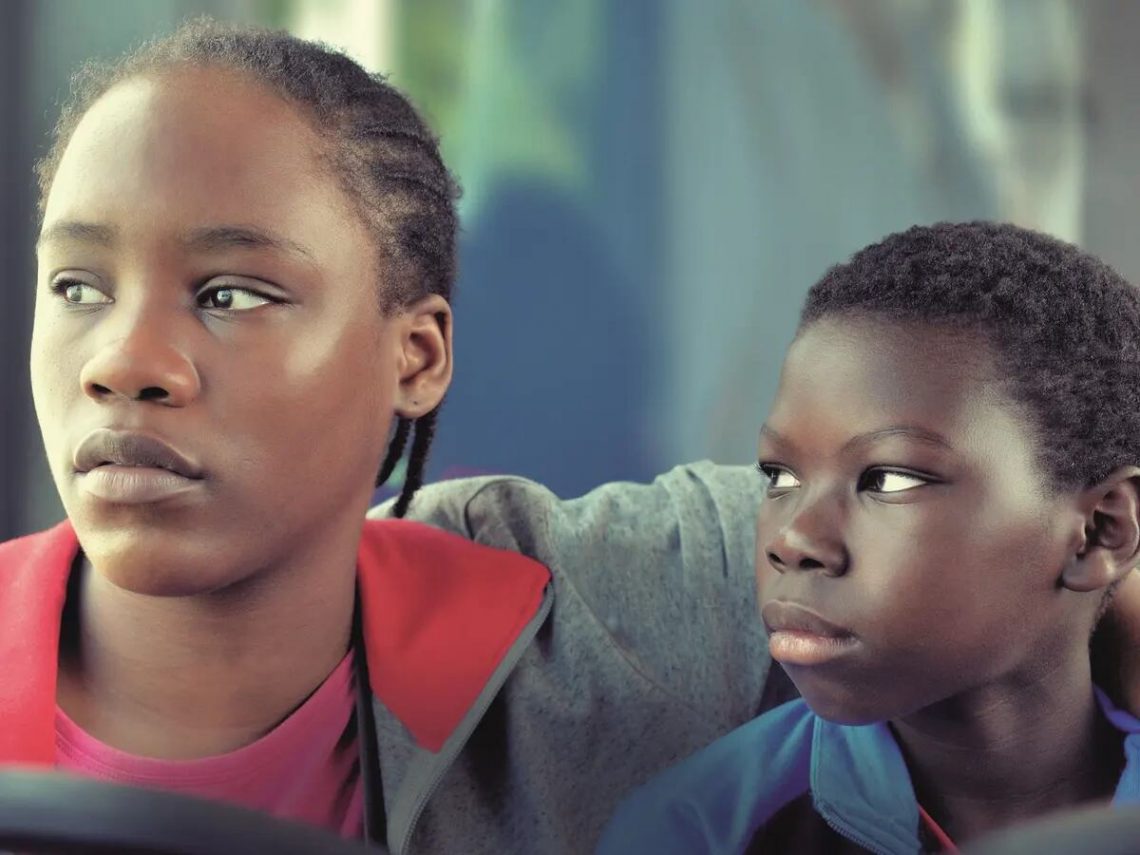
Belgian filmmakers Jean-Pierre and Luc Dardenne have returned to the big screen with their 36th film – Tori and Lokita. Their latest work tells the story of two youngsters, brilliantly portrayed by Mbundu Joely and Pablo Schils, who form a friendship and struggle to adapt to the cruel conditions of their life in Belgium after immigrating from Africa.
Like most of the Dardennes’ work, this new addition to their extensive filmography is a modest and direct one. Tori and Lokita has no soundtrack to complement its simplistic editing and austere camera style, comprised of consistent medium shots. The underwhelming visual style is designed to eliminate any distraction from the relationship between the two main characters and the brutal realities they face. This connection between the two is the story’s focus and the source of emotional engagement from the audience. Through the motifs of drawings, phone conversations and upbeat songs, the film translates the nuances of the central relationship and all its bittersweet moments.
The primary narrative consists of the mundane yet challenging lifestyle Lokita and Tori are subjected to, exemplified in long, drawn-out sequences that showcase the Dardennes’ penchant for cinematic realism. However, Tori and Lokita is a complex film because it sets one scenario up, only to question it later, starting from the opening. As an audience, we must learn of the characters’ past through on-the-nose yet emotionally daunting exposition.
Unfortunately, the dialogue comes across as didactic at times. However, it achieves its main objective by effectively establishing Lokita and Tori’s past and circumstances to assist in aligning and identifying their motives. The Dardenne Brothers effortlessly explore the textual issues and messages on immigration and racial attitudes, which give the film its core power. These are contrasted with the more gentle values of family bonds and womanhood as an emotional force. Essentially, the protagonists’ dynamic is inherently cinematic, creating a juxtaposition between love, commitment, inequality, and conflict as values.
As the film progresses and their situations deteriorate, the Dardennes once again prove they are adept at handling narrative tension. These sudden aggressions interrupt the customary tone we have become familiar with, in turn, unnerving audiences. This rising anxiety accentuates the grounded and hard-hitting style that toughens this story, elevated by the naturalistic and engaging performances by Joely and Schils.
A powerful yet tragic element to Tori and Lokita is the profound absence of innocence. The characters, despite their age, prove that they have been exposed to everything dangerous and detrimental. As a result, the audience is allowed to absorb their history and understanding of the world around them. However, it sours the film and burdens some of the directorial duo’s artistic intentions.
When asked by Cineuropa about their intentions and direction with Tori and Lokita, the brothers emphasised the significance of realism. Jean-Pierre shared how the film’s subject “is a topic that has haunted us for a long time, but we could not find from which angle to treat it.” He then adds: “Copying reality is not our business; it is not what we do. We go through fiction. But what brought us back to this topic was when we learned, even if we knew it without really knowing it, the number of minors who disappear each year in Belgium. We had also read articles on the tortures, even the assassinations perpetrated on young teenagers within the framework of drug trafficking.”
Employing a vérité style, Tori and Lokita is a familiar presentation of current sociopolitical issues. The Dardenne brothers are attentive and consistent in ensuring they remain centred on the primary narrative thread and that it isn’t overwhelmed or lost through an immoderate visual style. This often results in a hit or miss, as one has to be committed to and invested in its grounded reflective style, overlooking its eventual monotonous atmosphere.
Tori and Lokita premiered at the 2022 Cannes Film Festival on Tuesday, May 24th, 2022, where it competed for the Palme d’Or and won its special 75th Anniversary Award. The Dardennes’ latest project will be released on Friday, December 2nd, 2022.
Watch the trailer below.
