


The 10 greatest vampire movies of all time

With Halloween vast approaching, horror is the essential genre to be watching right now. The historic cinematic art form offers a lot of iconic creatures that are popular during the spooky season, the most prevalent being the ghoulish realm of vampires. These monstrous beings, known for their sharp fangs, taste for blood and love for all things gothic, have been loved staples in Hollywood for what feels like an eternity.
Vampires have been around for most of film history, having first started appearing onscreen during the silent era. Although they are mostly associated with horror, vampire films have also shown their ability to gel with drama, action, comedy, fantasy, or even romance. Both these factors have created versatile and unique depictions of vampirism. However, the general origin material of a thirst for blood and a dark, broody persona remains at the core of these presentations.
Filmmakers who portray vampires do so through the classic origin of Bram Stoker’s horror novel Dracula, using gothic imagery and tones blended with horror, or experiment by placing them in more modern backdrops where they hide behind a civilised facade that replicates the era’s norm. Vampire films can be atmospheric and dependent on suspense, or they can be visually graphic with images of blood pouring from torn skin and bodies piling up.
Essentially, there’s nothing the vampire sub-genre cannot do or shy away from. Anyone who has set out to watch as many vampire flicks as possible will want to surf through numerous periods and genres and enjoy doing so. With that, the ten best vampire films that exemplify this flexibility and pure horror can be found below.
The 10 greatest vampire movies of all time:
10. Queen of the Damned (Michael Rymer, 2002)
Vampire Lestat awakens from his slumber and hides his true form through the persona of a rock star. But chaos strikes when his music awakens Akasha, the vampire queen, who will not rest until she makes Lestat her new king.
First things first, Queen of the Damned is pure style over substance. To fully appreciate it, you have to be a lover of vampiristic and gothic imagery and a 2000s rock fan. However, it reaches its target audience well and is regarded as a cult classic in gothic film culture. The concept of a rock star secretly being a vampire is an interesting take that resides with the idea of selling your soul for fame and fortune.
9. Blade (Stephen Norrington, 1998)
Blade, a human-vampire hybrid, hunts down the city’s hidden vampire population that carries out their killings in underground clubs. He and his mentor soon rise up against an evil vampire rebel who plans to take over the outdated vampire council and resurrect a voracious blood god.
Blade is essential to Marvel’s late 1990s to early 2000s adaptations. It’s completely of its time and packed full of nu-metal and gothic iconography with blood on leather. Despite its bloodthirsty monsters, it is more of a fun action flick than a suspenseful horror, showing the versatility of vampire films.
8. Near Dark (Kathryn Bigelow, 1987)
After a farm boy meets a mysterious girl, he becomes tangled up with a band of southern vampires roaming the highways in stolen cars. Things turn for the worse when he is part of the undead.
Bigelow’s take on vampires blends a southern neo-western overlay with the Gothic vampirism horror tones. This directorial debut has edge, mood and style to help introduce vampires to a new modern image. The vampires are dangerous and unapologetic about it, with coordinated and suspenseful kill scenes, yet they have a melancholic vulnerability in their lonesome nighttime travels.
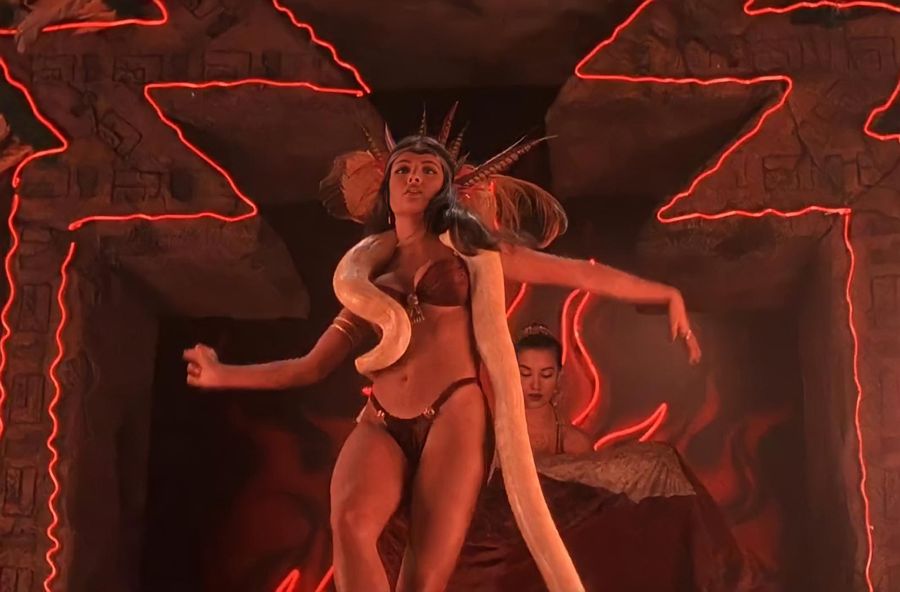
7. From Dusk Till Dawn (Robert Rodriguez, 1996)
Two brothers are on the run from the Texas police and the FBI after a crime spree through the southwest. Soon, they find themselves drawn into a battle with a bloodthirsty gang of vampires after trying to meet up with a kingpin.
This fun, eventful grindhouse flick hits all the spots for whoever is looking for some gritty carnage. In between the over-the-top violence are some hilarious moments, as both the horror and comedy pull no punches. The vampires are just pure animalistic monsters full of rage, accentuating the terror using a repulsive tone.
6. Låt den rätte komma in/Let the Right One In (Tomas Alfredson, 2008)
Oskar is a lonely outsider, bullied at school by his classmates. His wish for revenge is answered when he befriends his 12-year-old next-door neighbour, Eli, who only appears at night and has some bloody visions of comeuppance.
Alfredson tells a story of both coming of age and horror in this atmospheric creepshow. There is blood, but that doesn’t compare to the haunting and chilling atmosphere that truly carries the horror over to audiences. Within its darkness is a gentleness that blooms between the two main characters in their childhood love, marrying the horror with a romance.
5. Interview with the Vampire (Neil Jordan, 1994)
A vampire relates his epic life story of love, betrayal, loneliness, and dark hunger to an over-curious reporter. This story involves how he was turned and then helped turn a child into one of the undead.
Jordan’s adaptation of Anne Rice’s novel is a complex and layered one. Despite its representation of vampires, which should place it under the horror category, it also holds elements of romance, drama and history. There resides a homoerotic subtext in between the blood and gore, as Jordan manages to balance a campness against the central darkness of the vampires.
4. Bram Stoker’s Dracula (Francis Ford Coppola, 1992)
When Count Dracula heads to London in search of Mina Harker – the reincarnation of his long-dead wife Elisabeta – obsessed vampire hunter Dr. Van Helsing teams up with Jonathon Harker to end the vampire’s blood hunt.
One of this Gothic classic’s strengths is its cast, with the likes of Keanu Reeves, Winona Ryder, Sir Anthony Hopkins and Gary Oldman creating a pinnacle ’90s assembling. Furthermore, its setting and costume design is the lovechild of gothic and romanticism, making any horror elements sensual in their execution. It would make the great artists of the romantic gothic era – Byron and the Shelleys – proud and pays fitting tribute to Stoker’s original novel.
3. Nosferatu, eine Symphonie des Grauens/Nosferatu (F.W Murnau, 1922)
Hutter is sent by his master to finalise a deal with Count Orlok. However, he soon learns that Orlok is a vampire who has his eyes set on Hutter’s wife, Ellen.
In addition to being one of the greatest vampire horrors, Nosferatu is a beloved piece of film history. As one of the first vampire films, it focuses its terror through its suspenseful atmosphere, conveyed through Max Schreck’s chilling performance and its infamous, terrifying shots. Murnau’s work is an influential masterpiece of cinema, using a battle between light and dark to represent the mortal’s battle against one of cinema’s greatest vampires.
2. The Lost Boys (Joel Schumacher, 1987)
A divorced mother moves her two sons to a quiet small coastal California town for a new life. However, her oldest son is turned into a blood-thirsty vampire after meeting a biker gang of the undead, and the youngest son is tasked with hunting the pack down upon befriending two other hunters.
The Lost Boys is infamous for re-rejuvenating vampire imagery to fit the decade without omitting too much of their original foundations. These vampires are young, attractive and stylish. However, that doesn’t stop them from tearing the flesh of unsuspecting victims open to drink blood. The Lost Boys is a gem in the vampire horror section with a decade-defining soundtrack and some badass Gothic punk designs.
1. Dracula (Tod Browning, 1931)
The powerful Count Dracula arrives in London to prey on young, socialite women. Standing in the vampire’s way is a group of townsmen led by Dr. Abraham Van Helsing.
As the beginning of Universal’s horror monster classics, Browning’s Dracula is an example of style over substance. However, that style is brilliantly executed. Lugosi’s portrayal of Dracula established the character as a cultural icon, as well as the archetypal vampire in later works of fiction and a significant figure in the Gothic subculture, as evident in the Bauhaus song.
