


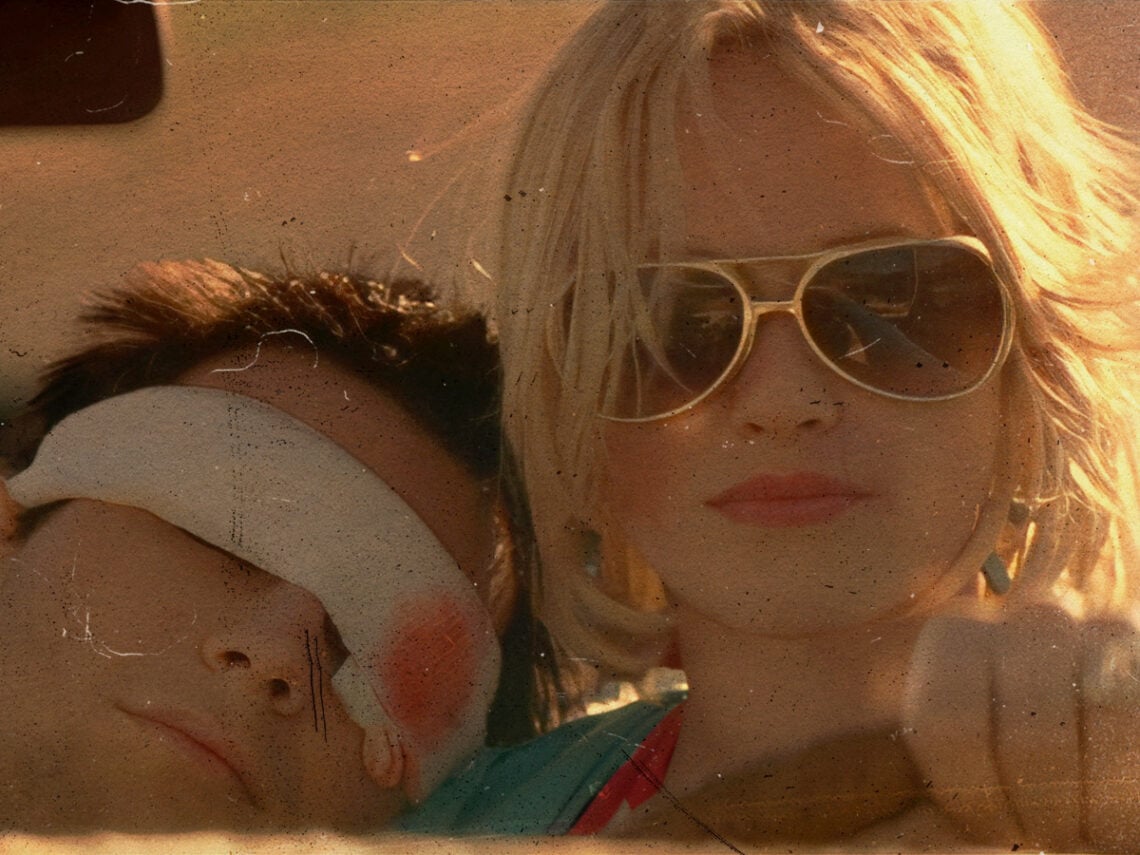
Tony Scott – ‘True Romance’

Tony Scott’s True Romance forms part of the 1990s romantic crime drama canon alongside the likes of Wild at Heart and Natural Born Killers, a subgenre that has found a large cult following. These films modernised the idea of the road movie, centring a sexually charged romance amid abject violence, destruction and chaos.
The Quentin Tarantino-penned True Romance remains a fantastically entertaining piece of ’90s cinema, containing incredible performances from its star-studded cast, including Patricia Arquette, Christian Slater, Dennis Hopper, Christopher Walken, Gary Oldman and James Gandolfini. While the screenplay is unmistakably Tarantino-esque, Scott’s direction gives the movie much more mainstream appeal, including a happy Hollywood ending, opposing the Reservoir Dogs director’s original idea for a tragic finale.
Thus, instead of following in the footsteps of road movies that end in unavoidable tragedy, like Arthur Penn’s Bonnie and Clyde or Thelma and Louise (directed by Scott’s brother, Ridley), True Romance carves a different path for its loveable protagonists. In this respect, the movie shamelessly gives into idealism and ‘true romance’, and you can’t help but love it for doing so. The relationship between Slater’s comic-book-loving, Elvis Presley-idolising Clarence and Arquette’s sweet callgirl Alabama is the beating heart of the film.
Despite the fastness with which they fall in love and get hitched, we root for them from the beginning, giving the violent moments more of an emotional sway.
The movie follows the pair as they meet and fall in love before an apparition of Elvis encourages Clarence to step up, murder Alabama’s cruel pimp Drexl, and hit the road with his new lover in tow. So that’s what he does, although hitting the road for a ‘happy ever after’ would be far too easy. Instead, during the confrontation, Clarence gets himself mixed up with a large stash of cocaine, leading the mafia to get on his case. All Clarence and Alabama want is to live in a comic-book fantasy, yet they must face the violence of vicious gangsters on their quest for happiness and freedom.
There’s a lot to love about True Romance, which revels in its unbelievability. The characters are wild and memorable, such as Oldman’s Drexl, who sports dreadlocks and a glass eye, or Hopper’s Clifford, the ex-policeman who accepts his untimely fate by mocking Walken’s mafia boss assistant Vincenzo Coccotti. Brad Pitt even makes an unforgettable appearance as the lazy stoner Floyd.
In typical Tarantino style, there’s plenty of great dialogue, from “I always said, if I had to fuck a guy, I mean had to, if my life depended on it… I’d fuck Elvis,” to “He must have thought it was white boy day. It ain’t white boy day, is it?” Along with the intensely gripping fight scenes and the perfect chemistry between Clarence and Alabama, the dialogue only elevates the movie to higher levels of greatness.
There’s also significant praise to be dished out to Arquette, whose charmingly delightful, cow-print-wearing Alabama (who has the Southern drawl to match) prevents the movie from becoming a complete macho frenzy. Not only does she boast one of the most iconic wardrobes of the ’90s, but Alabama demonstrates that femininity and delicateness don’t have to be compromised to be seen as strong. While Alabama has faced an abusive past, she is more than capable of holding her own and fighting back, something that defines a vital scene in which she kills Gandolfini’s Virgil.
Years of mistreatment at the hands of men bubble to the surface as she finds herself beaten by Virgil. In response, she rises triumphantly, doing all she can to save herself and enact her revenge. She uses various methods to kill him, including a hairspray and lighter combo, whacking him with a toilet tank lid and shooting him with a sawn-off shotgun. Through the destruction, she giggles cathartically, a reflection of her need to achieve vengeance.
True Romance ends on a note that seems too good to be true, with Alabama declaring, “Amid the chaos of that day, when all I could hear was the thunder of gunshots, and all I could smell was the violence in the air, I look back and am amazed that my thoughts were so clear and true, that three words went through my mind endlessly […] you’re so cool, you’re so cool, you’re so cool.” Joined by Clarence and their son, Elvis, we leave the couple living in true romance, seemingly unscathed by the violent chaos that’s played out before us.
The movie is, at its core, a delicious fantasy, no doubt one belonging to Tarantino. While Scott’s direction sometimes gives the film too much of a glossy Hollywood sheen, it’s hard not to immerse yourself entirely in Clarence and Alabama’s crazy whirlwind of love and chaos.
