


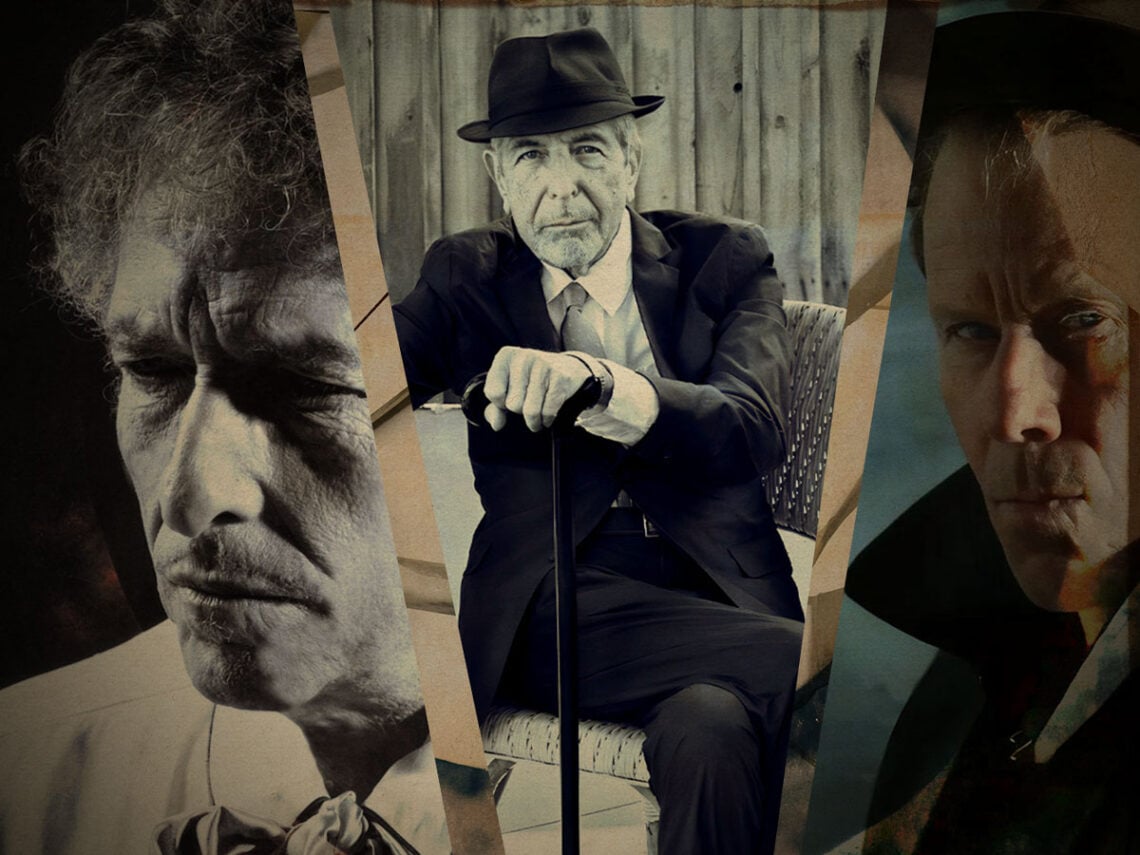
Tom Waits, Leonard Cohen, Bob Dylan: Who won the battle of changing voices?

It’s natural that our voices morph and change as time goes on, contributed to by changes in hormones, diet, and even weight. Generally, just old age can impact our vocal chords but by the time Bob Dylan, Leonard Cohen and Tom Waits were hitting their pension years, their voices were completely unrecognisable.
In fact, for all three of them, the change came way earlier; by 1975, when Bob Dylan was only in his early 30s, his voice on Blood On The Tracks was suddenly a lot different. The sound on ‘Make You Feel My Love’ was worlds away from the folk vocal of his earliest releases, as it seemed to drop several octaves and chew up a whole mouthful of gravel. The same goes for Tom Waits, who, on his 1973 debut, was your classic piano man crooner, then by 1978 on Blue Valentine, he sounded like his vocal cords had been put through a blender, or had become the jagged blender blades themselves.
It repeats again with Leonard Cohen, although much slower. In the 1960s, Cohen’s vocals were warm and bright, sweet and full of feeling, yet when the new millennium came, he sounded completely different on 2001’s Ten New Songs. The clues were there in the 1990s on ‘I’m Your Man’, especially, but suddenly, his voice was a million miles deeper. In the case of all three, their early voices were completely lost.
There is no way Dylan now is ever going to sound like Dylan then, nor is Waits ever going to be able to sing ‘Martha’ with the same lightness. In his final shows, there was no hope for Cohen reaching any high notes, but also in the case of all three, the world has not only allowed it, but celebrated it, watching these changing voices with a kind of fascinated awe. Sure, it’s not a competition, but let’s make it one by taking the damage of drugs, cigarettes, and improper vocal warm-ups in all three.

Who won the battle of the changing voices?
Instantly, I want to rule out Dylan, as throughout his career, there has always been an active debate about whether he has ever actually been a good singer, with some doubters claiming he has always been a little tone-deaf. Mick Jagger was once very diplomatic about it, stating, “It’s like a voice that’s never been one of the great tenors of our time, but it’s got a timbre, a projection, and it’s got a feeling to it”.
However, when he reemerged in the 1970s with a new voice, it wasn’t just that the smokes had caught up with him. For the new, few decades, Dylan kept trying on new voices to a startlingly odd effect as each new record seemed to be a song by a whole different tone. Sometimes he sounded good, sometimes he sounded like the Cookie Monster, and by now, he sounds like a wise sage, but it was too messy a process to enjoy.
And still, when people go looking for a Dylan tune to enjoy, they look deep into the past, but that isn’t so much the case for Cohen, though. So often, I reach for ‘I’m Your Man’, or ‘You Want It Darker’, or even the moving tracks of his final record, like ‘Happens To The Heart’. His changing voice perfectly matched his changing music, where the poetry came more to the forefront. It became less about folk or rock, and more just about him as a writer, and his deeper, richer voice seemed to give the words the weight they deserved.
But out of the three, no one utilised the change in their tone like Waits has. Back in the day, his classic lounge-singing tone was perfect for the languid, storytelling songs he was crooning. He was at the piano playing tunes of love, loss and scenes from the bar, so sounding like a downtrodden Sinatra suited him. Then, as if fate was working with vision, his voice got mangled by cigarettes and booze in perfect timing with his changing vision.
By Blue Valentine, when the change was really settling in, it was clear he was getting bored of his old style, so when Kathleen Brennan came onto the scene, and the pair started to get more experimental from the 1980s and Swordfishtrombones, Waits almost scary new voice simply became a tool to their avant-garde sound. More so than his voice-changing peers, he made his voice a character in his music. He knew he couldn’t sound pretty anymore, so he completely stopped trying, instead having fun sounding horrific.
Especially by the 1990s and The Black Rider or Mule Variations, where Waits sounds kind of like a horror movie villain, he leans into it by getting truly creepy in his writing and composition, too. It made his music endlessly more interesting, so surely, fans can’t be as mad.

Never Miss A Tale
The Far Out Bob Dylan Newsletter
All the latest stories about Bob Dylan from the independent voice of culture.
Straight to your inbox.