


Tom Hanks on the “seminal” scene that made him weep

Though many filmmakers have given it a seriously good shot, it is difficult, or perhaps even impossible, to translate the true horrors of war into a movie. Francis Ford Coppola does a great job with Apocalypse Now as does Elem Klimov with the Russian classic Come and See, but arguably, no director has captured the true chaos of war better than Steven Spielberg and his 1998 movie Saving Private Ryan.
Reflecting real torment, fear and disorientation, Spielberg’s D-Day landing scene in his visceral five-time Oscar-winning film is recognised as one of the greatest scenes of its kind anywhere across the cinematic landscape.
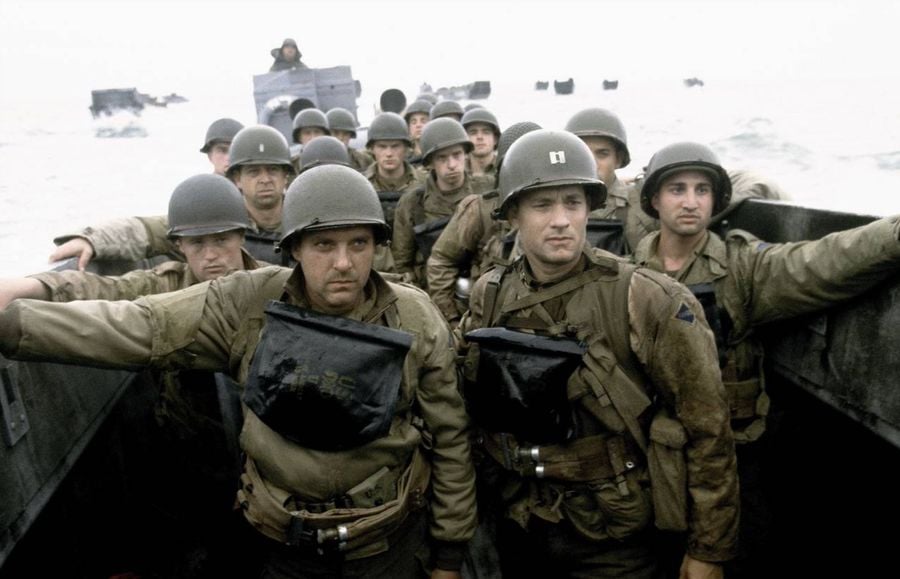
The 20-minute introduction to the film shows American troops preparing for battle as they arrive on Omaha beach in tinpot vessels before being immediately met with the roar of gunfire and the true horrors of war. Showing the graphic dismemberment of troops, as well as the true fear of those not willing to fight, Spielberg manages to recreate the many terrors of D-Day through nuanced asides with supporting characters as well as graphic visceral moments of horror.
Screening the film to WWII veteran Frank DeVita at the time, the real-life American soldier stated, “The horrors depicted in the movie are accurate”. Accuracy was ultimately Spielberg’s goal, too, being uninterested in making a war film in the typical Hollywood tradition. As the director later noted, “When they cooperated with Roosevelt to make movies extolling the virtues and nobility of the war. They would never have allowed the story to be told this way”.
With an all-star cast leading the way, including such actors as Matt Damon, Vin Diesel, Tom Sizemore, Giovanni Ribisi, Bryan Cranston, Nathan Fillion and Paul Giamatti, the classic WWII is pinned down by the Oscar-nominated performance by Tom Hanks in the lead role.
Excited to take on the project before the cameras had even begun shooting, Hanks recalls, “In our very first talk about the movie, Steven laid out how modern cinema technology made the movie possible in the first place—especially for the Omaha Beach sequence”.
Continuing, the lead star added, “He said no combat movie would have ever been like it. I knew immediately that our job as actors would be to behave and react in the actual physical moment, that we would be trained accordingly over time, and that anything that happened on-screen would be as it should”.
The result was indeed as effective as Spielberg and Hanks hoped it would be, transporting audiences back in time to a horrific time and place for world politics. A masterpiece of technical skill, it’s no wonder that the movie took home awards for Best Cinematography, Best Sound, Best Film Editing and Best Sound Effect Editing at the 71st Academy Awards in 1999.
Commenting on the first time he saw the whole scene, Hanks stated, “When I first saw the completed sequence, I wept,” before explaining how well the moment was brought to life, adding, “The landing, from the boats to the top of the bluff, was just too horrible to watch without becoming undone. People see that landing sequence as a seminal 20 minutes, not just in the history of war movies, but in all of cinema”.
