


‘Medusa Deluxe’ movie review: a dazzling cut with several loose strands of plot

Thomas Hardiman has made his feature-length debut with Medusa Deluxe, a British murder mystery taking place in the novel setting of a regional hairdressing competition. The feature, which admittedly lacks moments of genuine narrative interest, with slipshod acting at times, remains an intriguing approach to a well-worn path of storytelling.
Immediately, we are thrown into the action in a ‘one take’ method where stylist Mosca has not only been found murdered in competition but has had his entire scalp ripped from his head. Those in the competition are held for questioning by the police – who never actually seems to show up – leaving them to squabble amongst one another as to what on earth happened and who exactly is to blame in a state of paranoia and accusation.
However, there’s a real laissez-faire mood to the characters, and they switch between idly gossiping away as though it were just a normal day in the salon and then suddenly panicking as to the reality of the situation. There’s certainly a tongue-in-cheek feel to proceedings, an innate commentary on the flamboyance, distractive nature and general ridiculousness of competitive hairdressing perhaps, but this only serves to take away from the urgency of the story.
The film features a cast of characters, each more stereotypical than the last, the beyond-camp lover of Mosca Angel, the aggressive south London hair stylist Cleve and her African-heritage God-fearing counterpart Divine, the motherly, no-nonsense overweight stylist Kendra, and a silver foxed salon owner Rene. Not to mention the clumsy soft-spoken model Angie.
Medusa Deluxe is admittedly starless, perhaps intentionally, but it, therefore, suffers from acting beyond the level of Cleve actor Clare Perkins’ Eastenders fame, assuming the overall quality of an amateur drama troupe production. Darrell D’Silva, who plays Rene, occasionally ventures into moments of genuine emotion and stress before suddenly slipping into Ricky Tomlinson in The Royal Family.
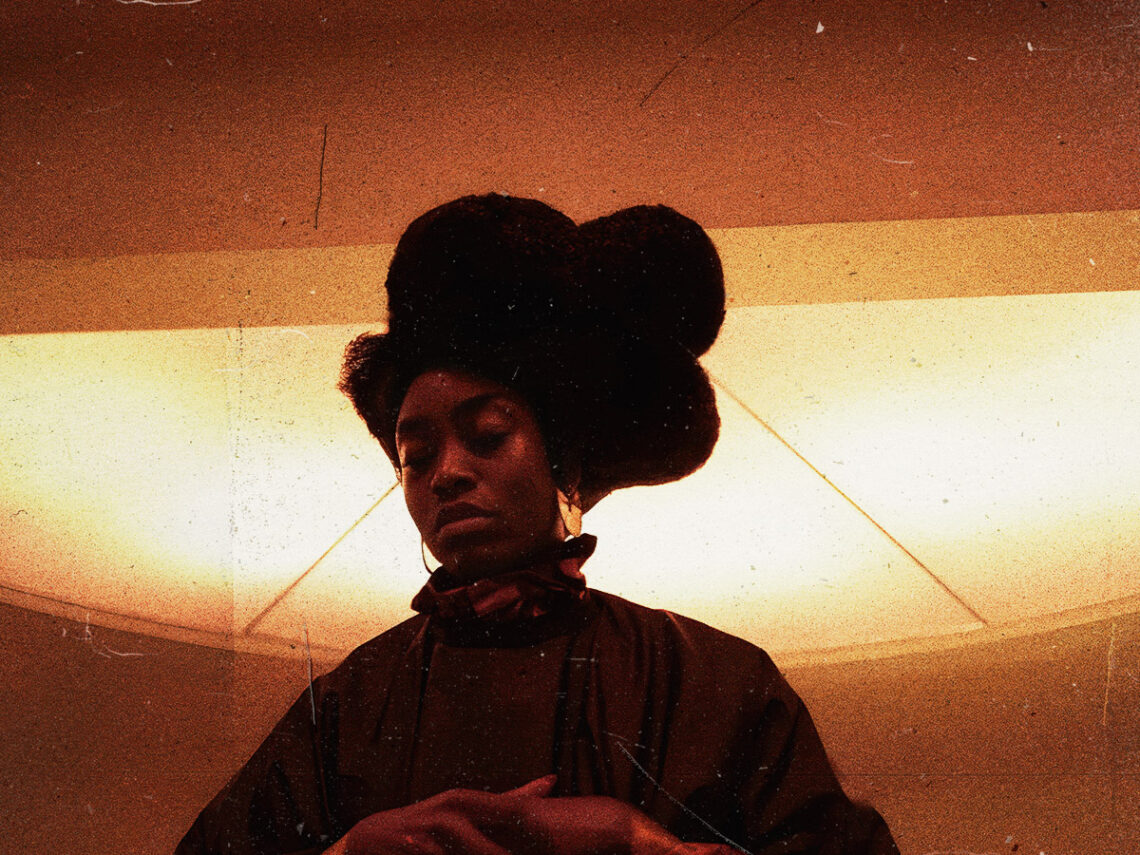
At least Hardiman’s film shines visually, though, lathered in the luxurious cinematography of DoP Robbie Ryan. The lighting almost seems to pulse in anticipation in every scene – ambient pastel colours in some, vibrant blocks in others – each lending its own unique weight to the drama that never quite completely unfolds.
There are certain nods to Alejandro González Iñárritu’s Birdman with the cleverly stitched together ‘one take’ approach (and certainly with the early parts of the minimalist score), and although it lacks the elegant intensity of the more recent Boiling Point, this admittedly keeps the audience tied to the film’s action, even if only on an aesthetic rather than a genuine narrative basis.
Hardiman clearly has an eye for a new kind of narrative and a novel way to tell it, and with a less chaotic script crammed full of gossipy, almost throwaway dialogue, he may just cement himself as one of the most promising newcomers in British cinema. However, his first feature-length offering leaves us feeling weighed down and in desperate need of a new trim.
