


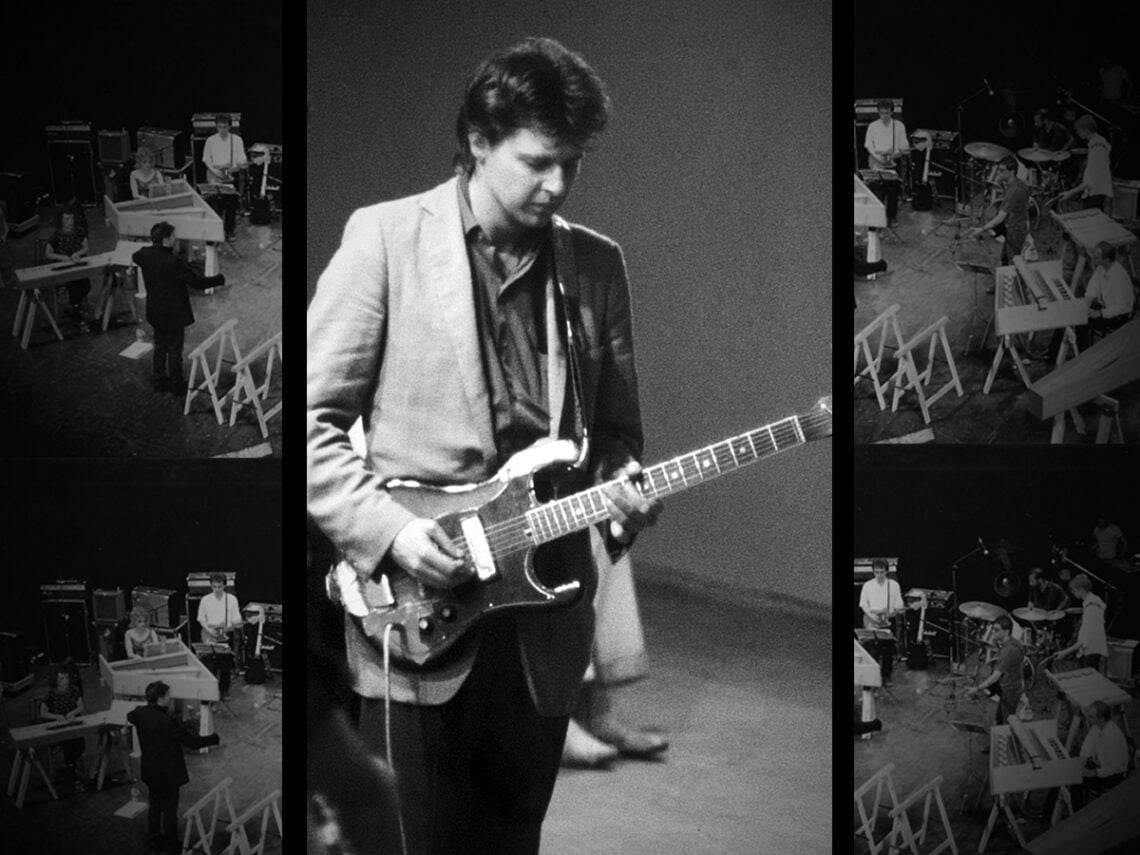
How Glenn Branca’s failed theatre career led to the beginning of New York no wave

“Life is what happens to you while you’re busy making other plans,” so declared John Lennon back in 1980, and while that quote has provided solace to multiple generations of bone-idle self-identified ‘creatives’, there is certainly some truth in it – just ask anybody who has moved to New York City in the pursuit of their artistic dreams.
Ever since the Gatsby-esque economic boom of the 1920s hit the East Coast state, New York has become a beacon for artists from all across the globe to travel to in search of their ‘big break’. Whether it’s in the musical realm, the bright lights of Broadway, or a deep-rooted desire to have your paintings hang in one of the multitude of art galleries that litter the five boroughs, the Big Apple has played host to a wealth of different dreams, many of which haven’t exactly gone to plan, as Glenn Branca found out back in the 1970s.
An enduring hero of experimental music, Branca led the charge of the New York no wave scene and its droning dissonance during the late 1970s, rejecting the increasingly fashionable realm of punk rock for something far more out-there and underground. It was also Branca who effectively launched one of the defining New York bands in the form of Sonic Youth, mentoring the band during their early years and releasing their first two records on his Neutral record label.
Prior to all of that, though, Branca first moved to New York with the aim of revolutionising theatre. During his student years, at the beginning of the 1970s, Branca studied theatre in Boston, at Emerson College, and in 1975, he established the experimental theatre group, Bastard Theatre.
Inevitably, though, as Bastard Theatre grew more expansive and experimental, Branca began to set his sights on New York City, where his theatrical dreams could blossom beyond the confines of Boston.
Pretty quickly, though, the composer’s surroundings in his newly adopted city corrupted those theatre plans. “I came [to New York City] to do theatre,” he once explained in the Kill Your Idols documentary. “And I was in the process of actually setting up a whole theatre situation with a friend of mine named Jeff Lohn. He had a loft in SoHo.”
It was in that SoHo loft, as it turns out, that Branca’s theatrical dreams came crashing down. “We were painting the place black and, at one point, I just couldn’t help myself, and I decided I just wanted to start a fucking band.”
Thus, the legend of Theoretical Girls was born. “We’re on a stage in front of an audience we can basically use,” Branca declared. “This band is our theatre group, so to speak. That was Theoretical Girls.” Establishing an unpinnable blend of experimental noise rock sounds, Theoretical Girls were essential in establishing the realm that would become known as no wave.
Despite the fact that the group only released one single and played around 20 shows during their short tenure, their impact on the wider underground scene of New York was untold, paving the way for a litany of innovative, experimental outfits and launching Glenn Branca as a beacon of inspiration for the entire realm of experimental music. Quality over quantity could have been their motto.
