


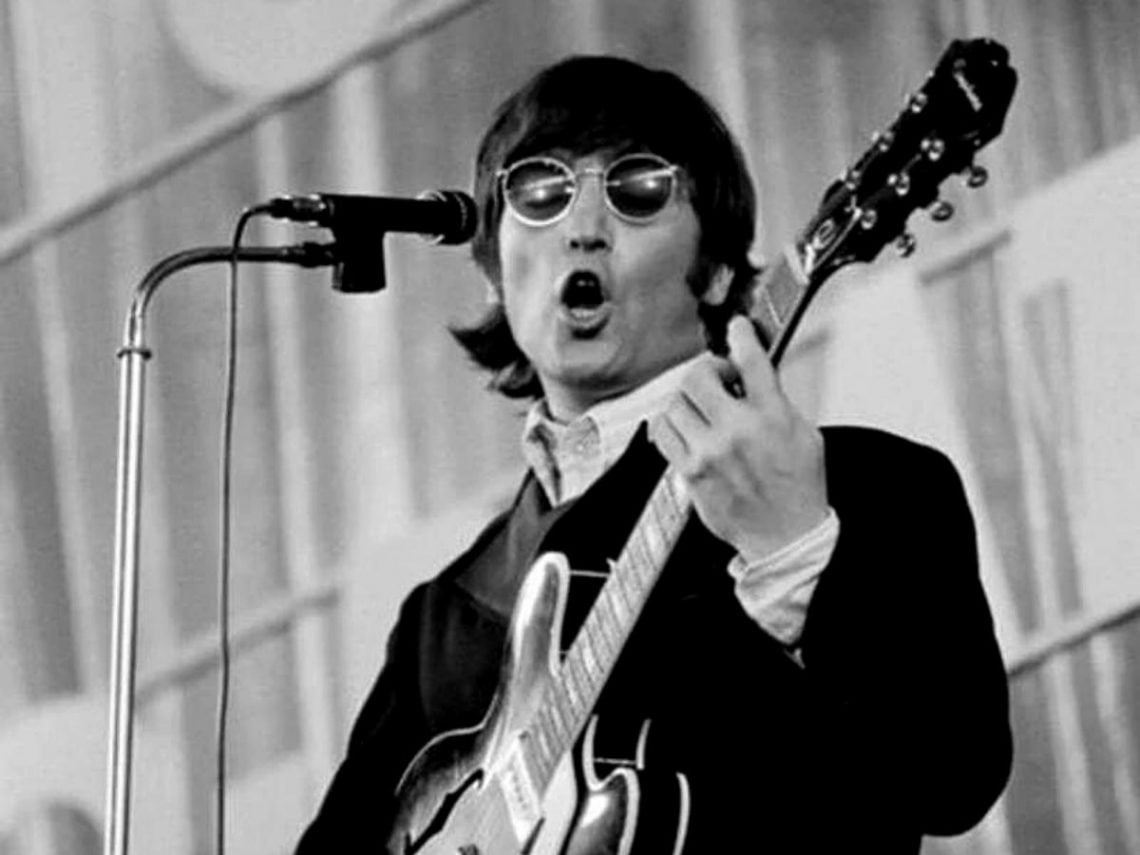
“Bigger Than Jesus”: when The Vatican responded to John Lennon

It’s difficult to articulate how dramatically the “Bigger Than Jesus” controversy shaped The Beatles. While being interviewed by journalist Maureen Cleave in February 1966, John Lennon mused about his collection of books, including his multiple texts about various religions. The comments that he made didn’t make a major impact when they were first published in March.
“Christianity will go. It will vanish and shrink,” Lennon claimed. “I needn’t argue about that; I’m right and I’ll be proved right. We’re more popular than Jesus now; I don’t know which will go first – rock ‘n’ roll or Christianity. Jesus was all right but his disciples were thick and ordinary. It’s them twisting it that ruins it for me.”
In the band’s home country, the response was minimal. But after Cleave’s interviews were reprinted in the United States that summer, a rising tide of conservative Christians was determined to teach The Beatles a lesson about blasphemy. Southern radio stations banned the group’s music from the airwaves, and records were torched during public burning ceremonies. The coverage of the story engulfed what would be the band’s final tour of the United States.
At the time, the Holy See even responded to Lennon’s comments. The Vatican denounced Lennon, even hilariously lumping the singer in with the Beatnik generation. It took more than three decades, and it came well after Lennon’s assassination in 1980, but the Vatican eventually came to peace in an article featured in L’Osservatore Romano. “The remark by John Lennon, which triggered deep indignation mainly in the United States, after many years sounds only like a ‘boast’ by a young working-class Englishman faced with unexpected success, after growing up in the legend of Elvis and rock and roll,” the paper observed about Lennon’s comments.
The major burden that the controversy stirred up in America added to the stresses that the band had already felt on the tour. Physically and mentally exhausted, The Beatles found it difficult to translate their new psychedelic direction on Revolver during live concerts. Still playing rock and roll covers and dealing with poor sound equipment, the band began a push toward staying off the road for good. The soured relationship with America certainly kept them from coming back before their breakup in 1970.
“The fact remains that 38 years after breaking up, the songs of the Lennon-McCartney brand have shown an extraordinary resistance to the passage of time,” the same article claimed, “becoming a source of inspiration for more than one generation of pop musicians.”
Of course, the Catholic Church did muddy its apology somewhat when a 2010 article in L’Osservatore Romano claimed that The Beatles’ music contained messages that “were possibly even Satanic”. At this point, the controversy that surrounded Lennon’s comments had an unintended consequence: it pushed The Beatles into the studio permanently and kickstarted a new era for the band with Sgt. Pepper’s Lonely Heart Club Band.

Never Miss A Beat
The Far Out Beatles Newsletter
All the latest stories about The Beatles from the independent voice of culture.
Straight to your inbox.