


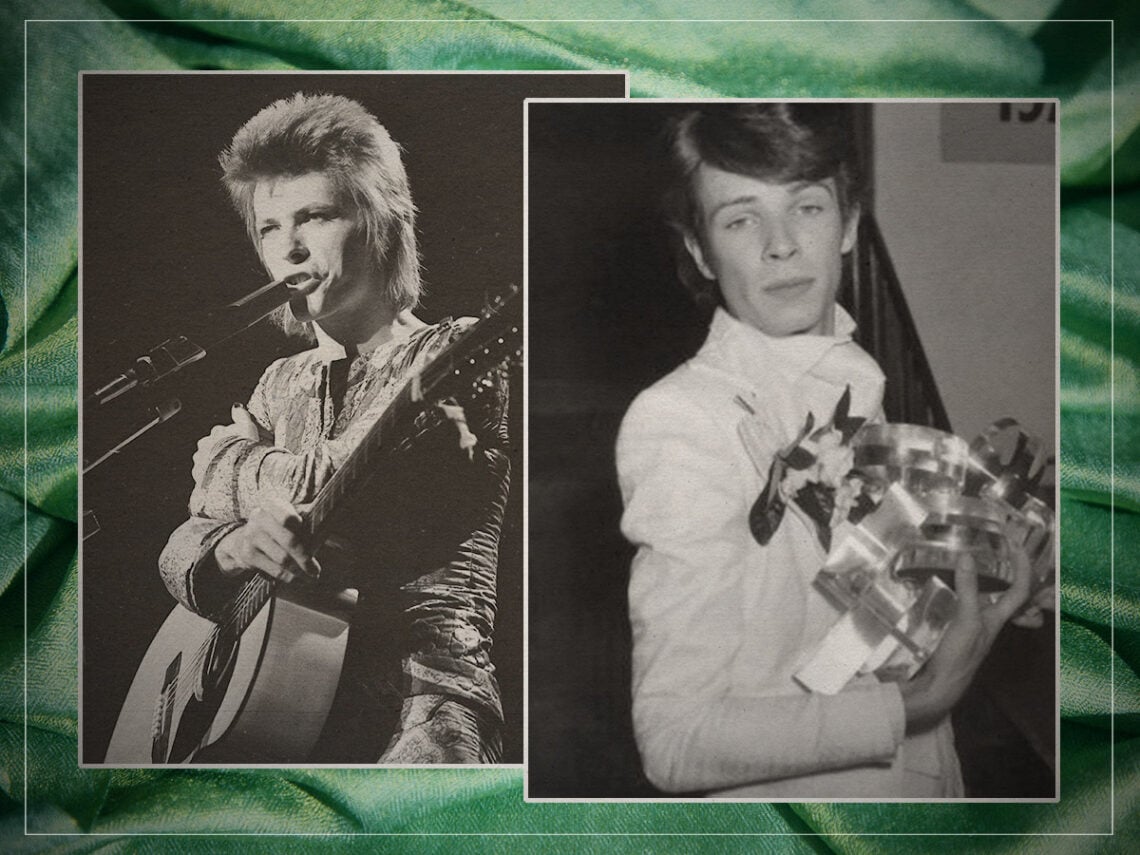
The man who sewed the world: The utterly bizarre tale of David Bowie’s tailor

Looking back, David Bowie might not have become the cultural icon of the world if he hadn’t had the right wardrobe to go with it. Whether it was a sharp, flared suit or the ethereal garms of Ziggy Stardust, every musical moment came with its dedicated selection of costumes, fabrics, and outfits that were each more flamboyant and show-stopping than the last.
While Bowie obviously had a hand in picking out the clothes that would grace every photoshoot, stage, and catwalk, it wasn’t as if he was the one staying up into the small hours every night hacking away at the sewing machine. Indeed, the man had an army of tailors and seamstresses clamouring after his every request and whim, slaving away to make the most exorbitant outfits, only fit for a king.
The artist worked with a number of prolific designers, from Alexander McQueen to Kansai Yamamoto, who all largely overshadowed the real brains behind the Starman’s fashion operation: Freddie Burretti. He may not have been as well-known or artistically renowned, but as the creative mind credited as “the ultimate co-shaper of the Ziggy look”, Burretti was the real right-hand man for Bowie’s most gobsmacking displays, as well as ones that have gained historical significance in the entire recognition of culture.
Meeting the ‘Thin White Duke’ in the late 1960s as a fresh-faced 19-year-old working on King’s Road, London, Burretti evidently charmed the singer in his nascent days well enough to be put in one of his many early bands, an outfit called Arnold Corns. But as time went on, Burretti realised that fabrics were his true calling, and ended up having a huge hand in launching Bowie’s career to the stratosphere, by designing the striking powder blue suit he wore in the video for ‘Life on Mars?’.
Naturally, as Bowie’s career reached its prolific peak in the 1970s, you would have expected Burretti to have been right alongside him in creating the outfits that defined a musical generation. But something strange happened. Right at the heart of the decade, the designer decided to bow out, telling the singer that he wanted to pursue his dream of working for Valentino. So, off he went, only to vanish into thin air.
After being spotted somewhere in Israel in the late 1970s, Burretti’s family placed his name on the missing persons’ register, but his presence never materialised in anyone’s lives ever again, leading them to believe that he had even been murdered. Losing touch with Bowie, it was never known if he achieved his dreams, and, rather tragically, no one knew that he had died from cancer in Paris in 2001 until some time afterwards.
As such, it’s no exaggeration to claim that Buretti was the ultimate unsung hero of the pinnacle of 1970s rock, helping Bowie cement himself as not only a musical icon but also a fashion behemoth, all without any of the credit or grandeur that came with any of his other designer partners. Maybe it was poetic that Buretti vanished, because, unlike any of his costumes or outfits, the man himself never left a trace.
