


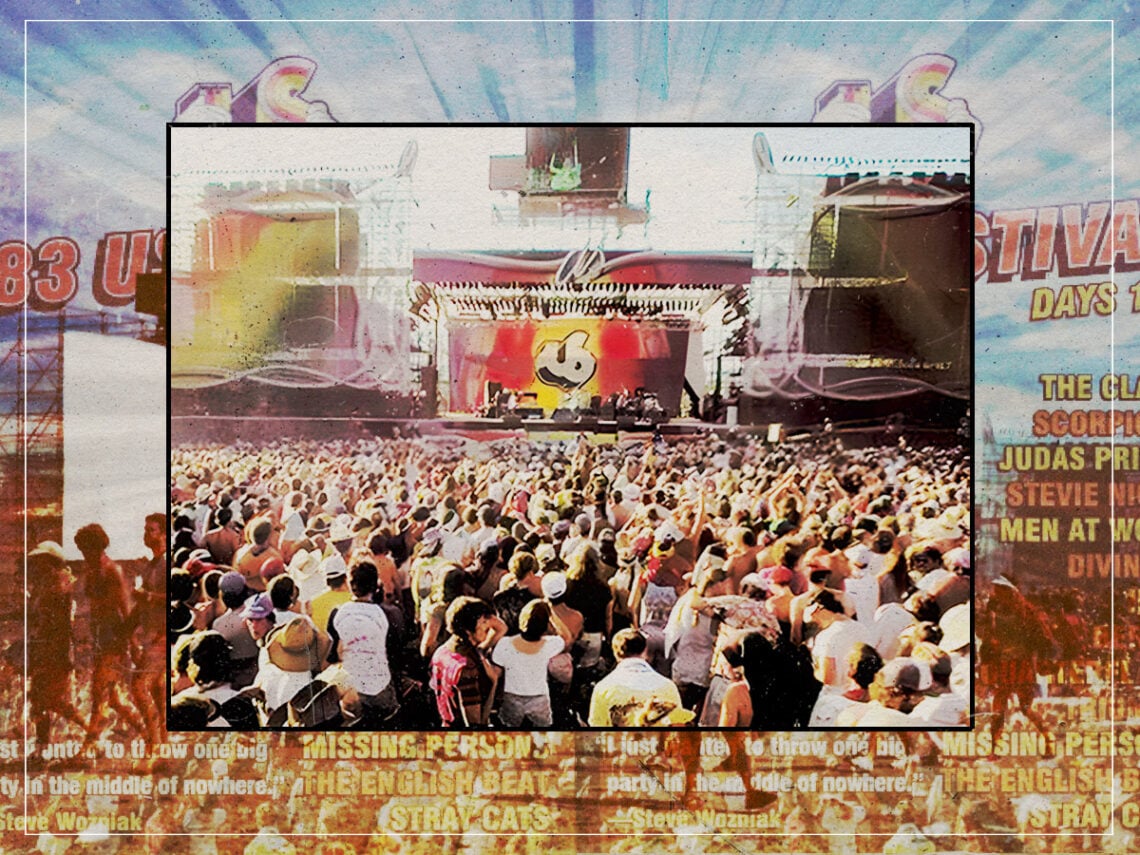
The US Festival: the bizarre rock music event that changed history

Every generation of music fans always has that one show that represents them more than most. While the concert might not have a clear place in rock history, everyone could tell their descendants where they were when they saw the first Woodstock festival or watched Queen dominate Live Aid in the mid-1980s. Although the US Festival may not always be in that company, it did lead to one of rock music history’s most singularly strange bills.
Rather than started by any tour promoter, the show began in the mind of Apple co-founder Steve Wozniak. Looking to put together some of the biggest names under one roof, the inaugural US Festival came with two very different genres of music clashing against one another. Coming out of the early 1980s, the first day of the festival kicked off with the biggest names in what was called ‘New Wave’, including Ramones and Stray Cats having prime slots on the bill.
Although both bands were responsible for flying the flag for rock and roll, the biggest names would be the up-and-coming bands like A Flock of Seagulls. Still riding high on songs like ‘I Ran (So Far Away)’, the band would become a mainstay of MTV once the channel started gaining traction, with their massive hit becoming a fixture of 1980s radio.
For all the great acts there, ‘New Wave’ day sparked as much controversy as it did audience members. Despite the massive crowds, The Clash were among the few bands that had a significant problem with the venue. After being considered one of the biggest names in punk music, Joe Strummer took issue with where the money for the festival would be going, thinking that it should benefit the poor in the area.
Initially declining even to take the stage, the band acquiesced, only for Strummer to announce boldly from the stage that the audience should pay attention to what the future generations of music fans. While this would be one of the band’s final performances with longtime songwriter and guitarist Mick Jones, the initial headliner for that night was intended to be completely different.
When shilling out huge figures for performance fees, Wozniak wanted to have the Eagles play on the final night, offering the band $1,000,000 to play one set. Despite the hefty payday, Glenn Frey turned it down, not wanting to fuel any rumours of a possible reunion of the California rockers.
While the festival went off without the smooth sounds of classic rock, the following ‘Heavy Metal Day’ would change what the sound of California would become. Outside of mainstay acts like Judas Priest and Van Halen taking the stage, various local bands ended up stealing the spotlight in their timeslots, with both Mötley Crüe and Quiet Riot showcasing a new brand of heavy metal independent from the likes of Black Sabbath.
Although Ozzy Osbourne would also perform on that date, this would become one of the clarion calls for hair metal, with every other band on the bill paving the way for metal to be featured on MTV. Quiet Riot would even be the first band to take the genre to the top of the charts, with their album Metal Health becoming one of the first albums to hit number one on the mainstream charts.
Even though the sounds of new wave and heavy metal may have been poles apart, the US Festival marks a historical moment where the cultural landscape had shifted for rock and roll. From these two days alone, hair metal and new wave music would become the biggest genres of music going forward, with everyone from Duran Duran to Poison getting primetime on MTV thanks to this gig breaking down the door.
Despite his idea to bring up some giants of classic rock history, Wozniak accidentally invented the new school of rock and roll. He may have wanted to use his wealth to help support the arts, but the US Festival marks a torch-passing moment between two generations of rock music. By the time the crowds had dispersed on both days, the 1980s had seen their version of Woodstock, and the rest of the rock world would never be the same.
