


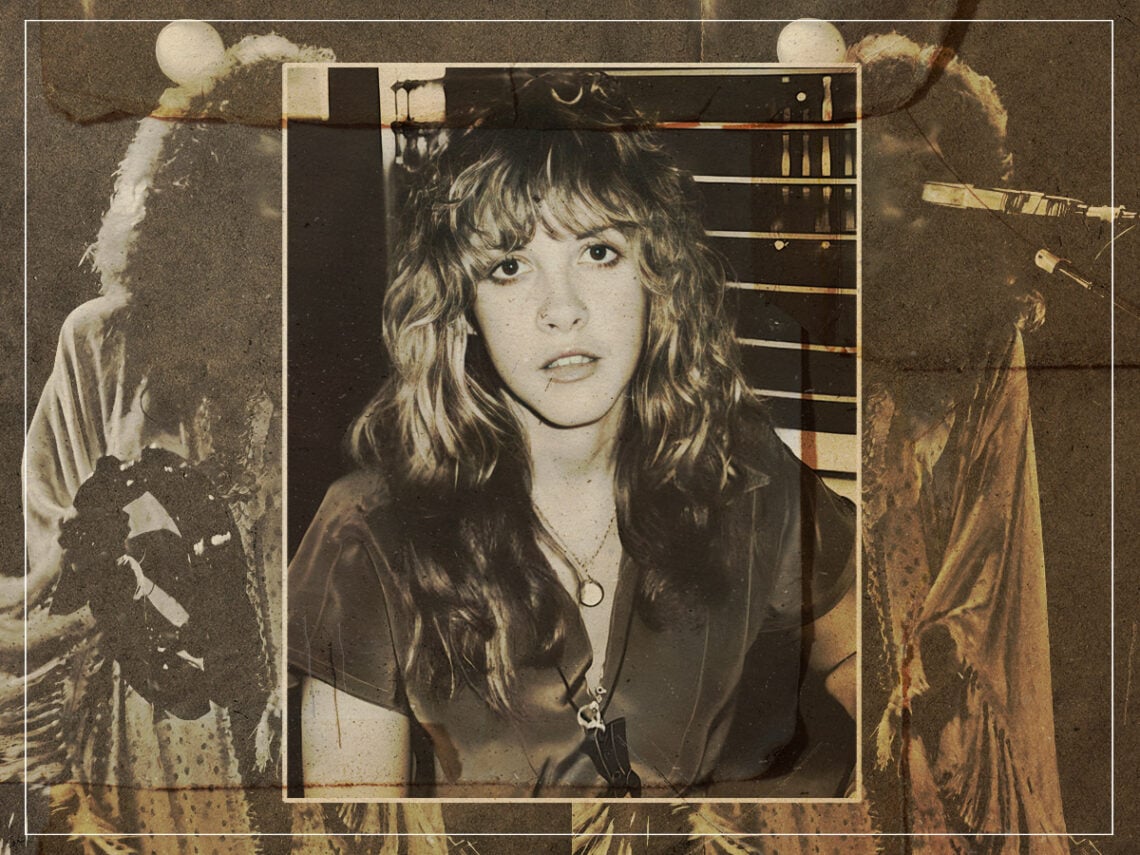
The two classic Fleetwood Mac songs Stevie Nicks has a bed to thank for

Stevie Nicks is one of the few artists who can make the Maddison Square spotlight seem like a candle in her bedroom. She has a voice that could haunt an empty house and a wistfulness that could hush the autobahn. Her songs might be anthemic and filled with more drama than a Jane Austen novel, but there is also a quilted cosiness to them—an earnest diary-like vulnerability that undercuts the rasping rock with soul.
This harks back to her beginnings as a serious songwriter. Many of her first leaps towards tracks like ‘Dreams’ began when she was home alone in Aspen and Lindsey Buckingham was out there trying to make it as a touring musician with Don Everly. Isolated and lonely, she sought solace in the reconciliation of creating art from the humble confines of a quiet temporary home. This is her grounding in songwriting—not jamming with some band or squirrelling away in the studio. She’s an old-school folk writer at heart.
So, it perhaps comes as little surprise that a couple of her greatest hits were not only written within the sanctified walls of a home but from the most intimate setting within: the bed. The first pillow-propped pop sensation arrived from the most unlikely of places. During the chaotic days of working on Rumours at the Record Plant, who wouldn’t want to get away from it all and have a lie-down? Alas, only Nicks would want to write a heartfelt hit in the process.
As Nicks told Lyndsey Parker, “Everybody was working on something else in the main studio, and I had this idea,” she recalled. “I was kind of wandering around the studio, looking for somewhere I could curl up with my Fender Rhodes and my lyrics and a little cassette tape recorder”. This was her songwriting modus operandi—it might have been beaten out of her for a time in favour of a more professional studio approach, but professionalism became a foreign word amid the coked-up carry-on of Rumours. So, she wandered in search of her old cosy muse.
Nicks happened upon a friendly Plant employee and enquired about ”a place to go and play”. He said he knew a place, but he said it with a hush and promise of secrecy. As Nicks recalled him saying, “You can never tell anybody,” to which Nicks’ urged: “Oh my God, a magic room! Oh my God, I’ll never tell anybody”. Obviously, the fact that this quote is now public counters her assurance.

The sacred spot in question was Sly Stone’s secret domain. The funk star had his very own bedroom built into the damn place, like a benevolent Bond villain of first-rate funk. According to Nicks, “It’s a big studio with a sunken circular shape, actually like a lighthouse, like a circle, and there’s keyboards all around, a bunch of keyboards that went down this tunnel kind of thing”.
But the presentiment that most enticed Nicks in this magical world was “this big half-moon circular bed with all black and red velvet. It sounds a little garish, but it was actually beautiful”. She nestled in, and 20 minutes later, ‘Dreams’ nestled out.
While the track might now be bombastic, if you analyse the structure, very little ever happens; it is as sleepy a pop sensation as you’re ever likely to find. In fact, musically, it is, frankly, boring. But the beauty of it is in the very dreaminess that its type proclaims. It is a song of quilted contemplation—of unrobed, cradled vulnerability.
And Nicks tried to repeat this trick some years later. She did so with great success. ”In the old days, before Fleetwood Mac, Lindsey and I had no money,” she told Entertainment Weekly, ”so we had a king-size mattress, but we just had it on the floor. I had old vintage coverlets on it, and even though we had no money it was still really pretty… Just that and a lamp on the floor, and that was it—there was a certain calmness about it. To this day, when I’m feeling cluttered, I will take my mattress off of my beautiful bed, wherever that may be, and put it outside my bedroom, with a table and a little lamp”.
Disillusioned and stressed by the sudden fame that followed the explosion of Rumours, after a life as a waiter beforehand, Nicks decided to perform her old comforting trick of displacing her mattress and taking herself back to the moment when songwriting’s purpose was far simpler. Her life in San Francisco was distressed and disorderly, but this little practice gave her a semblance of control.
And from the floor, she penned: ”So I’m back, to the velvet underground. Back to the floor, that I love. To a room with some lace and paper flowers. Back to the gypsy that I was”. And suddenly, her second hit written from atop a mattress, arguably constituting her two greatest songs, was born: ‘Gypsy’.
