


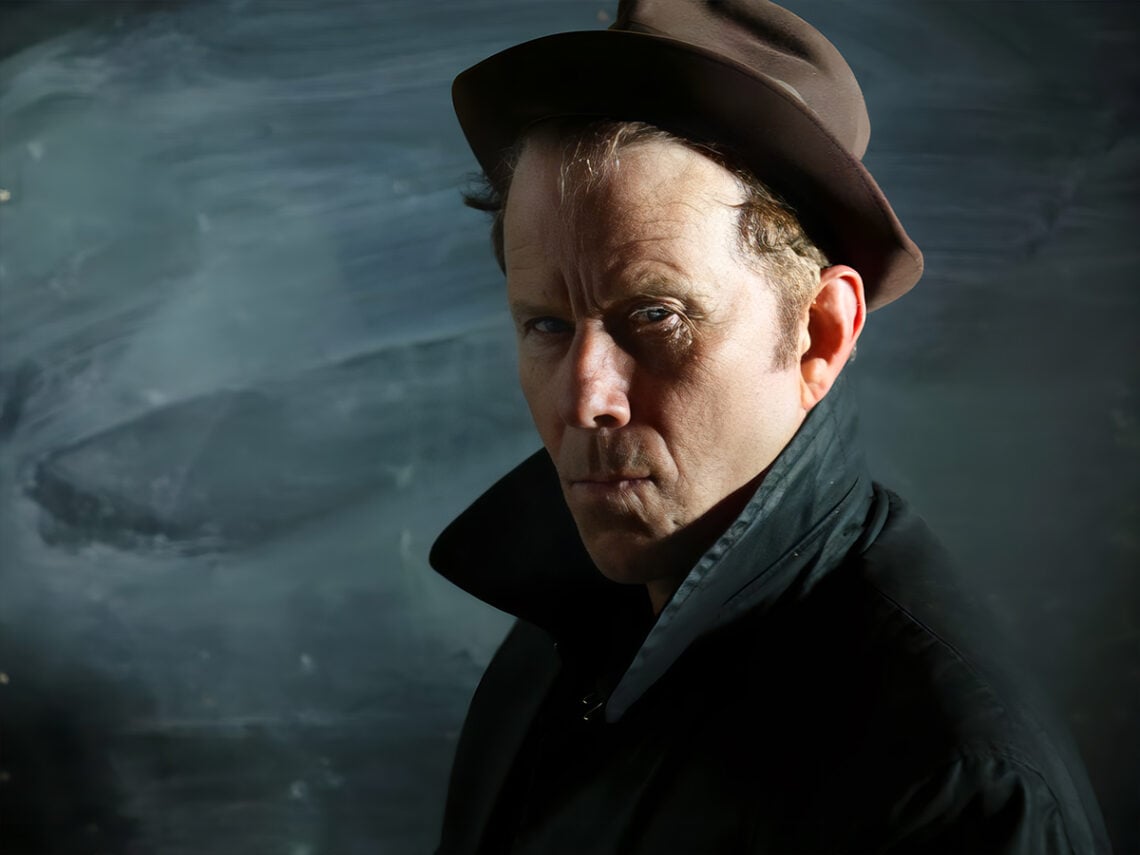
The Tom Waits song about the “American dream gone straight to hell”

What if Bruce Springsteen’s ‘Born to Run’ fairytale had its worst possible ending? What if you got out of that town but never stood in the sun? If Wendy gave you one more choice between her and the booze, and you made the wrong choice? What if having no one to love gave all the madness in your soul nowhere to go, and just made you rot in a bar somewhere downtown, a victim of your own blinding hope and youthful optimism?
Well, then you’d get Tom Waits.
Tom Waits spent his career lifting the rock of late 20th-century American life. Not just witnessing its damp, dark underbelly but depicting it too, in music that was as varied and breathtakingly alive as anyone Waits wrote about. It could be uncomfortably visceral or dazzlingly romantic, or it could be the kind of sad that makes you crave a lie-down in a dark room. However, something that gets sidelined in how mutated and gothic his universe was in Waits’ later music is just how down-to-earth everything about his work is.
That’s not to say that the macabre fantasias that light up the likes of Bone Machine and Real Gone aren’t some of the best work he’s ever done, mind you. Just that, for all his reputation as a bizarre, uncanny storyteller, the real power of his yarns comes from how there’s always a human heart to them, even if they are telling a story of a mutant dwarf society living in steam tunnels underground.
Above all, though, while Waits is looking into the seedy underbelly of American life, he’s always doing so with empathy for those lost souls. He isn’t lifting the rock to sneer with disgust at it; he’s looking with fascination at real life that would otherwise go unnoticed and misunderstood. If anything, his scorn and disgust is saved for those living above the rock.
How did Tom Waits express his disgust with American life?
Tom Waits doesn’t look at the protagonists of songs like ‘Martha’ and ‘Christmas Card from a Hooker in Minneapolis’ with any sort of judgment. They may be fuckups, wastrels and shady to the core, but, in his eyes, they are what society made them. Better that than anyone making a buck off their suffering, which is who Waits really turns a critical eye to in his work. He elaborated on this in an interview conducted in 1984 when promoting one of his many masterpieces, Swordfishtrombones.
In it, he goes into some detail about the inspirations for individual songs, and in particular, the song ‘Frank’s Wild Years’. He says the song is about “Crumbling beauty, Frank is a little bit of that American dream gone straight to hell. Frank is more of a commentary on real estate brokers, and insurance investigators, and defence attorneys. That fear, that button down, 8 o’clock, the whistle blows, Bermuda shorts approach to life.”
It’s telling that he starts writing about this part of life in the 1980s, where the “American Dream” was replaced with the Yuppy wet dream of untrammeled commercialism and worship of money. This was a part of life he got his first real exposure to early in the decade when he took his first “office job”, in his own words, writing the soundtrack for the Francis Ford Coppola mega-flop One from the Heart.
Considering that ‘Frank’s Wild Years’ is a bone-chilling story about an everyday, middle-American salaryman setting fire to his house, with his wife and dog inside, one wonders the kind of men he met in those office years.
