


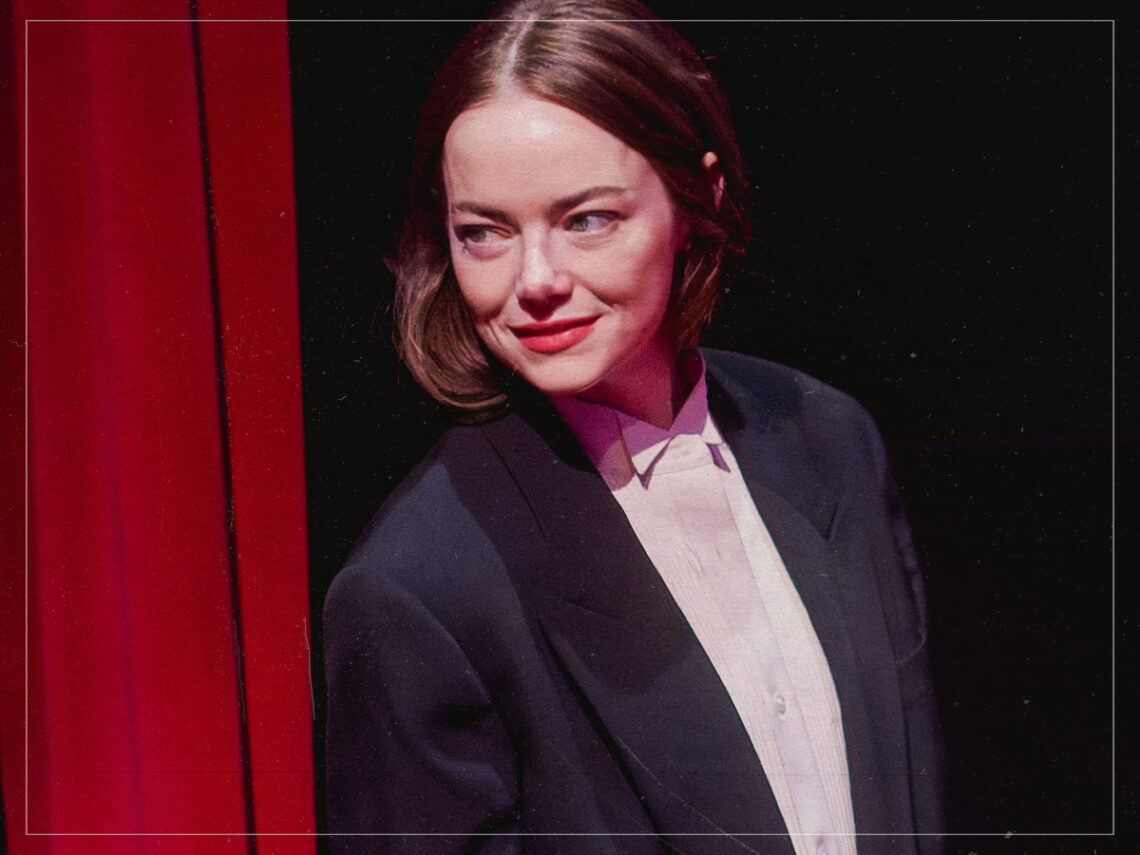
How three “heartbreaking” actors convinced Emma Stone to take on Hollywood

For an industry as financially powerful as Hollywood, it’s a wonder how often they wildly miss the mark.
Actors who have now become cinematic powerhouses were once struggling auditioners, whose stardom was miscalculated on the basis of conventional beauty standards. Meryl Streep, Carey Mulligan and Emma Stone are perhaps the strongest examples of horrific misjudgement in the entertainment industry.
When Seth Rogen was finally pulling together Superbad for the big screen, he was relatively certain that Emma Stone was the actor he wanted involved. This summer, he revealed to The Hollywood Reporter that her casting took some convincing from the studio and thus continued to prove how warped some of the executives’ outlooks are on talent.
Because like all great actors, Stone possesses more than what’s on the surface. She wasn’t an actor whose brilliance could be simply understood in a quick headshot glance, with dollar signs impeding the eyeline. From the very beginning of her artistic journey, she shaped her understanding of the practice through work that predates the glitz and glamour of Hollywood vanity. Stone honed her craft off the back of Charlie Chaplin.
“I had a friend that was in film school when I was 14 or 15 that was watching these and kindly suggested that I check this out,” she said, explaining how she got a hold of Chaplin’s work. “And so I saw City Lights and then Modern Times I don’t know if you remember that roller skate scene where he’s right at the edge of a second story. I mean, it’s just unbelievable. Just sheer physical talent. He’s like a stunt person, and a comedian, and a heartbreaking actor.”
Sure, the modern work of Stone is cut from a hugely different cloth. Her acting style is no way as physical as Chaplin’s, especially in Modern Times. But it transcends in the same way, by creating a line of communication between the actor and audience that is immediately resonant.
Stone continued, explaining, “I think watching films that combined, I mean, of course, watching Charlie Chaplin, it’s not like I could watch him and go, ‘Oh, that’s exactly what I want to do’. I could never be Charlie Chaplin. But the films that were made by people like him, or Gene Wilder, or John Candy, the people that inspired me so much were the people that were able to combine humour with heartbreak so beautifully and fluidly. Those films I think were what inspired me to want to come to L.A. and audition for movies. Because before that, I really wanted to do musical theatre and didn’t have the chops for it really.”
You could say that in La La Land, the film that gained Emma Stone her first Oscar, acted as a full-circle metaphor for that sentiment. Not only was it a middle finger up to studio executives who turned her down or naysayers who believed she wasn’t cut out for the world of musical theatre, it also saw her combine all of the tropes that made Chaplin, Wilder and Candy so successful, into one modern incarnation.
