


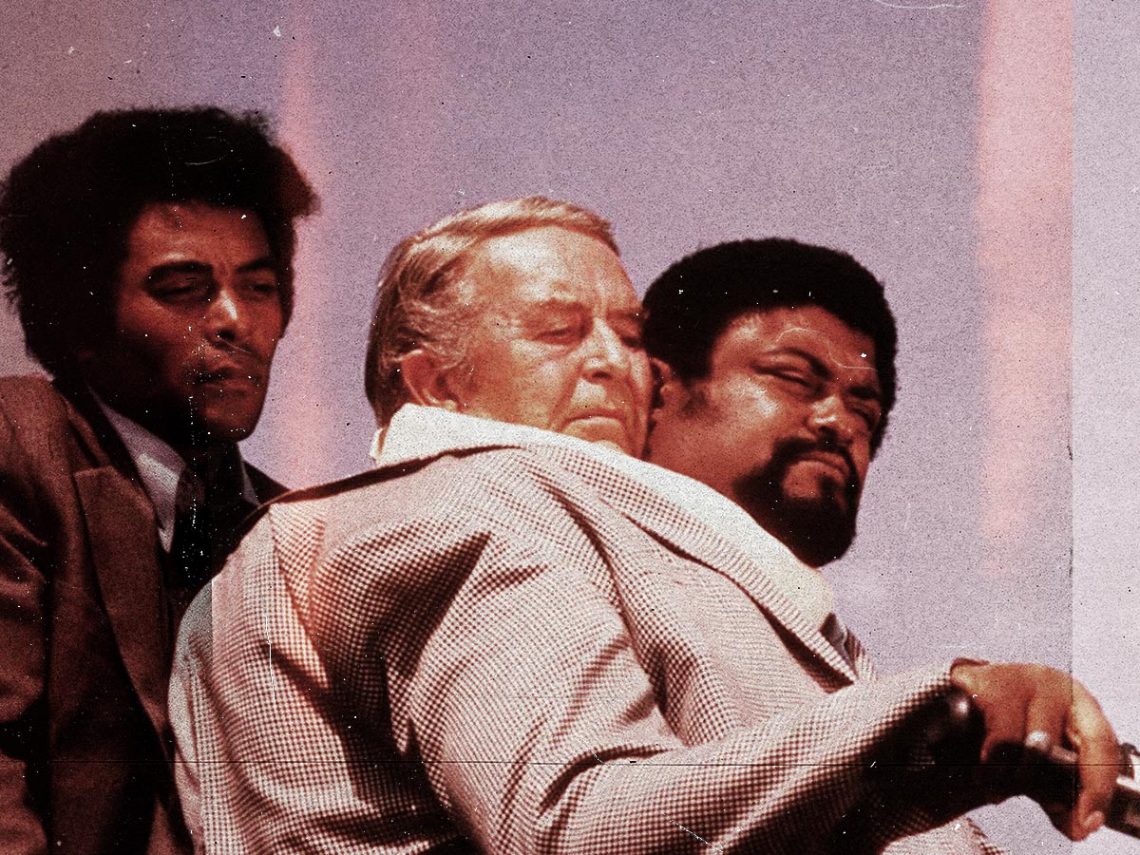
‘The Thing with Two Heads’: body horror meets racism

Horror, and all its associated subgenres, have always been a fascinating domain within which artists have pushed the boundaries of social commentary. Filmmakers such as David Cronenberg have used body horror to explore various aspects of the human condition, ranging from critiques of contemporary media practices to unsettling explorations of human sexuality.
While body horror has many undeniable classics, the subgenre gets crazier as we delve deeper into the B-films that have emerged over the years. There are too many to choose from, but one of the craziest examples is Lee Frost’s 1972 blaxploitation flick, The Thing with Two Heads. Almost mislabelled as a sci-fi comedy, Frost’s film tells the story of a rich racist who wants to escape death by transplanting his head onto someone else’s body.
Even to those who are familiar with Frost’s raunchy filmography, The Thing with Two Heads is a bit of an anomaly. A true master of the sexploitation genre, Frost’s films often rely on themes such as sadomasochism and have even ventured into other related areas such as the mondo subgenre. He even tried his hand at Nazi sexploitation, directing the 1969 prison movie Love Camp 7.
However, The Thing with Two Heads takes a very different direction when it comes to the narrative. It features Ray Milland as an extremely racist surgeon who’s struggling to come to terms with his own mortality. After multiple obstacles to the experiment, a Black death row inmate named Jack Moss (played by Rosey Grier) agrees to participate in the surgeon’s feeble attempt to undo the trajectory of nature.
Eventually, the doctor’s head is transplanted onto Moss’ body, and the two engage in an unprecedented struggle for agency. Obviously, the central metaphor of a Black man with a racist’s head transplanted onto his body is a powerful one. It’s a site of historical, political, moral and philosophical conflict, signifying a disruption to contemporary discourse about race and the sociopolitical climate of the Watergate era.
As is natural with many B-flicks, it’s evident that the writers weren’t really interested in exploring the ramifications of such a union, but that doesn’t really matter. The Thing with Two Heads might have been conceptualised as a comedy, but it doesn’t work as one. Instead, it’s much more beneficial to watch it as a work of body horror because of the raw power of the central concept.
Although the film has entertaining stunts and grindhouse eccentricities, The Thing with Two Heads should always be remembered as one of those unique cult films that had the potential to be so much more. Hollywood is routinely busy trying to remake already revered classics, but schlocky cult flicks such as The Thing with Two Heads deserve those remakes the most.
Watch the film below.
