


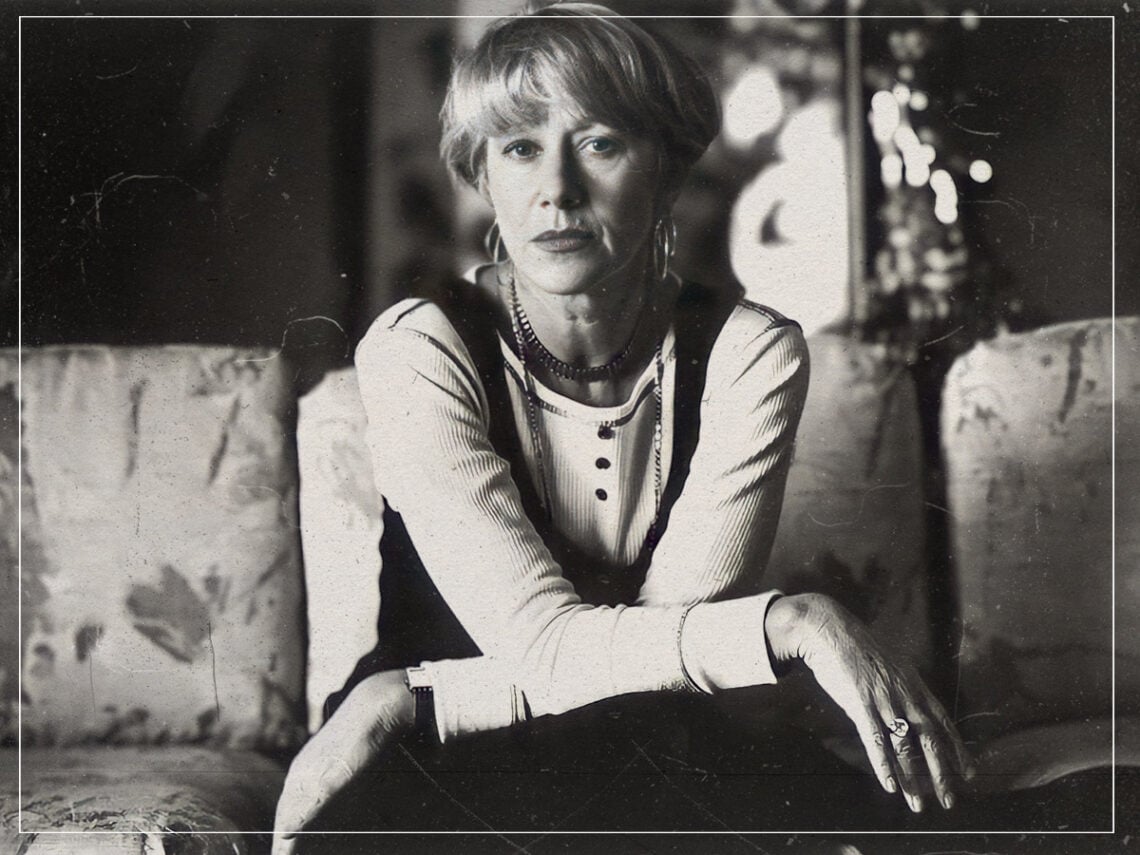
The “terrible character” Helen Mirren fought hard to change: “I was a bit of a pain”

Throughout history, female actors working with male writers or directors have needed to fight to give their characters more depth.
While some characters are more overtly sexualised or stereotyped than others – for example, the ridiculously gratuitous sexualisation of Jean Tatlock (played by Florence Pugh) in Oppenheimer, or pretty much every pre-2000s Bond girl – others are just given less depth than their male counterparts, like Natalie Portman’s character of Alice in the 2004 film, Closer.
Even great female actors like Helen Mirren have had to contend with being given two-dimensional characters. One of the most established actors today, Mirren originally rose to fame in the 1970s in roles like the highly sexualised courtesan and wife of the Roman Emperor, Caesonia, in the erotic 1979 drama Caligula, or the sorceress Morgana in the 1981 film Excalibur.
But there was one role Helen Mirren fought tooth and nail to change, which was her character in John Mackenzie’s 1980 film, The Long Good Friday. A British classic, The Long Good Friday is a brutal gangster movie set against the backdrop of the IRA in the 1970s. Bob Haskins plays Cockney crime boss Harold Shand, who is in the middle of a deal with the American Mafia to build a stadium for the Olympic Games on an empty plot in East London, when a string of bombings in the area threatens his expanding criminal empire.
Mirren played Shand’s girlfriend, Victoria, an intelligent middle-class woman who Shand comes to rely on for her loyalty. But Mirren’s character was originally written completely differently. After reading the script and loving it, Mirren decided to come on board, but with the caveat that she could change her character, admitting she was a “squeaky wheel being very annoying”.
According to Mirren, her character was originally “terrible” and “very, very dull”, no more than “the girlfriend in the corner”, so Mirren wanted to make Victoria “more influential in the plot”.
She ended up pushing director John Mackenzie to rewrite the character, changing Victoria’s background from working class to middle class, transforming her into someone who grew up in a nice house and whose father had a successful career. Despite admitting that she was a “real thorn” in Mackenzie’s side, Mirren had no regrets about persuading him to change her character, and she can now look back and be proud of her character.
“That was my contribution, and the film was much better for it, I think,” she told The Guardian on the film’s 40th anniversary in 2021. Her co-star, Bob Hoskins, was also very supportive of her pushiness, and it definitely paid off, as The Long Good Friday is now regarded as one of the best gangster movies of all time, boasting a muscular script, characters with depth, and a unique storyline.
Mirren has said the film is in her list of the top five films she has been a part of, and after the film’s release, she gained major street cred in the East End, being brought drinks in every pub she went into. Her own uncle by marriage was a bona fide East End gangster of a generation just before and after the Second World War, so Mirren had a background and a history to play into. Mirren has been vocal about having to fight to be recognised and heard in the film industry as a young actor, but clearly, The Long Good Friday was all the better for it.
