


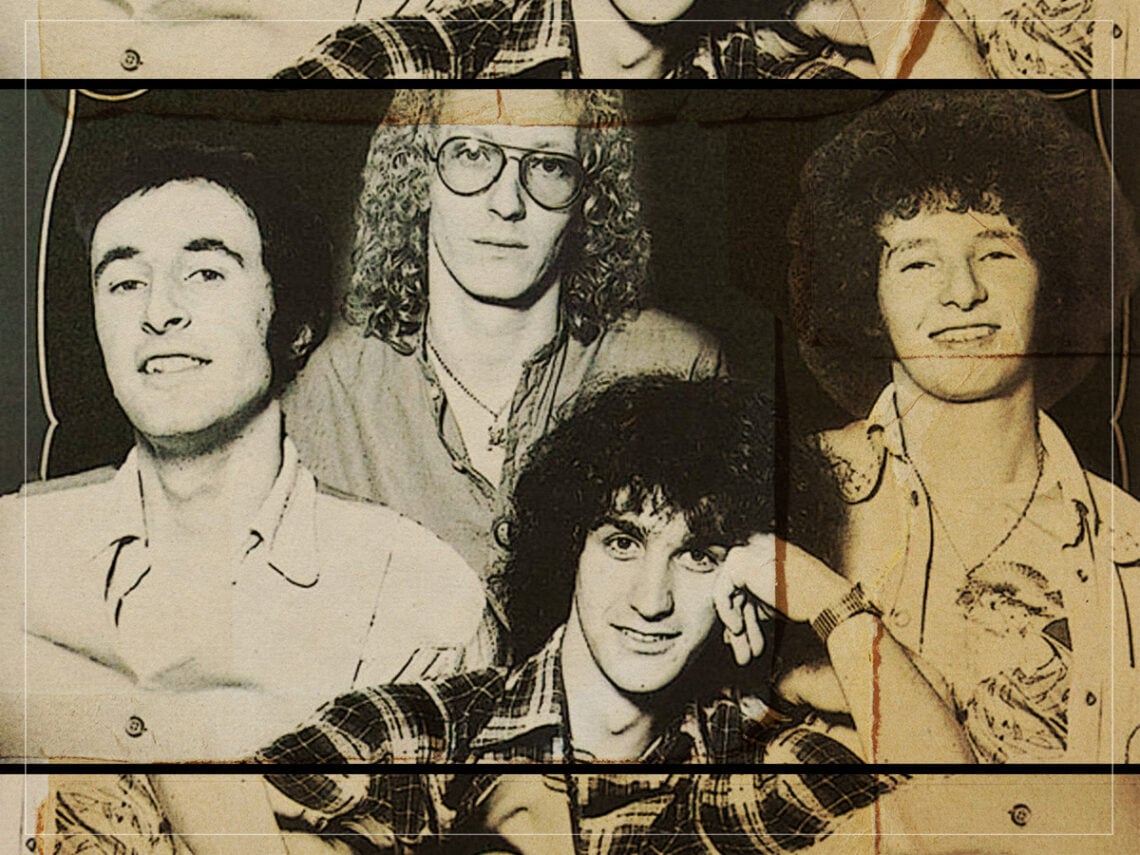
Stretch, Clifford Davis, and the strange case of the “fake” Fleetwood Mac

Few events in music history have the power to thrive on mystery alone. While, in some instances, stranger things have occurred, one of the many that will forever remain veiled in secrecy is the curious case of “fake” Fleetwood Mac, involving several musicians who performed a run of concerns under the name in the early 1970s—allegedly under the pretence that they were operating as Mick Fleetwood’s new lineup.
Taking promises at face value isn’t uncommon in the music industry, especially when they involve the possibility of success. Fleetwood Mac has famously always epitomised inter-band frustrations and fragmented dynamics, so much so that it even defined one of their best records, Rumours, which only managed to hold as much charm and charisma because each of its members was at the end of their tether.
In 1974, however, Fleetwood had apparently started working on a new lineup, a narrative sparked by their manager Clifford David, who assembled a group of British musicians, including vocalist Elmer Gantry and guitarist Kirby Gregory, to operate as the new force of the Mac. The heat of the ruse began from the first live show, when Fleetwood neglected to show up. The others brushed it off as mere happenstance, knowing that the drummer was going through some exhaustive personal issues.
Fleetwood had recently been made aware of an affair his wife, Jenny Boyd, was having with guitarist Bob Weston. Although it wouldn’t be the first intimate mishap that had a profound impact on Fleetwood’s work, ethos, and general creative attitude, it led the others to believe that his absence was a result of his trials and tribulations. When they were subjected to another no-show and another one, the deceptiveness of the entire setup started to make itself abundantly clear.
Before the “new” Fleetwood Mac set out, Fleetwood had reportedly met with the others to discuss the possibility of starting the new lineup and scheduling some tour dates, but the outcome of such a meeting remains unclear. It’s said that Fleetwood remained non-committal to the entire idea, supposedly excusing himself from rehearsals because of the intense personal struggles he had to divert his attention to. The others operated under the false pretence that he would join them at the beginning of the tour until he didn’t show. Not once.
To add insult to injury, Gantry and Gregory seemed to genuinely believe that Fleetwood would eventually show, which, as time went on, made their Fleetwood-less shows look more and more like a ploy to imitate a band that they had no affiliation with, even though they had no idea what was actually going on behind the scenes. “When he never appeared, and we were later branded in the press as imposters, I felt a rage towards him that has taken decades to subside – even slightly,” Gantry told Louder, expressing his understandable anger at having willingly entered a situation he didn’t understand fully.
“We were receiving encores and ovations, but it felt bad. I thought: ‘What’s the point? This has no future’. Kirby and I were getting really depressed and stoned all the time,” he continued. “We even sacked the pianist on stage one night as he was too drunk to play.” A nightmare from the beginning, they eventually felt an intense bout of betrayal, experiencing a second wind when Fleetwood later claimed he didn’t even know their names, placing him as completely unaware that the tour was going ahead in the first place.
While this was later contradicted by a court document proving that Fleetwood did, in fact, hold that initial meeting with Gantry and Gregory, one overarching question remains: Why did he fail to communicate why he no longer wanted to be a part of their assembly when it was his idea? Could he have committed to something he later regretted? No matter the real reason, Gantry, Gregory, Jim Russell, and Paul Martinez found some much-needed catharsis a year later when they formed Stretch and recorded the aptly-named ‘Why Did You Do It’, hitting out at Fleetwood and securing several charting positions at the same time.
“The line that says: ‘The only ones who know the truth / Man that’s him, me and you,’ was about the fact that me, Elmer and Mick sat in our Tooting flat and discussed the new Fleetwood Mac,” Gregory said. A big shadow across the entire sentiment remains in the form of Davis, whose position in the entire mishap never really made itself known. According to Gantry, they believed he had been a victim in the story, like them. Over time, however, after realising nothing was what it seemed, doubt began to creep in.
