


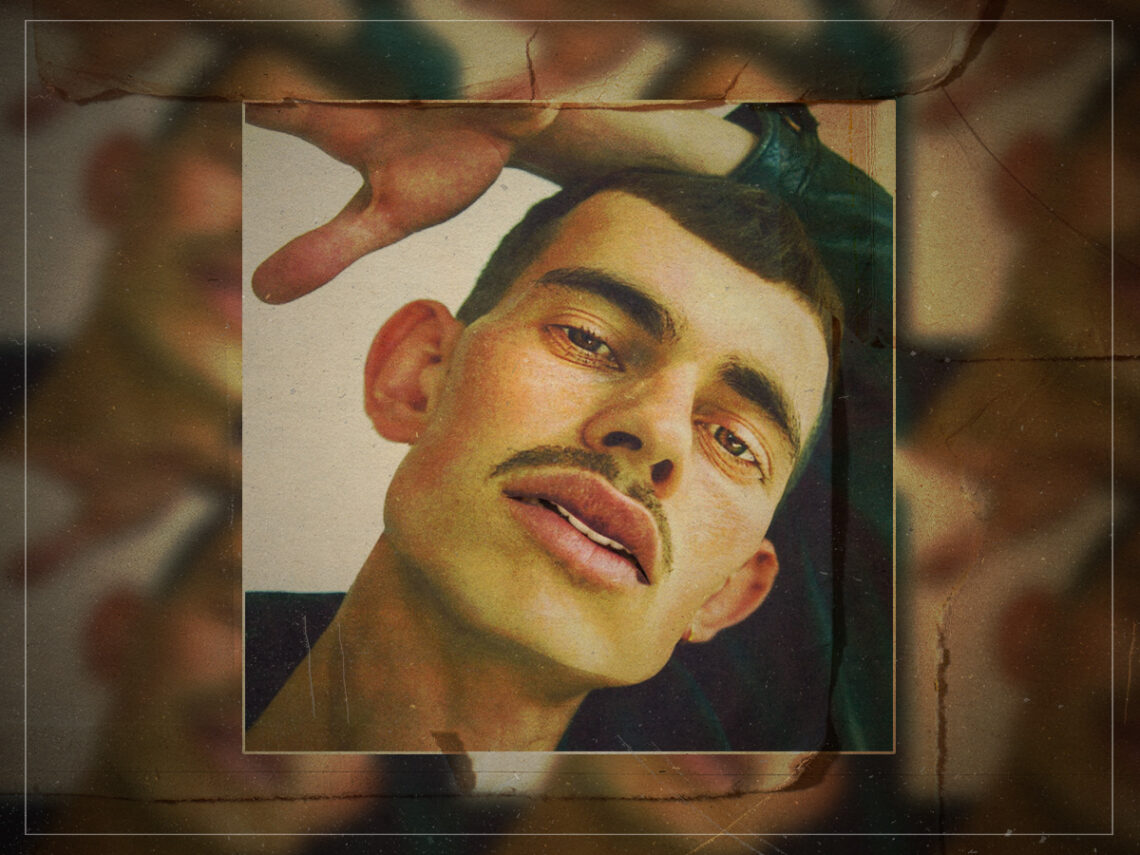
To the limits of creativity: the strange case of Valentin Hansen

The record for most songs ever recorded by an artist was swiftly broken early this year, topping Indian playback singer Asha Bhosle’s certified 11,000 studio sessions dating back to the late 1940s. At the time of writing, Berlin filmmaker and artist Valentin Hansen’s latest album, Max, released in January, totals over 70,000 tracks and is set to continue to climb indefinitely with an average of two songs a day.
While the concept of indefinite musical pieces has been attempted in the world of avant-garde academia—British composer Jem Finer’s singing Tibetan bowel Longplayer is set to play, all-willing, until December 2999—but Hansen’s Max is the first time such an astronomical volume of material has been ostensibly packaged as an album, in the contemporary pop understanding of the concept, by a commercial artist.
Fuelled by a subversive examination of the streaming age and AI‘s threat to the creative industry, Max straddles the thin line between critique and embrace.
It’s not the first time Hansen has sought to toss his albums into the workings of the digital realm like a spanner. For 2021’s Crisis (The Worthless Album), Hansen cut the album’s eight songs into 30 29-second segments, bypassing Spotify‘s rule that one stream equals going over a track’s 30-second mark. This resulted in an album floating in the streaming giant’s database without an iota of data or revenue information, remaining a ghost of a record despite installing a massive click farm of multiple devices, still never making a dent.
Jumping from minimalist stunts to maximal theatre, Hansen has utilised AI technology informed and programmed by his style and sensibilities to perennially drop around 4,000 songs a week, boasting a modified tape deck that continually records each new cut for physical posterity.
Max’s voluminous output somehow manages to mask its AI shape with Hansen’s characteristically listless delivery and easy songcraft, which presents an uncomplicated template for the computer to emulate. But as the songs wash over you, you’re eventually struck with the inevitable uncanny valley issue, as well as each song title, such as #297’s ‘Truth Faces Notes Fire Echo’ or #328’s ‘Crack Fire Pain Throne Mirror’, named like the word randomiser effect it sonically reflects.
It’s hard to tell exactly what Hansen’s trying to achieve with Max‘s eternal song factory. Just as Crisis (The Worthless Album) poked fun at contemporary attention spans and artists wading through a torrid terrain of KPIs and algorithmic mires, perhaps Max is a statement on the constant demand to churn out “content” to appease the music business’ new corporate bigwigs, chillingly reiterated by Spotify CEO Daniel Ek’s excretious X post last year: “Today, with the cost of creating content being close to zero, people can share an incredible amount of content.”
Whatever Hansen’s intentions, he keeps them close to his chest but speaks candidly about his wide-eyed wonder at the new dawn of AI, as much as its dangers, and fascination with the blurred lines between the creator and consumer of his own album. “When I’m talking about it, I’m more the artist of the album,” he told Sleek.
Concluding, “But when I’m on the website listening, I’m 100% the listener because I haven’t heard the songs before. It’s quite strange, especially because it’s my voice. Sometimes I recognise words from my own lyrics, as the software is trained on my songs. But in those moments, I definitely feel more like a listener.”
