


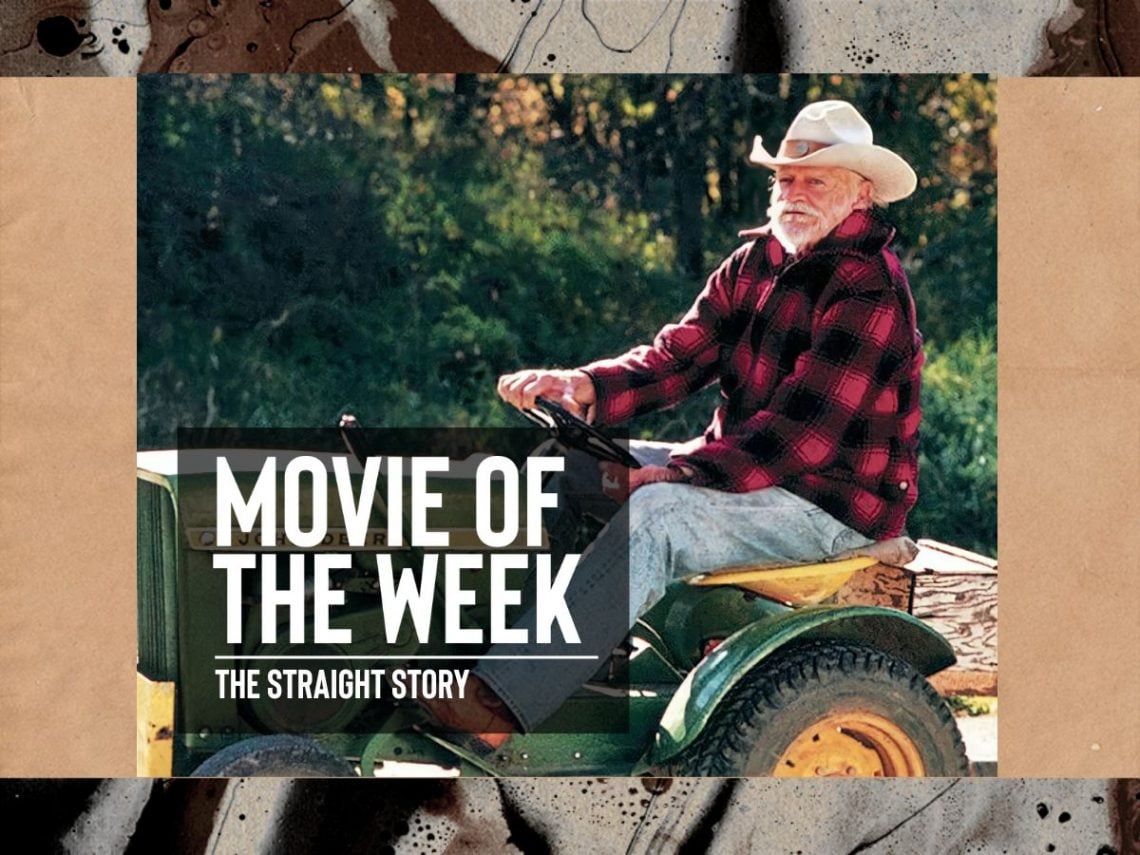
Movie of the Week: ‘The Straight Story’ – David Lynch’s most enlightening movie

“The worst part about being old is remembering when you were young,” Alvin Straight utters to a bunch of pigskin-tossing youths in David Lynch’s unusual collaboration with Disney in 1999 for the all-American drama The Straight Story. Teetering on the border of avant-garde, as if situated in the next town over from the Lynchian Twin Peaks, this linear story from the modern master of surrealism is the filmmaker’s most enlightening work of art.
Dramatising a real-life event that occurred in 1994, when an elderly man named Alvin Straight drove his tractor 250 miles to visit his ailing brother, Lynch’s movie, penned by John Roach and Mary Sweeney, is a tender celebration of Midwestern American ideals. Fulfilling the dream of American liberty, his voyage across the country is an epic journey but is framed by Lynch as if it is a meandering road movie and a rite of passage for his protagonist.
Living in Laurens, Iowa, Alvin (played with deft naturalism by Richard Farnsworth) is a stubborn septuagenarian and hardy stoic, refusing to take his doctor’s advice of using a walking frame when he falls over in his kitchen, opting to use two canes instead. Shortly after he receives news of his brother’s illness, Alvin ponders the arduous cross-country journey with the same American optimism as The Swimmer’s Ned Merrill (but without the arrogant bravado) and sets sail to the sound of his lawnmower’s gentle purr.
Fuelled by the trepidation of regret, Alvin sets out on his journey that fatefully ends up being more of a joyful celebration of Midwestern than an onerous, introverted soul search. With recurrent shots of the orange sunset and the ploughing machines that work the surrounding golden fields, Lynch creates a patriotic American love letter, where tirelessly selfless folk support Alvin’s journey across the land.
Washing into his path before flowing away as quickly as they came, Alvin comes across a young pregnant woman who’s fled home, a pair of young cyclists basking in their youth, and Verlyn, a WWII veteran who recalls his trauma with a quivering throat. Though each experience is fleeting, every conversation is treated with the same time and care, creating a mosaic of rural American life that sways in melodic harmony to the accompanying music of Angelo Badalamenti’s extraordinary soundtrack.
Without the foreboding ethereal twangs of his iconic Twin Peaks soundscape, Badalamenti’s work on Lynch’s wildly different tale rings with the same American sentimentality as the instrumentals of Woody Guthrie or Pete Seegar. Supplementing the film as if the music of a genuinely talented guitarist around a starry-skyed campfire, the work of Lynch’s greatest musical collaborator excels beyond expectation.
Such helps construct what feels like a genuinely enriching filmmaking experience that takes the profound surrealism of Lynch’s work and spreads it thinly across its canvas, telling a story that delves into the duelling complexities and innate desires of human life. Indeed one of the filmmaker’s most strict and poetic pieces of cinema, The Straight Story is an emotional, heart-wrenching ghost story in reverse, following a protagonist who faces his demons before they have the chance to haunt him forever.
