


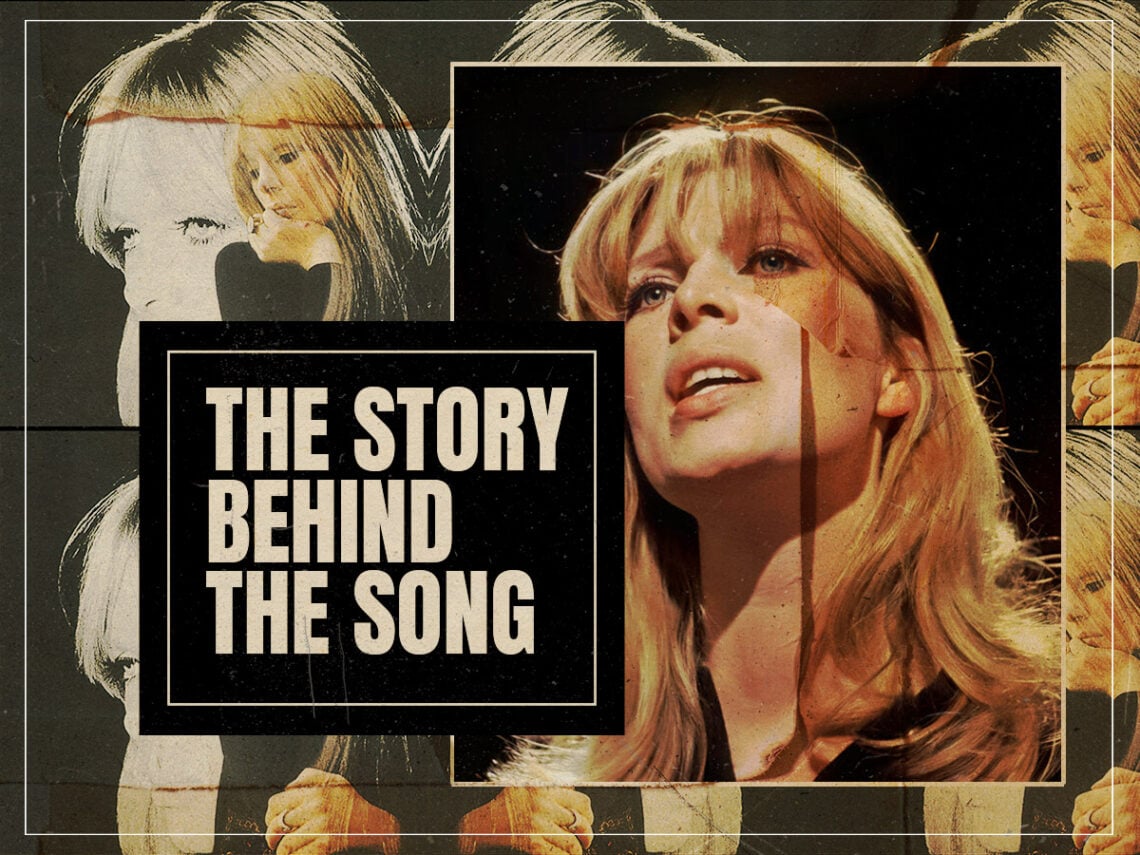
The Story Behind The Song: The contrasting origin of Nico’s ‘These Days’

Nothing feels as heavy as youth. In those in-between years, once childhood has been gone, adult freedom hasn’t arrived yet, and everything seems so sharp. Love is all-consuming, heartbreak even worse. Letdowns feel catastrophic as even small failures appear as the end of the world. Disappointment perhaps hits hardest as it lingers like a cloud, raining on the heads of teenagers everywhere as they wait for their world to start. ‘These Days’ sums it up perfectly as while it was popularised by Nico, the track was written by a teenage Jackson Browne.
For anyone who tries to doubt that Browne would write such a song so young, you really only have to reflect on the lyrics through the eyes of your own teenage self. The track speaks to a kind of end-of-the-world view that only a 16-year-old could reach, tracing back through regrets and slip-ups without the maturity to contextualise or soften the disappointment.
“These days I seem to think a lot / About the things that I forgot to do / And all the times I had / A chance to.” It feels like a laughable comment for a 16-year-old to make. But at some point or another, we all knew that feeling and how heavy it was back then, when your exam results felt utterly defining or whether that person fancied you back could very well determine whether your life would live up to its potential or not.
“To me, it was not a heavy song or particularly revelatory,” Browne said of the song. “It was just telling my truth, the truth of my life.” When he first put the track down as a young songwriter, it was a tale of small teenage disappointments. But when the first recorded version was released, picked up by Nico for her debut album, it was transformed into something bigger and darker.
In Browne’s own early demo of the song, it all sounds a lot lighter. His folk guitar gives the track a rambling feeling, where that opening line of “I’ve been out walking” feels more like a thoughtful stroll than a weighty walk off a cliff. With his more joyful acoustic guitar strums, the demo track seems to be a perfect balance of hope and disappointment, sadness and nonchalance. It sounds like a track that looks at the hard moments in life but moves on. In short, it sounds like a man singing the troubles of his youth but moving on and up through them.
All of that stands in stark contrast to the better-known version recorded by Nico. Unlike Browne’s country-twanged voice, Nico’s is cold and inexpressive. Very little emotion comes through in her steely performance, heightening this sense of numbed-out depression that colours her take on the track. It was a feeling that they decided to lean into fully.
When it came to crafting Nico’s 1967 debut, Chelsea Girls, tracks were picked from a crack team of writers that included Browne alongside Bob Dylan, Lou Reed and John Cale. At the time, Browne was romantically involved with the singer, so was brought into the project to contribute several tracks in the end. While ‘The Fairest of the Seasons’ and ‘Somewhere There’s a Feather’ were written for the singer by the musician, ‘These Days’ was picked out of his archive, spotted for having something special in its unique mix of hope and hopelessness.
The project was overseen by Andy Warhol, who was acting as The Velvet Underground and Nico’s manager at the time. The transformation from folk song to modern masterpiece was really his doing, as he directed that the twanging acoustic guitar be switched for the now well-known electric guitar finger-picking. Along with the addition of strings and flutes, the finished result sat somewhere between chamber pop and folk, existing in this cold yet rich space that the Germanic singer’s voice captured perfectly.
That being said, Nico herself considered the track unlistenable. “I still cannot listen to it, because everything I wanted for that record, they took it away,” she said of the whole album. “I asked for drums, they said no. I asked for more guitars, they said no. And I asked for simplicity, and they covered it in flutes!” As she first heard Browne’s own early take, perhaps if she’d had her way, it would have stuck closer to the folk original.
But Nico’s iconic version rewrote the meaning of Browne’s song. Her performance is so unique, being somehow both utterly emotionless yet so full of feeling, that it’s coloured the track with a deeper meaning. Without any inkling of expression in her vocal delivery, all of the light is shone onto the words themselves, pushing Browne’s youthful inner conflict into a strangely clinical spotlight.
It sounds like it shouldn’t work, but the coming together of melodramatic words versus a stunted delivery lands on this intoxicating result that has endured as a beloved track for decades. While it started as a simple ditty written by a schoolboy, Nico’s matured air turned it into something darker, sadder and perhaps more enduring as it extended beyond youth.
