


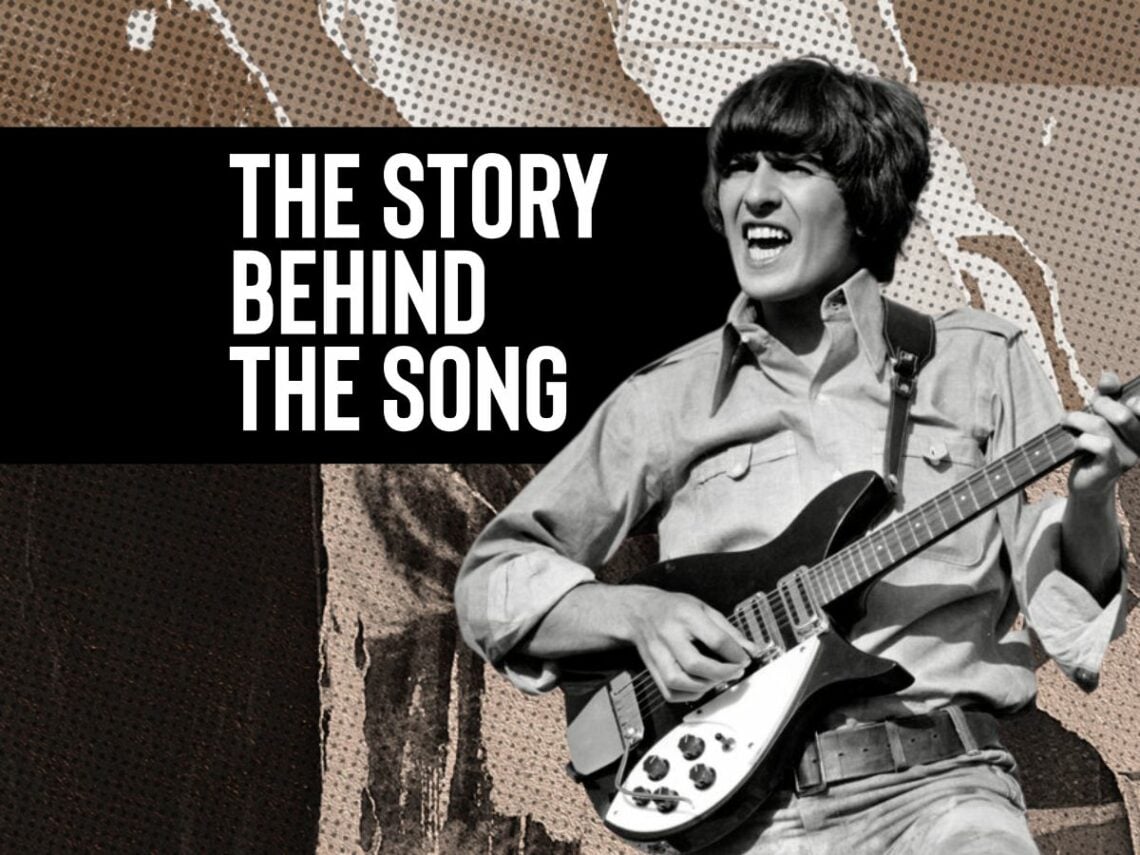
The Story Behind the Song: The Beatles’ lamenting ode, ‘Taxman’

George Harrison was unhappy. By 1966, The Beatles were far and away the most popular band to have ever existed. Millions of fans listened to their music, bought their albums, and came to see their concerts. The sudden influx of money was overwhelming, especially for four working-class boys from Liverpool. But Harrison wasn’t seeing as much money as he probably should have, and it wasn’t just because of the pitiful contracts that The Beatles had with their manager, Brian Epstein, and their record company, EMI. It was also because of the tax structure in Britain during the 1960s.
“I had discovered I was paying a huge amount of money to the taxman,” Harrison said in the Anthology book. “You are so happy that you’ve finally started earning money – and then you find out about tax. In those days we paid 19 shillings and sixpence out of every pound, and with supertax and surtax and tax-tax it was ridiculous – a heavy penalty to pay for making money. That was a big turn-off for Britain. Anybody who ever made any money moved to America or somewhere else.”
At the time of the song’s writing, the British government was controlled by the Labour Party, headed by Harold Wilson. Wilson implemented a progressive tax initiative that saw the wealthiest individuals pay as much as 90 per cent of their earnings back to the government. The same laws would later cause acts like The Rolling Stones to become tax exiles, but instead of moving to another country, Harrison decided to write a song about it.
“‘Taxman’ was when I first realised that even though we had started earning money, we were actually giving most of it away in taxes,” Harrison wrote in his autobiography I, Me, Mine. “It was and still is typical.”
After primarily serving as a lead guitarist and backing vocalist, Harrison had established himself as a songwriting peer to John Lennon and Paul McCartney. He contributed the self-written ‘Don’t Bother Me’ to With The Beatles, but Harrison then went two albums without a songwriting credit. Help! saw Harrison get back on the horse, contributing the songs ‘I Need You’ and ‘You Like Me Too Much’. The follow-up, Rubber Soul, continued the trend with ‘Think For Yourself’ and ‘If I Needed Someone’. At that point, Harrison was still looking for some refining from his bandmates.
“I remember the day he called to ask for help on ‘Taxman’, one of his first songs,” Lennon told David Sheff in 1980. “I threw in a few one-liners to help the song along, because that’s what he asked for. He came to me because he couldn’t go to Paul, because Paul wouldn’t have helped him at that period. I didn’t want to do it. I thought, ‘Oh, no, don’t tell me I have to work on George’s stuff.’ It’s enough doing my own and Paul’s. But because I loved him and I didn’t want to hurt him when he called that afternoon and said, ‘Will you help me with this song?’ I just sort of bit my tongue and said OK. It had been John and Paul for so long, he’d been left out because he hadn’t been a songwriter up until then.”
Revolver would be Harrison’s true coming out party as a songwriter. Lennon had been experiencing a spell of writer’s block, allowing Harrison to contribute an unprecedented three songs to the new LP. Along with ‘Taxman’, Harrison also wrote and sang the Indian raga ‘Love You Too’ and the psychedelic ‘I Want To Tell You’. The fact that Harrison could write a song good enough to lead off a Beatles album was a sign that the guitarist was gaining more respect and appreciation from his bandmates.
Pulling inspiration from the funk and soul music coming out of America at the time, Harrison composed a thorny and slightly dissonant chord progression for ‘Taxman’. When he brought the song into the studio, Lennon and McCartney originally sang a frenetic set of backing vocals centred around the phrase “Anybody got a bit of money?” It was later decided that Wilson should get a direct should out, along with Conservative Party leader Ted Heath, who became the “Mr. Wilson” and “Mr. Heath” referenced in the countermelody.
The track was almost finished when Harrison became stuck on the guitar solo. For years, the other members left the tasks of guitar solo solely to Harrison. However, McCartney had begun to contribute more solos as the band explored the studio on Help! and Rubber Soul. While Harrison struggled to produce an adequate take, McCartney began sharing his ideas for the part. Harrison suggested that McCartney give it a go himself. Although engineer Geoff Emerick claimed that the band’s primary guitarist “couldn’t even do a proper job” on the solo, Harrison and McCartney remembered the solo as being more amicable and diplomatic.
“I was pleased to have Paul play that bit on ‘Taxman,'” Harrison told Guitar Player in 1987. “If you notice, he did like a little Indian bit on it for me.” McCartney also felt that Harrison was easygoing about the solo. “George let me have a go for the solo because I had an idea – it was the early Jimi Hendrix days and I was trying to persuade George to do something like that, feedback-y and crazy,” McCartney told Rolling Stone in 2006. “And I was showing him what I wanted, and he said, ‘Well, you do it.’”
‘Taxman’ would end up being the leadoff track on Revolver, greatly increasing Harrison’s standing in the band. The album’s release came just a week before The Beatles’ final tour of America, but none of the album’s songs found their way into the setlists. The increasingly complex nature of the band’s work would have been impossible to replicate on stage, even though a song like ‘Taxman’ would have been relatively straightforward. Instead, Harrison sang ‘If I Needed Someone’ in his designated lead vocal slot of the show.
More than 25 years after the song’s initial release, Harrison revived ‘Taxman’ during his final live shows as a part of his brief tour of Japan with Eric Clapton in 1991. While on stage, Harrison commented on the evergreen nature of the song, observing that there will always be a “Taxman” no matter the time or place. It was a fitting look at one of the few human experiences that everyone can relate to, condensed into one of The Beatles’ funkiest and most explosive tracks.

Never Miss A Beat
The Far Out Beatles Newsletter
All the latest stories about The Beatles from the independent voice of culture.
Straight to your inbox.