

Unmitigated chaos and melting clocks: The dangerously surreal life of Salvador Dalí
Read More


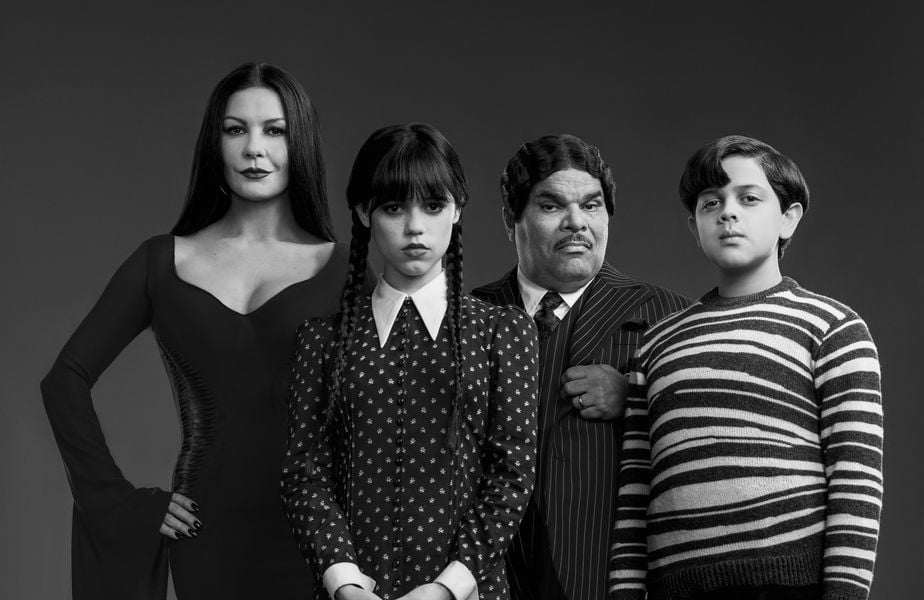
When The Addams Family creator Charles ‘Chas’ Addams sat down for his portrait, the picture by which the world would remember him, he took the helmet off of the knight behind him, flipped open the visor, and donned it himself. He was a playful man with a subversive edge. So was his wife—when he died of a heart attack in his stationary vehicle aged 76 in 1988, she remarked, “He’s always been a car buff, so it was a nice way to go.”
By all accounts, he actually wasn’t that much of a petrolhead. Moreover, the comment is sharpened further still given that it arrived in the immediate aftermath of his passing—if you can’t joke about the recent death of your husband, what can you joke about? All this amounts to an evident paradigm that when it came to The Addams Family, creation and creator were one and the same—they’re creepy and they’re kooky, mysterious and spooky, they’re all together ooky, Mr Addams and his Addams Family.
Back in 1938, Addams’ dark irreverence landed like a curveball in The New Yorker. However, this absurdity had a satirical bent. The Addamses, as he referred to them, were an inversion of the ideal suburban aristocrats. They were wealthy misfits who revelled in the macabre without a notion of self-awareness or an iota of a desire to ‘fit in’. In a time when the pervasiveness of white picket American idealism was coming to the fore, these subversive cartoon strips often had folks laughing at the absurdity of the family without fully getting the joke.
After their 1938 debut, 150 unrelated panel cartoons were produced and printed. Then, in 1964, a live-action television show premiered on ABC. While counterculture might have been kicking off in other areas, television was still the living room sanctity of conservative America—progressive satire, disembodied hands, and sinister gallows humour had no place there. However, somehow the series was successful enough to grab a second season. Bearing in mind that this was in an era when you could jot every show on air down on the same slice of A4, that’s quite a feat.
Part of this feat was achieved by the fabled lore kicked up by Addams himself. Pop culture is the cult of personalities and his was a bombastic one. He utilised this new engine of interest in the folks behind the masks to daub his cartoons and subsequent TV show with a manic Van Gogh-like imbuement. When it was a cartoon strip, mystified partygoers would stand there agog and ask those who knew him, ‘Does he really drink martinis with eyeballs on cocktail sticks instead of olives?’ When the TV show arrived, families at home would gossip, ‘Apparently, he sleeps in a coffin and some fans have mailed him severed hands’.
None of these were true, he was just a little kooky and spooky is all, a simple purveyor of the American Gothic, like David Bowie bringing something antiquated back to life to reflect the present. It was a sort of antonym of retrofuturism, he reflected the present by inviting the quirkified past to meet it, and it held such a weird mirror up to American society that it barely recognised itself in it. And it was all unostentatiously hidden under the general haywire humour and artistic aesthetic of the show; some things are just damn great to look at.
This is apparent in the matter-of-fact way that Addams describes the premise: “Gomez and Pugsley are enthusiastic. Morticia is even in disposition, muted, witty, sometimes deadly. Grandma Frump is foolishly good-natured. Wednesday is her mother’s daughter. A closely-knit family, the real head being Morticia—although each of the others is a definite character—except for Grandma, who is easily led. Many of the troubles they have as a family are due to Grandma’s fumbling, weak character. The house is a wreck, of course, but this is a house-proud family just the same and every trap door is in good repair. Money is no problem.”
That rather unassuming summation has had a huge legacy in pop culture. Iconic within the goth subculture, it is a bastion of outsider fashion. It has a feel that has transcended its own family tree, spawning the likes of The Nightmare Before Christmas. And its touchstone for polished productions with a set aesthetic.
However, more so than that, the spooky gang remain the obverse American family on the same dime that sports the Roosevelts on the reverse. And they are just about as pervasive too. They are, quite simply, the archetype misfits of American culture, and that’s a niche that countless others have flooded into since the gates were opened by a waggish rogue hand back in 1964—the dawn of mainstream absurdity.
