


The Story Behind The Song: Patti Smith’s ‘My Blakean Year’

One of the most inspiring facets of Patti Smith‘s artistry is her faithfulness to honouring the artists who paved the way for her to find her voice.
In Smith, all artists – whether you be a writer, musician, photographer or another medium of your choosing – can see a piece of themselves in her endless tributes to her heroes. From her earliest beginnings, leaving New Jersey for New York City in pursuit of becoming a fully-fledged artist, those she admired remained central to her work. Her fascination with and devotion to the written word, in particular, has been her champion for decades, and once she learned the power of setting her writing to the electric guitar, her work found its niche.
Across her poetry, memoirs and music, there are references to the many artists whom she holds dear. ‘Break It Up‘, from her 1975 debut album Horses, was written in tribute to the story of Jim Morrison, mirrored in the Greek myth of Prometheus. The French poet Arthur Rimbaud is engraved into Smith’s artistry, from her literal chant of, “Go Rimbaud!” on ‘Land: Horses/Land of a Thousand Dances/La Mer (De)’ to her first glimpse of his face, when she saw him on the cover of his poetry collection, Illuminations.
“Rimbaud held the keys to a mystical language that I devoured even as I could not fully decipher it,” she wrote of the moment in her 2010 memoir, Just Kids. “My unrequited love for him was as real to me as anything I had experienced.” Each of the artists with whom Smith identified came to rest on a mantle in Smith’s mind, their works being prized possessions that served as continual wells of genius and reminders of the power of art, in both her life and the lives of others.
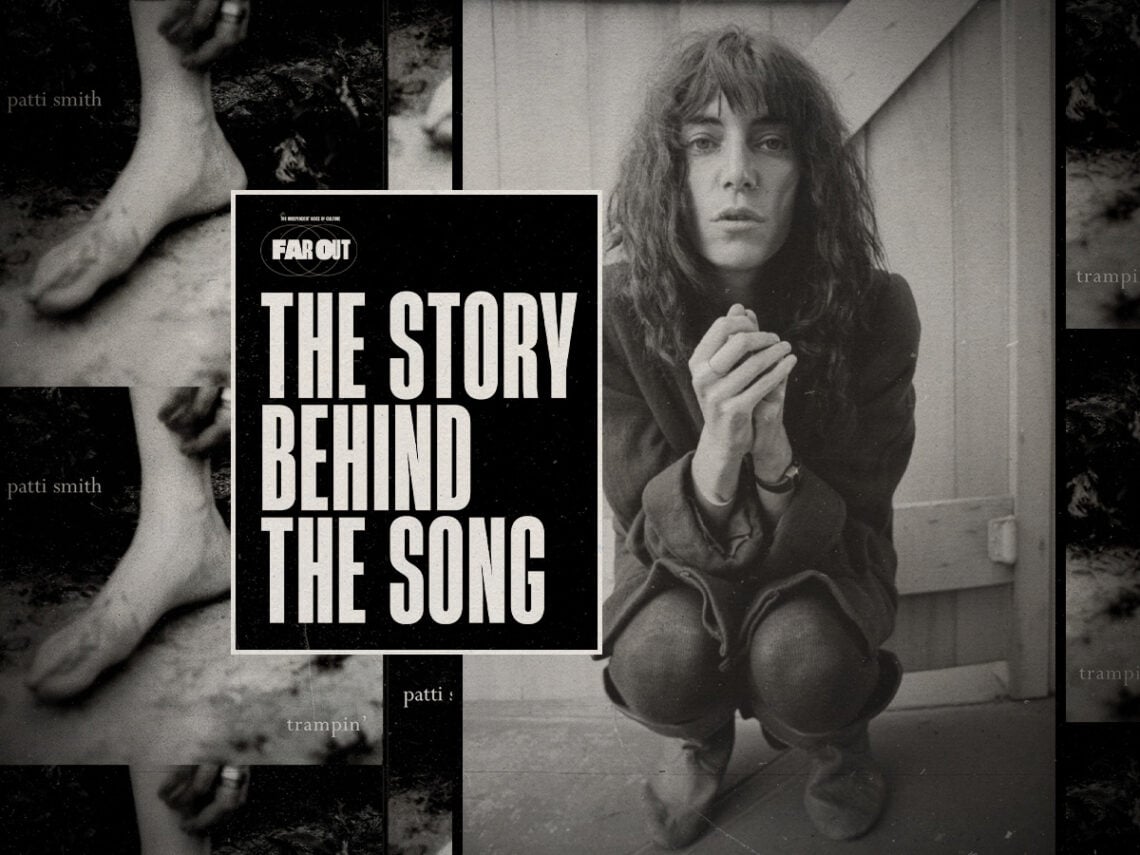
One of her most moving tributes to her heroes came in 2004 with the release of her ninth studio album, Trampin’. The album was created nine years after Smith’s return to being a working musician, as she was simultaneously writing what would become Just Kids, recounting the story of her life with Robert Mapplethorpe, and her embrace of creating visual art. On the album is ‘My Blakean Year’, a moving call to action written in tribute to its namesake, William Blake.
“I wrote ‘My Blakean Year’, again, because I was in a difficult time and I felt – I hate to say it, but I felt sorry for myself,” Smith explained on Democracy Now! in 2015, continuing, “I felt very unappreciated or something, I don’t know why, but I was thinking of William Blake, who was such a great artist, poet, printer, philosopher, activist, who died in poverty, was ridiculed in his time [and] who was almost forgotten. But, in his lifetime and also, such a true visionary, he never let go of his visionary powers.”
Smith opens the song with the reflection: “In my Blakean year / I was so disposed / Toward a mission yet unclear / Advancing pole by pole.” She reckons with a calling, a vocation, and the disillusion that often pervades the life of an artist. But, looking to Blake’s story for inspiration, Smith comes to the realisation that moments of questioning pale in comparison to one’s necessity to create.
On Democracy Now!, Smith spoke of Blake’s struggles throughout his life: how his career as a printer was unstable in the wake of the Industrial Revolution, and how he faced constant ridicule and criticism because of his progressive political views and his championing of women and children against the outdated labour laws of the time. In Blake’s story, Smith found a glimmer of hope in his persistence.
“He did his work, and he did it unapologetically,” she expressed. “And he also did it without remorse or feeling sorry for himself, and just accepted his particular lot and just kept working.”
As ‘My Blakean Year’ progresses, Smith fully realises the value in continuing the work despite hardship, finding power in the ability to transform hesitation into a productive energy. As she proclaims: “Embrace all that you fear / For joy shall conquer all despair / In my Blakean year.”
“Basically, the lesson is that people – other people in the world, I know, really suffer strife,” Smith continued to explain the song’s impetus. “They really know strife; they have to deal with war… disease, poverty, displacement. When I look at everyone around me, I have to really counsel and scold myself when I feel, you know, a little sorry for myself. And so, this song is to remind me of that, but also remember to – when you take on the mantle of an artist or an activist, you know that you’re going to have a lot of derision. So, you have to meet that derision almost with pride… You have to be a happy warrior.”
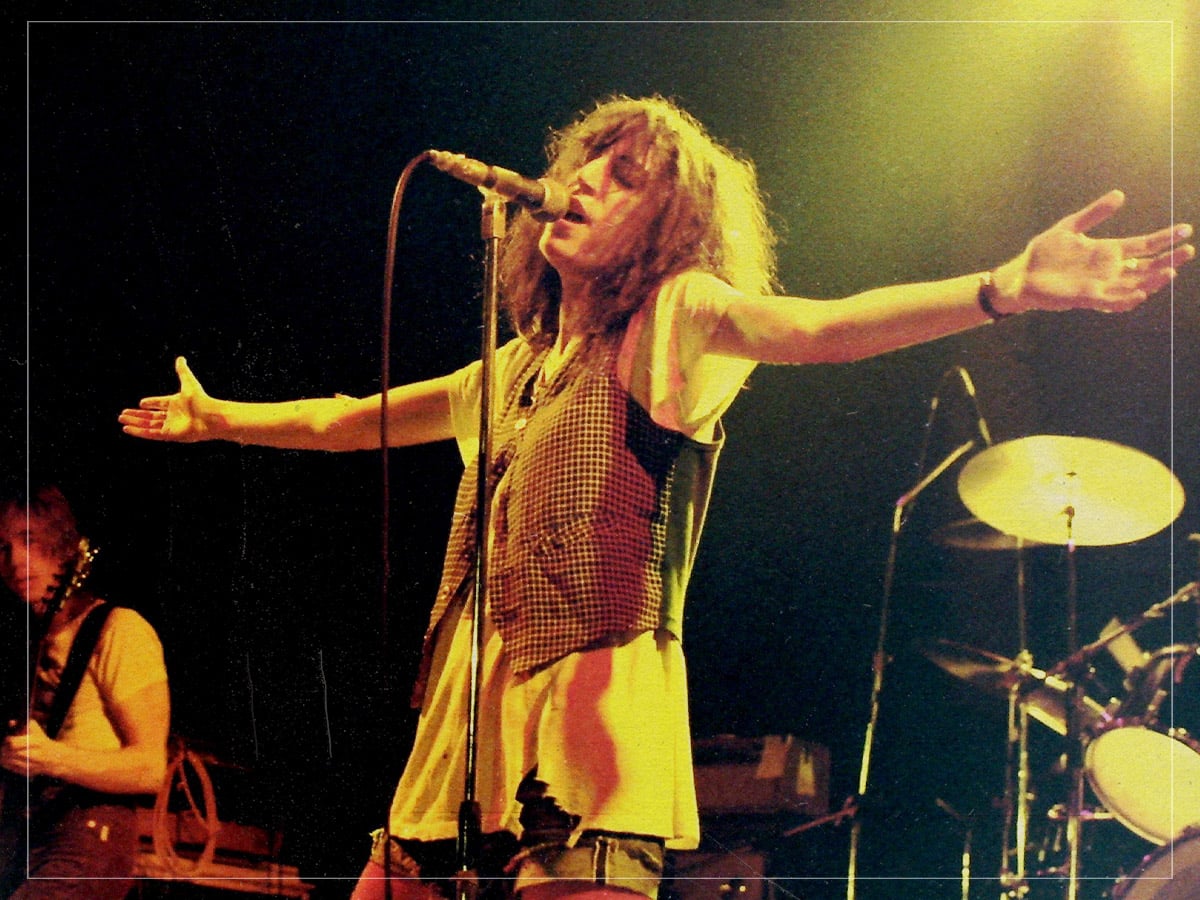
This energy is reflected across Smith’s career: her continued devotion to showing up as a “worker” (as she regards being a musician) and performing her “jobs” (her live performances) is anchored in the sentiment that being an artist is not a mere choice; it is an inexplicable calling that becomes a necessity.
On the anniversary of Blake’s passing in 2024, Smith took to her Substack to reflect on the day, after serendipitously finding pages of the song’s manuscript in one of her old journals.
“I was asleep, and when I woke up, this song was in my head,” she recalls, “I started dreaming it in my sleep, and basically, the message of the song was to remind me that there are far greater strifes than my own.”
Concluding, “And also, if you’re going to take the path of an artist or having any challenging vocation that doesn’t guarantee you fame and fortune, you’re going to sometimes have a hard road. And I just wrote it down. It was like a gift.”
