


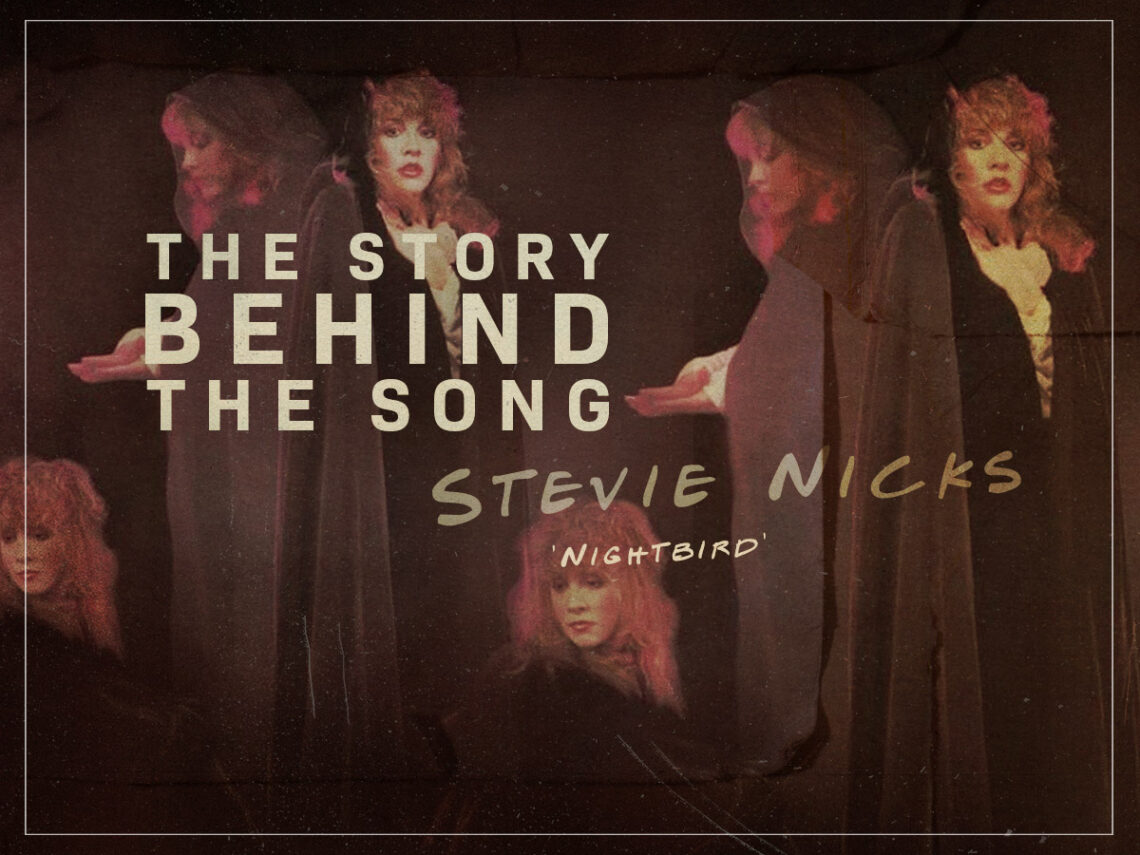
The Story Behind The Song: ‘Stevie Nicks’ ethereal ode to absent friends with ‘Nightbird’

“When I call, will you walk gently through my shadow?” Stevie Nicks sings for the chorus of ‘Nightbird’. The Wild Heart did, in fact, capture everything wild about Nicks’ resilient and overwhelmed heart, from her previous romances to the industry’s toxicity when it comes to female starts. ‘Nightbird’, on the other hand, bred a different kind of mystery: the kind that made her disregard it from her live set lists entirely.
Part of the reason many became so endeared to ‘Edge of Seventeen’ was how passionately it tackled frustrations surrounding the inevitability of death. Though not explicit in its execution of such themes, nor a protest song by any means, Nicks was unflinching in her vocal delivery as she sang about the violence of death, manifested in the image of a “white-winged dove”. The two figures who inspired this feverish outburst were people who meant a great deal to her: her uncle and John Lennon.
Perhaps this is what made The Wild Heart one of her most open and honest works to date, though less so in her desire to lay her soul bare and more in the approaches she embraced to ensure her heart was presented in its most authentic form. Many of these instances occurred when she least expected, like on her wedding day, when she felt compelled to go home and write the beginnings of what would eventually become ‘Stand Back’.
Or maybe this was achieved by allowing her more creative side to flourish, writing about the bittersweet nature of her past romance with Mick Fleetwood and capturing it in the tragic tale of ‘Beauty and the Beast’. However, with ‘Edge of Seventeen’, Nicks knew she had more of the story to tell, more tragedy to divulge, and more frustrations to air.
‘Nightbird’ was borne out of a desire to continue this story, extending on the perils that categorised the beauty of ‘Edge of Seventeen’ and capture Nicks’ grief after losing her childhood friend, Robin Snyder Anderson. Using this as the nucleus, Nicks also explored the negative treatment of female musicians in the industry and how often they are forced to process how hope is merely a fabricated means to make things seem less bad than they actually are.
As she explained in 1983: “This song does extend from ‘Edge of Seventeen’; it’s about the difficulties of female rock ‘n’ roll singers; it’s about my friend Robin, it’s about death, it’s a spirit calling. Wearing boots all summer long is like, always being ready for a flood or avalanche to happen, for the worst to happen.”
Continuing, she added: “Because when you really look at life, all the money, material things and dreams we all search after could not save one small girl.”
Consequently, many of the lyrics explore this bleak outlook and how, in her view, there isn’t much that you can do to tamper with fate when the stars are already aligned. This is also the type of melancholy that follows grief, when things seem entirely out of your hands, and life seems to have taken on a new meaning that you can’t keep up with no matter how hard you try.
On top of that, Nicks has always known first-hand the difficulties of being a woman in rock, and that disillusionment, coupled with navigating the pain of losing someone you love, preludes the ultimate concoction of despair and confusion. As she sings in the song: “And the summer became the fall / I was not ready for the winter / It makes no difference at all.”
Interestingly, Nicks once said the song was one of her favourites in the entirety of The Wild Heart. Darker than ‘Edge of Seventeen’, it feels like the quintessential Nicks record, with a downbeat yet heartfelt melody that feels almost reminiscent of some of her other staples, like ‘Gypsy’. However, she has also only ever performed the song twice upon release since omitting it from her setlist altogether, without much indication as to why.
It’s natural for musicians to retire some songs when they feel they’ve naturally run their course, but something about Nicks’ connection to ‘Nightbird’ signifies that this might not be the case here. There could be many reasons why the singer decided to forgo performances after 1983, but the main one seems as evident as the sounds of Nicks’ heart itself: the song was too intimate, too raw, to revisit more than a handful of times.
