


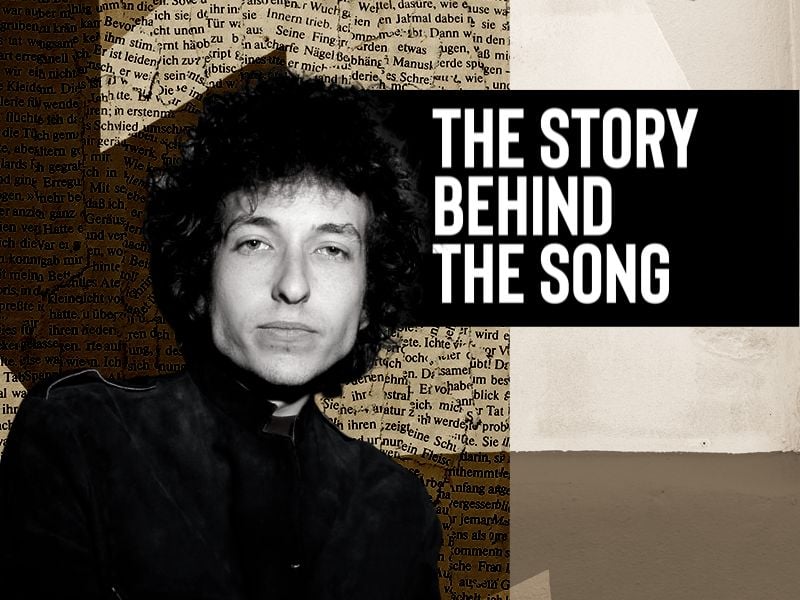
The Story Behind The Song: Bob Dylan’s epic ‘All Along the Watchtower’

In 1967, Bob Dylan was in exile in every sense of the word. Following a motorcycle accident, he had retreated into the shadows. He didn’t turn his back on society, he just took some space to reflect. The result was an album that proved less political. After stockpiling a slew of recordings with The Band, he submitted them for copyright but then decided not to use any of them for the record.
Instead, he would craft some ditties that had no scathing point to make beyond soulfulness. However, in amongst the country-inclined heap was one mystic beast, ‘All Along the Watchtower’. This anthem seemed to say more than many could even comprehend. Complete with a biblical overture, this epic track soon became the most enigmatic in his mystic back catalogue.
In truth, when met with a fine-tooth comb, it reveals so much about the previous 18 months of viewing the world from afar that led up to it. Despite the conspiracy, his motorbike accident did, indeed, occur and minor injuries may have been sustained, but he milked it for all it was worth like a disgruntled employee with a doctor’s note.
He had thought that “everything was wrong [and] the world was absurd” at that time, so why not kick back? Amphetamines had apparently become an increasing part of his life during the period leading to the crash as he dealt with strains of constant touring, Judas chants, and a spell so prolific that even the load-lifting balm of joyous creativity was surely proving a touch taxing. If he had a chance to sit back, recover, kick the habit and indulge in a little spot of self-mythologising, would he have taken it? He was, in essence, taking stock from his own watchtower, and by all accounts, he simply revelled in the peace of gentle existence.
He enjoyed this period of private reconciliation. However, the scene that Dylan conjures from this viewpoint is a desolate one. Riders approaching from afar invoke an image akin to Game of Thrones, where a kingdom is soon to be beset with more bad news from nowhere. There is no relief from this bombardment the joker proclaims, and in the modern world where we are greeted with ten grim news stories a day, that sentiment suddenly seems very prescient. The joker seems to plead: How do you rise above this dower malaise?
Well, the thief has a profound answer. He has been privy to this approaching darkness for a long time, it would seem—long enough to invoke the biblical notion of the hour getting late and the sense of salvation that comes with that. Don’t get excitable and caught up in this dark storm, he seems to say, you only lose your way down that route, you’ve got to move on through it. Then you will also be ready to accept Godspeed and good tidings.
This belief comes from a thief no less. Why did Dylan choose to put such wise words in an unreliable mouth? Once more, this is also plucked straight from the Bible and the ‘good thief’ who was crucified next to Jesus. Therefore, it stands to reason that perhaps the parties chatting in ‘All Along the Watchtower’ are the pair crucified alongside Christ on the hill of Golgotha. In Catholicism, this was not a moment of despair, but one of salvation—the two riders brought good news. Just as Dylan’s own literal fall from grace brought peace to him.
The fact that a thief can see this is symbolic of the virtue of forgiveness. In the context of the society that Dylan released the song into, this provided an important message. The times were tough, but with ‘All Along the Watchtower’ he provided a message that usurped spiritual vapidness and despondent nihilism that pervaded an era of despair in America. In favour, he presented a note of fullness and forgiveness through an attitude of hope and the joyous sequestering of cynicism that comes from looking for solace beyond the despairing insular world of the watchtower.
You can’t just stand on your guarded watchtower and look out at the world with a cynical glare expecting only darkness to blight your walls. You have to draw on your own experiences and know that things aren’t truly as terrible if you grace them with a virtuous disposition. And you can do that too, the song says. You don’t need to picket Dylan’s house as fans had done a few years earlier, you just need to find peace.
Or at least that is how it seems? Maybe it’s about something else entirely, but the force is unmistakeably there to behold. “A song is anything that can walk by itself,” Dylan once said; ‘All Along the Watchtower’ doesn’t walk, it gallops. It even raced right out of the record, released a mere two months after it was recorded as though Dylan wanted to get the message out in a hurry.
Jimi Hendrix soon lassoed the beast and made it his own, so much so that some think that it was his track all along. The guitar God would go on to explain how the track defined Dylan. “All those people who don’t like Bob Dylan’s songs should read his lyrics. They are filled with the joys and sadness of life,” he said. “I am as Dylan, none of us can sing normally. Sometimes, I play Dylan’s songs and they are so much like me that it seems to me that I wrote them. I have the feeling that ‘Watchtower’ is a song I could have come up with, but I’m sure I would never have finished it.”
The result is a masterpiece that Bob Dylan even preferred to his own and amended the structure of his initial track for later live performances to be more like Hendrix’s, explaining: “I liked Jimi Hendrix’s record of this and ever since he died I’ve been doing it that way,” adding: “Strange how when I sing it, I always feel it’s a tribute to him in some kind of way.”

Never Miss A Tale
The Far Out Bob Dylan Newsletter
All the latest stories about Bob Dylan from the independent voice of culture.
Straight to your inbox.