


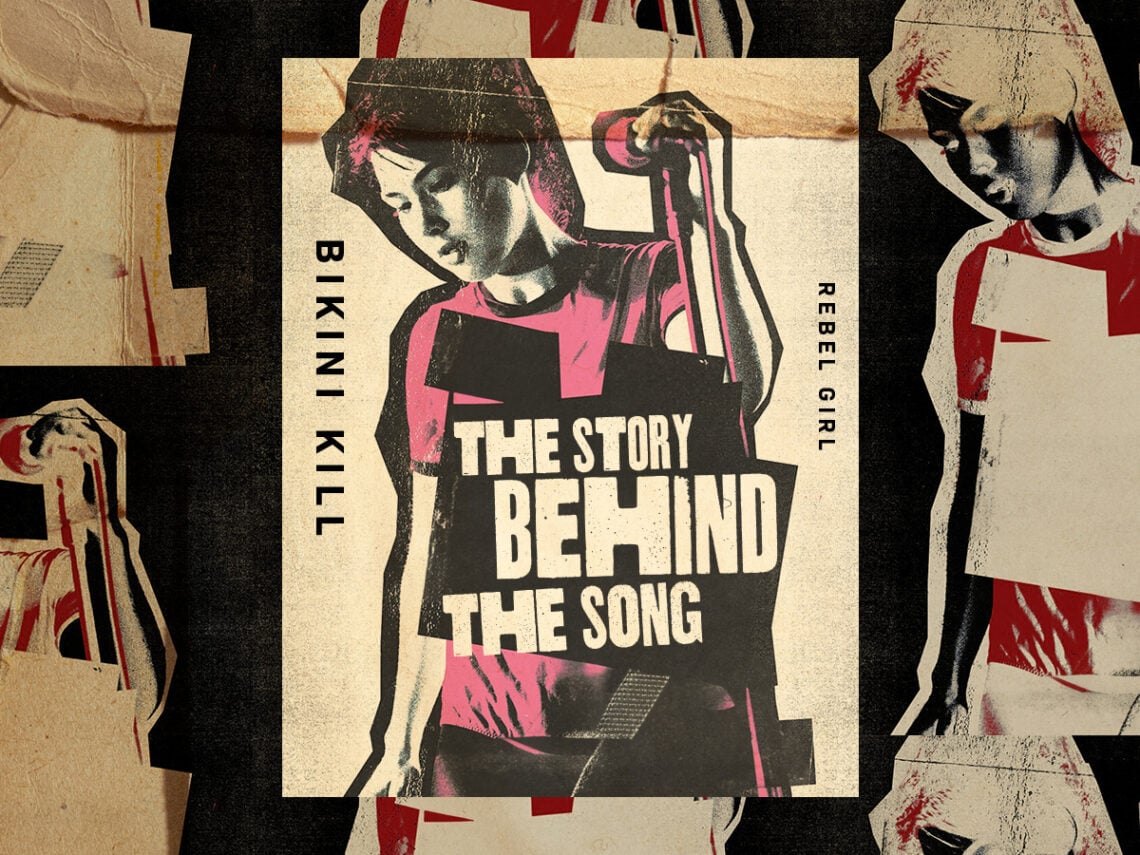
The Story Behind the Song: Kathleen Hanna’s quest to expose the world with Bikini Kill hit ‘Rebel Girl’

It’s frightening to think about what the music industry might look like without Bikini Kill. No, really; in Kathleen Hanna’s memoir Rebel Girl, she begins her story in the most hard-hitting way possible, underscoring her desire to go into her life story without lingering too hard on her traumas. “I want to tell you how I write songs and produce music,” she writes, “But I can’t untangle all of that from the background that is male violence.”
Hanna’s story is marked by moments of immense highs and lows, and it started with being a woman in the creative industry. As a spoken-word poet, her desire to change the world was marred by its desire to remain flawed, with audiences heckling with physical and verbal challenges, pushing her further into her innate drive to expose toxicity in all its forms. “The things I’m writing about aren’t stories,” she continues, “They’re my blood.”
There’s a reason ‘Rebel Girl’ became a song synonymous with the riot grrrl movement. By the 1990s, women in music had more than earned their right to shout about the things that pissed them off, and at the fore of such an opportunity was Bikini Kill. In Hanna’s life, her connection to memory and everything that made her passionate about life was always connected to music, so translating her frustrations and trauma into a song that would stand at the core of a much-needed movement felt like her destiny.
In 1991, Hanna and every woman who had ever wanted revenge were suddenly faced with countless avenues to express as such; some opted for unconventional appearances to express their disdain or sexual identity, while others joined the movement by showing solidarity, even if they presented as quiet participants. In other words, there were many ways to express female rage, and ‘Rebel Girl’ emerged as one of the most essential.
When Bikini Kill first started performing the song, the response was palpable. Even after several performances, audiences beckoned for more, having tasted the power of an unreleased song with a pure, unfiltered, and hardened core. They wanted nothing more than to experience the fervour of feeling in control for once in their lives, even if it spanned a mere two-and-a-half minutes.
Three versions of the song emerged, one of which was produced by Joan Jett, who became endeared to Hanna’s concept after recognising herself in the musician. “They were unapologetic, doing what they wanted to do, and you didn’t see a lot of that, particularly with women,” she noted. Jett even contributed to the main, most familiar version of the song in 1993, playing rhythm guitar and backing vocals before they released it to the broader scene, ready for them to attack like deprived, hungry vultures.
When the song was finally out there, lapping up the blood-tinged winds of a generation who had grown sick of their own oppression, riot grrrl had an anthem to latch onto and fodder for the flame that exploded into every corner of punk. Much like hoisting the sail on a stormy sea, ‘Rebel Girl’ became a battle cry, pushing against the tides of apathy from the hands of a seemingly lonesome captain until the crew caught on and fastened their mud-worn shoes in anticipation.
Perhaps this is why Hanna once told Uncut that the song was about being a “feminist pirate” or, at the least, another way to adventure into unchartered waters. “The power of ‘Rebel Girl’ is that it’s about being a feminist pirate, being an adventurer,” she said. “It’s not about standing at the back and not participating. It’s about loving and defending your friends and the confusion between friendship and sexuality.”
In the song, the power of owning yourself and your own sexual confidence thrives, with women who walk to the beat of the “revolution” as it thuds in the movement of their hips, the sound of their voice, and everything they taste. Now, ‘Rebel Girl’ echoes the stories of thousands, adopting a timelessness that will never perish so long as inequality prevails. As Hanna said: “I have a lot of people I can direct that song to. It can be in a sexy way or just women I would totally throw down for.”
