


Red Elvis and The Singing Revolution: A brief history of how the Soviet Union was folked to breaking point

In 1922, Arseny Avraamov approached the precipice of a purpose-built tower surveying the sprawling metropolis of Baku. He was about to conduct an entire city in song. In a futurist melee, the might of man and machine would turn industry, sirens, choirs, bands, wailing babies, screaming banshees, a blasting salvo of ammunition, car horns, foghorns, cannons and a chorale of the finest musicians in the world into one unified song. This was a revolution. Six decades later, the Soviet Bloc’s biggest cultural coup, Dean Reed – a crooning American defector who played Marxist tunes to packed-out stadiums – was found dead in a lake in East Berlin. Years before his suicide, the disillusioned singer rallied at local police: “I’m as fed up with the system as the other 17 million!”
The contrast between the pro-Soviet scene in its gaudy pomp and the plashy mire of its sorry demise is a paradigm for the music that echoed around the region during its long-drawn existence. And, ultimately, how the distinctly divergent Singing Revolution in Estonia finally helped to topple the empire—an empire that was hoisted by its own culture-suffocating petard and folked into dissolution by the defiant tradition of humble songs. In many ways, the tale escapes the Soviet Bloc entirely and serves as a brief history of what defines the best of modern music.
Folk itself is the music of the proletariat. In many ways, it isn’t all that different to Avraamov’s magnificent ‘city in song’ stunt. The difference is, if it was folk, he would’ve surveyed the city from afar, played a lonely song, and then wandered back off to Moscow via a thousand other lonesome towns. Only to return to Baku one day and hear that his track was caught in the wind, and someone transcribed it and passed it along. In the days before recorded music, this is how songs survived. Outside the grand concert halls where the elite mingled, the rest of the city traded pretty melodies that preserved important stories.
In areas of oppression, this practice is all the more important. Folk and the blues are neighbours in this regard. And there is no finer explanation for the subversive power of lowly guitar music than the one offered up by Lightnin’ Hopkins. The blues legend tells the tale of Mr Charlie’s Rolling Mill: “Once in the country there was this little boy and he stuttered,” Hopkins casually begins.
He continues to tell the story of a pariah who left home after it became clear his mother couldn’t understand his stammering ways. Out on the road with a meagre flower pack full of possessions and a spiritual sack full of woes, the boy wanders his tired legs up to a dingy outbuilding called The Rolling Mill. It belongs to Mr Charlie. So, the boy stammers his way towards asking Mr Charlie if he has a place for him to stay.
Mr Charlie tells him he can stay in his Rolling Mill down the road so long as he sees to it that his stove never catches fire. The boy agrees, and Mr Charlie tells him he never wants to hear from him again unless there is ever a fire. One day the boy is in the Rolling Mill, and the place catches aflame. He races his way up to Mr Charlie’s house to tell him about the blaze. As the boy struggles to spell out the problem in his failing words, Mr Charlie stops him and says, “Look here boy, if you can’t talk it, then sing it,” at which point Lightnin’ Hopkins strums his guitar and bursts into song.
The story holds a metaphorical mirror to the tale of folk and blues. When those suffering on plantations couldn’t speak, they had to learn to sing. It is this encrypted meaning and the humanised expression of these humble genres that elucidated the vital necessity of music, both as a means of communication and as a soulful vessel for exultation. You can make music that isn’t vital all you like and push it as an agenda, but if you suppress this genuine form of expression, then it inevitably finds a way to spring up.
In the Soviet Union, this expressive subversion exploded in Estonia and shook the regime to the ground. Before its independence, Estonia had been in a perennial foreign occupation for centuries. During this time, folk songs helped to uphold old traditions and a sense of identity. They became not only a way to sing when you couldn’t talk but an encapsulation of what it meant to be Estonian amid the disorientating push-and-pull of occupation.
In 1869, the inaugural Estonian Song Festival was held. The festival came to the fore during the Estonian national awakening, whereby the local population rose to the empowering belief that they were a nation deserving of the right to govern themselves. The festival was a symbolic representation of this. It summoned 51 choirs. Songs that had sustained the cultural backstory of a beleaguered country proudly rang out. It empowered the nation’s growing belief, and the songs themselves seemed to be emboldened by the realisation that simple traditions were high culture.
This song celebration included ‘My Fatherland is My Love’ in its repertoire. It contains the following (translated) verse: “My fatherland is my love, I will never leave him, and I would die a hundred deaths because of it! If foreign envy is slandering, you still live in my heart, my fatherland, my fatherland!” Over the years, Estonians would reconvene to celebrate the Song Festival, and this anthem would be sung at the finale once more.
However, in 1947, the Soviet authorities decreed that the old repertoire must now include the ‘State Anthem of Estonia’, ‘The Internationale’, and the ‘State Anthem of the Soviet Union’. This felt like a suppression of what the festival was all about. These forced anthems sullied the traditions of old folk songs that simply seemed to spring up from the nation’s fertile past. In this act, the seed of revolt was sown. This revolt was held down by the brutality of the regime, but such is the way with folk, you simply can’t swat it away. It’s as futile as trying to silence the wind.
Recognising this, the Soviets decided that they would allow the festival to continue but assume soft-power control over it, foist their own agenda upon it, and use it as a tool for promoting their own cultural hegemony. By 1969, the Soviets had even banned traditional costumes fearing that such a visual display of regional individualism could lead towards a call for independence.
This move sparked a show of defiance among the crowd. Folk’s foolhardy defiance is symbolic of people’s power in itself. The crowd noticed this potential as they gathered in their masses. They bellowed out their anthem. The Soviet authorities present tried to drown it out, but it simply wasn’t possible. The people of Estonia sang their national song and celebrated their own traditions.
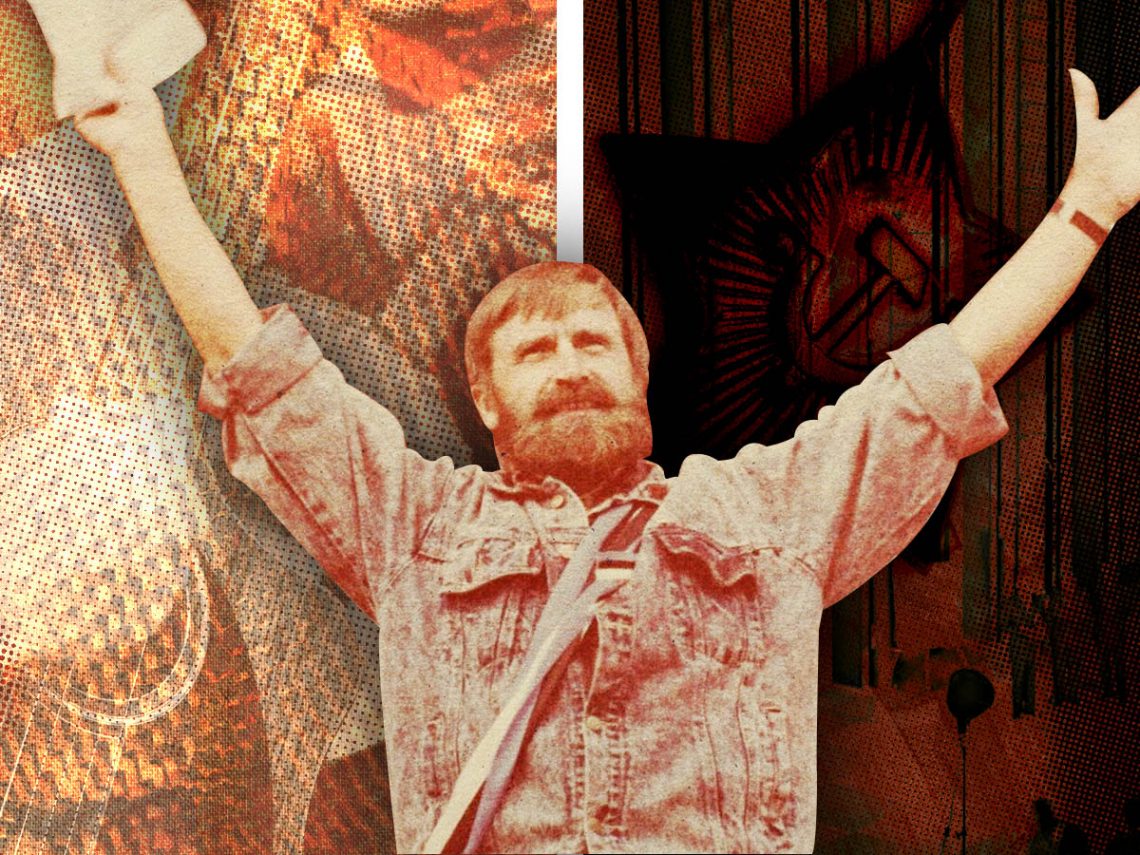
Two years later, over in Germany, a failed American singer arrived to see if he could finally make it as a star. Reed was greeted like a hero. The Soviets could not believe their luck. They had their very own Elvis. “I was sure we had got ourselves a Hollywood star,” Egon Krenz, the East German leader, said. And for a while, they did. Thanks to his matinée idol good looks, foreign appeal, and the express backing of the regime, he played huge shows and became a poster boy for millions of teenagers.
The problem was he was a State-funded facsimile of the real thing. Even his own political beliefs were naïve and wavering, seemingly heavily rooted in his desire to make it somewhere as opposed to an ardent Marxist philosophy. He had been shunned in the US simply because record producers didn’t think he was any good. They thought his act lacked originality in the age of radical counterculture individualists. Ultimately, the same truth would dawn in the Soviet Union once the regime fell on hard times and his backing dwindled. Reed himself grew restless, and like Avraamov before him, he traded conducting cities in song for the shadows of forgotten obscurity.
Avraamov had been a genius in his own eccentric and problematic way, but ultimately, he faded in the same way that Reed did: he failed to truly connect to the people. Avraamov’s city-wide concert was supposed to bring “music to everyone”, but he failed to play them one they knew, so to speak.
Avraamov wrote: “Music has, among all the arts, the highest power of social organisation. We had to arrive at the October Revolution to achieve the concept of the Symphony of Sirens. The capitalist system gives rise to anarchic tendencies. Its fear of seeing workers marching in unity prevents its music being developed in freedom.” However, his magnificent concert seemed to be like trading one dogmatic rule for another. Their voices might have rang out in Baku, but it wasn’t their words or story and the machines that they were singing with symbolised a dangerous futurist portent.
The folk music, however, billowing from The Estonian Song Festivals was all about the people and rooted in the timelessness of defiant tradition. It was a stark contrast to a State-funded fake Elvis or a prodigious eccentric pushing the boundaries of music. These folk songs were the music of the people for the people. Everyone knew them, and everyone could sing them. As the old saying goes, if it was never new and it never gets old, then it’s a folk song. When the waning Soviet power tried to suppress them in 1987, the newly invigorated movement engaged in protest songs en masse.
The Singing Revolution was afoot as one in ten Estonians gathered to sing their patriotic songs despite Soviet condemnation. As Heinz Valk wrote at the time, “A nation who makes its revolution by singing and smiling should be a sublime example to all… With their actions, they have earned the irrefutable right to exist under their blue sky on their hereditary fatherland. I am proud to be a member of such people.”
Four years later, The Singing Revolution succeeded, and independence was granted. They often say that music can’t change the world, it can merely reflect the change that people produce, but folk seems to muddy the boundaries between the people and the music. They are, in short, one and the same and the Singing Revolution is a mark of the defiant power of people as much as it is of music.
