


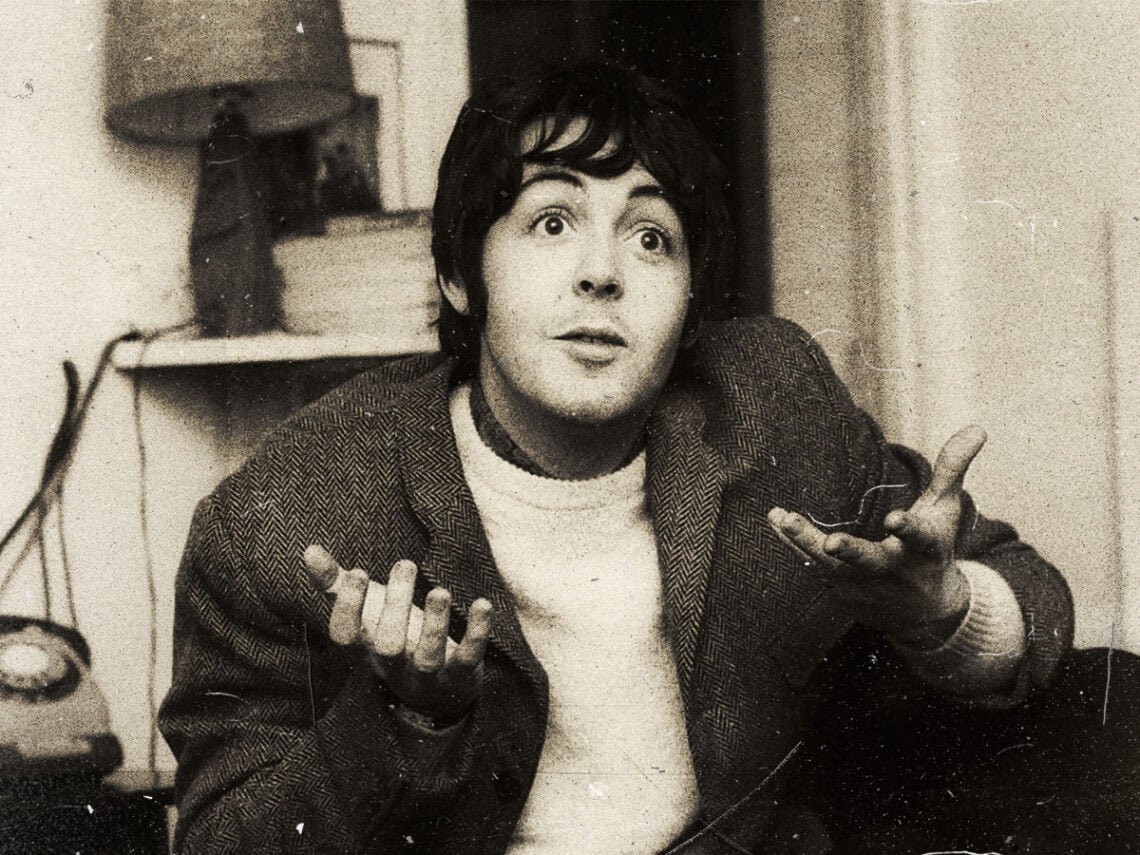
The songwriting style Paul McCartney always wished he had: “I can’t just leave it”

Let’s face it, there’s not an awful lot Paul McCartney can’t do.
When it comes to songwriting, McCartney, along with John Lennon was the pioneer of so many styles. The foundations of modern pop were largely built on the shoulders of the band, as well as the subtle makings of art rock and psychedelic rock. Where McCartney is concerned, it was all about the melody. His acute ability to write coherent yet innovative melodies meant whatever uncharted sonic territory he entered was truly captivating.
The result of all this groundbreaking talent was a generation of musicians who came after The Beatles, profiting from the new, diverse landscape they had created. In the 1970s, psychedelic rock thrived under the flag of bands like Pink Floyd, soul became a rich and expressive genre under the stewardship of Marvin Gaye, and let’s not forget disco, which, despite what rock fans would like to admit, changed the landscape of pop in the decade.
Within all of these new styles, the structures of conventional songwriting were able to change. Disco in particular could reimagine the verse and chorus composition of otherwise conventional songs and instead ride the rhythm of the all-important bassline.
So, as music continued to evolve after the dissolution of The Beatles, and McCartney continued to understand his career in this landscape, he made attempts at personal evolution himself. In the 1970s, he largely stuck to his trusted formula in his acclaimed solo and Wings efforts, with perhaps ‘Arrow Through Me’ being his first true foray into a new style of groove.
In the following decades, McCartney’s career followed the pattern of follower as opposed to leader. Whether it was introducing synths on the 1980s record Press Play or perhaps most recently on the 2020 record McCartney III Imagined, where he enlisted the help of instrumental groove icons Khruangbin, Macca was no longer at the spearhead. He willingly sat in the slipstream of more modern, innovative artists.
But in this new world, and specifically on the original version of that 2020 record, McCartney slowly figured that magic wasn’t always going to be at his fingertips, and there were some songwriting tropes that would act as a kryptonite for him.
“I sometimes envy songwriters when they just repeat the first verse,” he explained, adding, “It can work sometimes if it’s a dance song or a song based on something like a groove or a repetitive expression. I did that recently on the song ‘Deep Down’ from McCartney III. I found a beat and tried to express the same sentiment in different ways. But it can also sometimes come across that you just haven’t bothered to go anywhere else. Normally, I have to bother. I can’t just leave it, I need to finish it and, like my dad used to say, D-I-N – do it now.”
Maybe he can’t do it on his own. But on McCartney III Imagined, where the likes of Khruangbin, St Vincent and Blood Orange all reworked tracks from the original album McCartney III, there was proof that in the realms of collaboration, McCartney could of course achieve that style of songwriting he said eludes him. I guess he just needed a little help from his friends.

Never Miss A Beat
The Far Out Beatles Newsletter
All the latest stories about The Beatles from the independent voice of culture.
Straight to your inbox.