


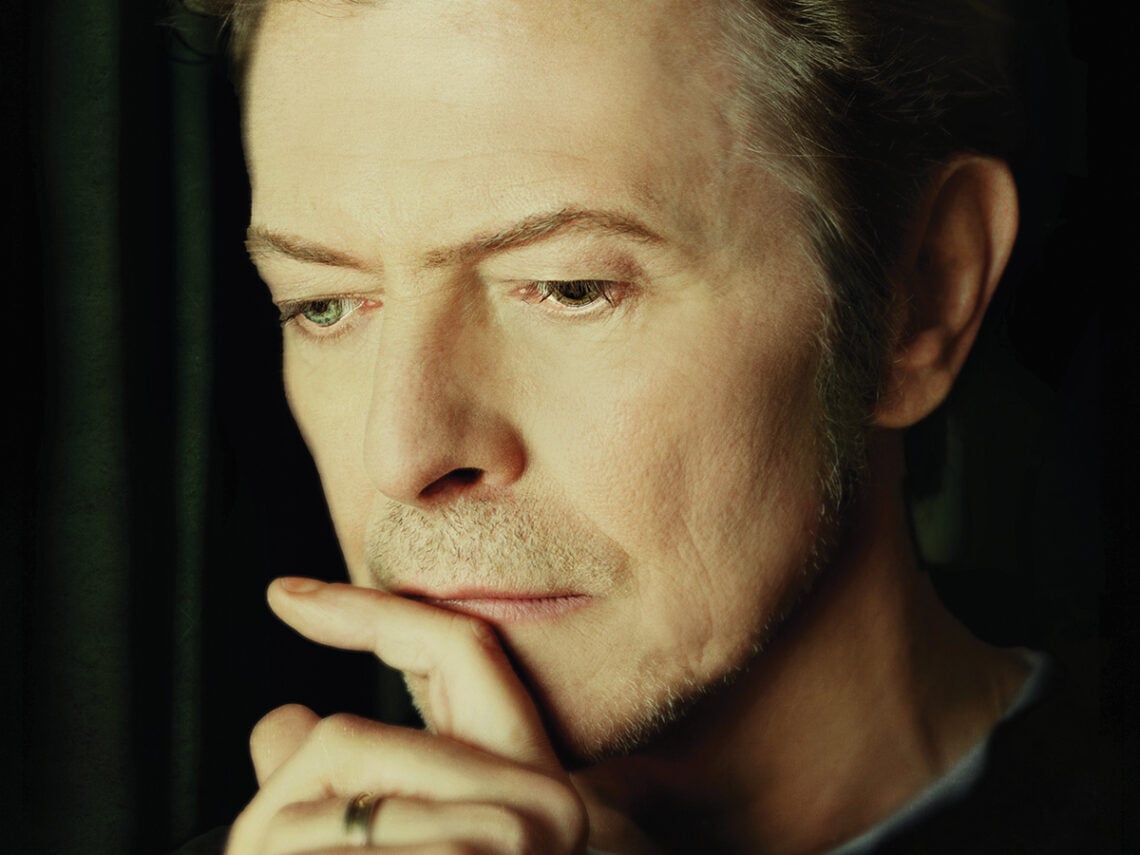
The song David Bowie said was the building blocks of rap music: “Splintered with anger”

Great music always makes you look backwards. Let’s say you listen to Ty Segall, for example, it’s not long until your admiration takes you on a pathway of lineage back to Black Sabbath. But there are few musical paths that are more enjoyable to trace than that of hip-hop.
For me, it started with Kendrick Lamar’s 2015 record To Pimp A Butterfly. So dense in its storytelling, I actually dedicated six months of my life writing my university thesis on it, where I learned just how complex and referential his lyrics were. It opened up a rabbit hole, where the first stop was 1990s Los Angeles, soon followed by its East Coast counterpart and the rivalry that ensued.
Swiftly, I learned just how special a time period this was for music. A genre that had been threatening to dominate the music industry had finally flourished in the ‘90s and was doing so in an inherently innovative way. Samples of soul music gone by were being carefully twisted into a modern palette to help foreground some of the most interesting storytellers in music.
Because of the genre’s somewhat slow burn into the social consciousness of music fans, the history of it is closely studied. In fact, it’s truly difficult to determine the root cause of the genre. The Sugarhill Gang’s ‘Rapper’s Delight’ was indeed the first commercially consumed rap record, but the genre had been invented in more underground circles earlier that decade.
In 1973, the Bronx, New York, artists like DJ Kool Herc, Afrika Bambaataa and Grandmaster Flash were developing the idea of rapping verses over the top of beats that displayed the first essence of sampling. On the decks, DJs would manipulate the percussion and rhythm sections of old funk and soul tunes to provide splices in which this new style of vocal delivery could exist.
Those days in the Bronx represented the purest beginnings of modern hip-hop. But it didn’t just come out of thin air. It was built on the back of what two specific artists were creating in the early part of that decade
Speaking of The Last Poets’ 1970 debut album, David Bowie explained that the record was “One of the fundamental building blocks of rap. All the essential ‘griot’ narrative skills splintered with anger here produce one of the most political vinyls to ever crack the Billboard chart.”
Bowie continued, citing yet another artist and a compilation record of his. “While talking rap, (what?) I can piggyback this great treat with the 1974 compilation, ‘The Revolution Will Not Be Televised’ (Flying Dutchman), which pulls together the best of the formidable Gil Scott-Heron works.”
To prove my point that the lineage of hip-hop history is the most profound and revealing of all, is the fact that all of this can clearly bring me back to Lamar’s 2015 record. Scott-Heron’s titling of his compilation as the Flying Dutchman provides a clear nod to the African-American playwright Amiri Baraka, whose famed play comes under the same name. It’s also a play that is subtly referenced in the lyricism of To Pimp A Butterfly, thus proving that across the half-century of hip-hop’s existence, almost everything has a link.
