


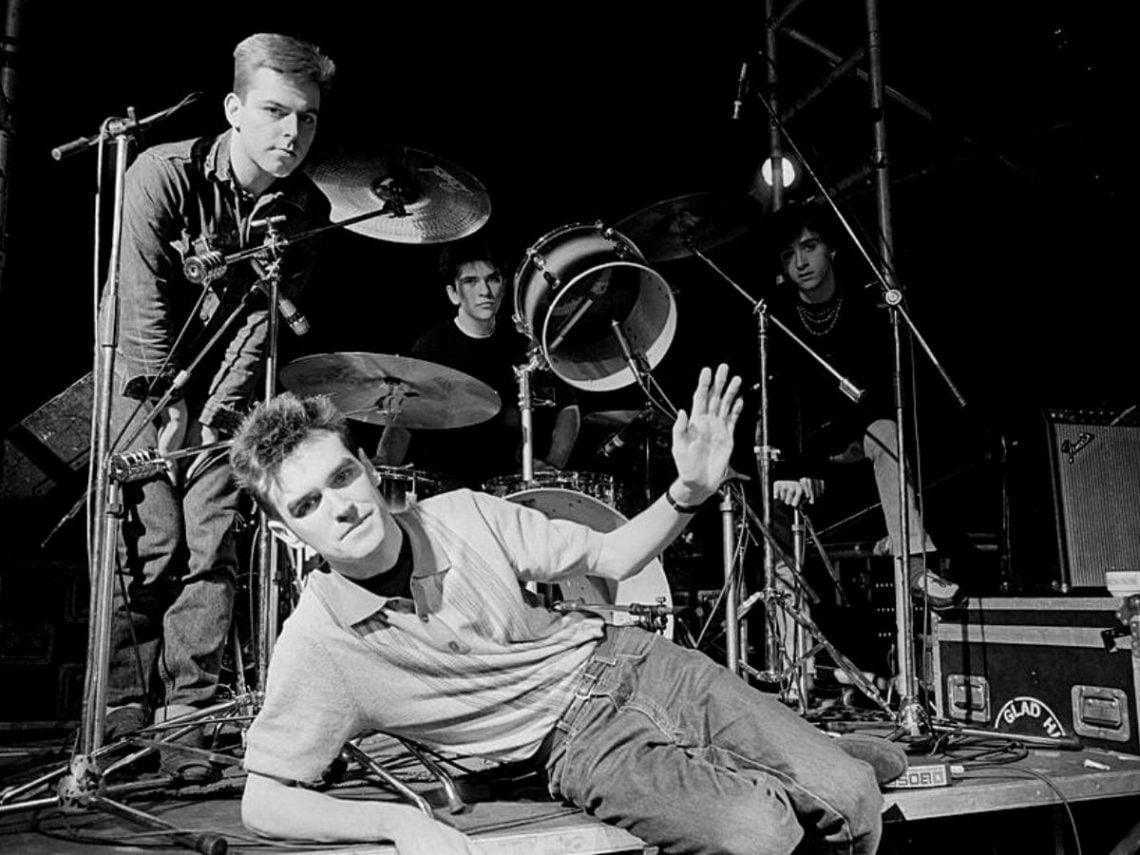
The Smiths song that saw Johnny Marr emulate the style of Nils Lofgren

The Smiths seemed like an entity born out of an insatiable desire to hold higher standards in the music industry. Hotwiring off Morrissey’s innate push for music to be better than ever, alongside Johnny Marr’s genuine intuition about what makes a good song, the band was built on pure instinctive drive from the off, culminating in a sound that was as indescribably endearing as it was lyrically surprising.
Mar has always known that, be it a result of The Smiths’ longevity or not, he was in it for the long haul. A self-proclaimed “lifer”, the guitarist has never entertained the idea of doing anything else, particularly after throwing himself into the world with a new guitar he owned at the age of 13. Playing in several bands led him to co-found The Smiths at age 19, where his playing became the band’s backbone.
Coupled with Morrissey’s witty melancholy, Marr bolstered The Smiths’ sound with an innate intricacy that often oscillated between overwhelming sonic overlays and more considered restraint. However, while Marr gained his reputation from being an integral part of one of the best rock bands in history, he never really felt it would ultimately define his legacy, a ploy he learned from other legends around him.
Growing up, Marr’s love for playing the guitar was the nucleus of his musical venture, beyond the simplicity of wanting to attach him to the success of a singular entity like The Smiths or any other band. Most of those he looked up to made it by being exceptional musicians, regardless of whether they had been a part of several bands or emerged from a different project altogether.
Just as names like Neil Tennant are celebrated more for their work in Pet Shop Boys than Smash Hits, or Ronnie Wood more for his integration into The Rolling Stones than Faces, Marr set himself on a similar trajectory by chasing what he felt was a higher standard, knowing that, if he followed his instincts, his name would be enough to transcend the parameters of any band or project.
This is where his connection to Nils Lofgren began to settle in. Marr had become endeared to the guitarist in the 1970s, watching him go from being a “young, hyperactive ace guitar player” to a “ringer” for Bruce Springsteen. His name mattered the most, as he explained to The Guardian, more than anything he was a part of. But his love for the guitarist also drew him to his particular style, which he allowed to bleed into his own work, even when he was still a part of The Smiths.
According to Marr, the most notable example of this influence comes through in ‘Shoplifters of the World Unite’, in which he knowingly emulated some of his hero’s tricks to enhance the sound. He discussed this parallel with The Guitar Magazine in 1997: “You can hear Nils Lofgren’s influence on me in the solo. That’s all done with false harmonics, which is a steel player’s technique: you touch the strings with a right-hand finger an octave higher than where you’re fretting, and then pluck the string with your thumb.”
Marr might have earned his name alongside Morrissey, but it was his distinctive guitar playing and commitment to musical excellence that placed him among the stars. Even after The Smiths disbanded, Marr never stopped working alongside some of the greatest names in history, knowing that his versatility would always lead the way.
