


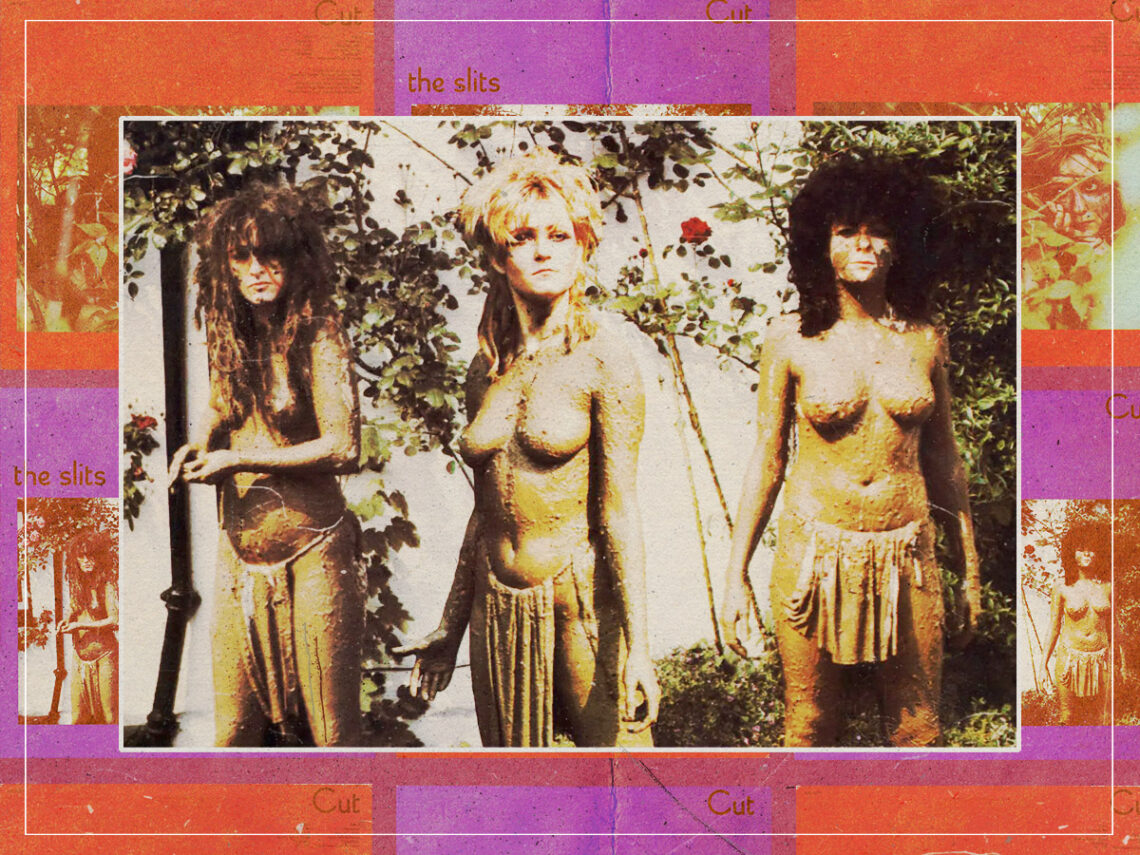
‘Typical Girls’: the song that made The Slits punk’s fiercest pioneers

In 1977, Bob Marley and The Wailers released the song ‘Punky Reggae Party’, a tribute to the London punk scene Marley was utterly taken with. In the original demo of the song, he shouted out by name “The Clash, The Damned and The Slits”. The latter band, in particular, were obsessive Marley fans and were deeply flattered when a tape of this was sent over to bassist Tessa Pollitt. When the record came out, The Slits had been cut from the lyrics. This was because, according to Pollitt and singer Ari Up, Marley had found out that the band were all women.
Thus was the lot for The Slits. Pollitt and Ari, along with guitarist Viv Albertine and drummer Palmolive (Paloma Romero to her mum), had thought they found a space in the same London punk scene that Marley had been so fond of. One that preached the importance of non-conformity, self-expression and spitting in the face of authority, yet still had a fatal, festering flaw in its heart. Despite all the big ideas, it was, at its core, a male-dominated space.
Punks claimed they gobbed on bands to show their respect; they gobbed on The Slits for the other reason. Punks who watched them seemingly found the line that they could not see crossed, that is, supporting women who were as untrained and untamed as their heroes. Those early Slits concerts need to be seen to be believed, by the way. They’re incredible. An utter cacophony of feedback, the barest hint of a beat behind it, and Ari Up giving back every drop of venom they’re getting from the men in the audience with interest.
Even behind the scenes, The Slits were confronted by intense misogyny that flew in the face of all these so-called radicals. In an interview with Loud And Quiet regarding The Slits’ first major tour with The Clash in 1977, Albertine said, “Every day the tour manager would threaten to throw us off the tour, Norman the bus driver had to be bribed daily to let us on the bus.” It was up to the band to take this hostility and make the best of it. This more or less meant that The Slits, even when they signed to Island Records in 1978, were left alone to develop their sound.
In an interview with The Quietus, conducted in 2009, Up reflected on this, saying, “The Slits developed The Slits’ sound. To this day, no one sounds like us, no one. People trying to categorise the music has fucked us up over the years: ‘Oh, we can’t label you, what are you?’ It’s… Slits! A totally new sound. We had no heroes. We had no one to look up to.” Perhaps it was this level of creative freedom that led to them writing a song as genuinely progressive as ‘Typical Girls’ in 1979.
Perhaps inspired by how men seemed desperate to box The Slits into an idea of “traditional femininity” everywhere they looked, both in and out of the music scene, ‘Typical Girls’ rages against what patriarchal standards define as the behaviour of, well, “typical girls”. On the surface, lines like “Typical girls get upset too quickly / Typical girls can’t control themselves” and “Don’t create / Don’t rebel / Have intuition / Don’t drive well” run the risk of coming across like an early example of “I’m not like most girls” feminism.
However, the entire thrust of the song turns with the genius lyric, “Who invented the typical girl?” It’s a question that everyone with a passing understanding of the world can answer. Who invented the typical girl? Men. With that one line, the song becomes something different. Without it, the song could have quite easily been a clumsy expression of internalised misogyny, but with it, it becomes a genuinely progressive act of punching up.
Catchy, daring and utterly unique, in the end, ‘Typical Girls’ sums up everything that makes The Slits such a vibrant, vital band nearly half a century after their formation.

Never Miss A Beat
The Far Out Punk Newsletter
All the latest Punk content from the independent voice of culture.
Straight to your inbox.