


Ride’s six best guitar-playing moments

The late 1980s was a febrile time for music, with alternative rock emerging from the depths and creating a tsunami that left all in its wake. Notably, it was in America that the movement first came to fruition with The Replacements, Hüsker Dü, Pixies, Dinosaur Jr. and R.E.M. all breathing new life into rock music – making it more stimulating than ever before.
The aforementioned groups had such a momentous impact that the culture-changing grunge movement was their most notable offshoot. However, it was much more extensive than just the Seattle scene, with the likes of Hüsker Dü and Dinosaur Jr. significantly impacting the wave of bands that emerged in dear old Blighty at the end of the decade.
Some of the most prominent of these British acts came to be regarded as shoegazers, or more mockingly, as the loose-knit “scene that celebrates itself” by parts of the press. Many of these acts also found themselves on Alan McGee’s Creation Records, with one of the most celebrated, Oxford’s Ride.
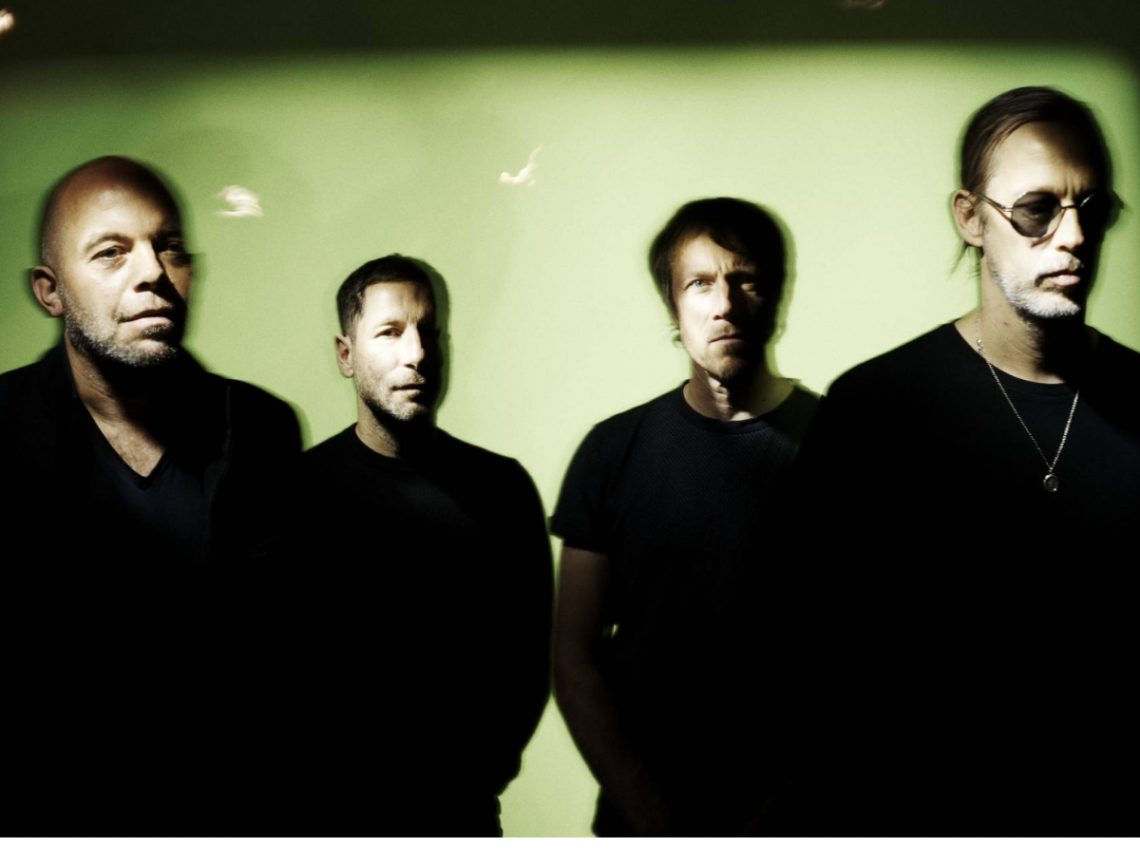
Comprised of Mark Gardener, Andy Bell, Steve Queralt and Loz Colbert, the four-piece fuse the ethereal essence of the shoegazing blueprint with a dual guitar attack that’s second only to their Oxford brothers in arms, Swervedriver.
At points in their work, the punk attitude of Dinosaur Jr. and Pixies can be heard, and in others, the jangly indie of The Smiths and R.E.M. Over their first chapter from 1988 to 1996, the band gradually developed their sound into a more Britpop-leaning form of psychedelia as they slowly fizzled out. However, since the band’s return in 2014, their two latest records Weather Diaries and This Is Not a Safe Place, have seen them branch further into a new realm, containing flecks of electronic and post-punk courtesy of years apart and the influence of producer Erol Alkan.
Ride remains one of Britain’s foremost guitar groups, with Gardener and Bell’s partnership a particularly potent one. Backed by Queralt and Colbert, who make up their own formidable coupling, they have delivered many stellar moments on the six-string. Augmenting their undoubted songwriting ability, this allowed them to rise so meteorically when they first broke through and has continued to keep their fandom so cultish.
Duly, we’ve compiled Ride’s six best guitar moments. Find the list below.
Ride’s six best guitar-playing moments:
‘Like a Daydream’ – Play EP (1990)
First released on the 1990 EP Play, since then, ‘Like a Daydream’ has remained one of the best-loved moments in Ride’s back catalogue. Opening with the barnstorming central refrain and carried by Colbert’s dynamic drumming, Gardner and Bell’s guitar playing is brilliant on this early cut.
From the punchy bar chords to Andy Bell’s plinky work in the verses, ‘Like a Daydream’ is a masterclass in alt-rock guitar work. This point is encapsulated by Bell’s solo, an extended movement that cuts through the mix halfway through and carries it to the conclusion. It’s melodic, ice-cool and compelling, with this early single showing everyone that the Oxford band were here to stay.
‘Dreams Burn Down’ – Smile EP 1990
Perhaps Ride’s best piece, ‘Dreams Burn Down’ is one of the most vital moments in the early chapter of shoegaze, with Gardener’s droning guitar providing a foil to the dream-like sound of Bell’s lead playing.
Of course, the most famous part of the track is the noisy, wah-laden breakdown, which offsets the harmonious nature of the verses.
In many ways, the track is the perfect shoegazing piece, with both the visceral and melodic visited triumphantly. In terms of the guitar playing, both Gardener and Bell shine, with Bell’s work at the climax invariably making the hairs on the back of the neck stand to attention. Never has a Rickenbacker sounded so good.
‘Seagull’ – Nowhere (1990)
No list of Ride’s best guitar moments would be complete without ‘Seagull’, the opener of their 1990 debut, Nowhere. Boasting a droning, heavily psychedelic performance from Gardener and Bell, their guitars shift and swell around each other, creating a sensory experience unlike anything else that was being created at the time.
There are also effects galore, with the band’s typically jangly guitar style matched by some expert use of the wah and delay, the two foundations of the shoegaze sound. Note how the dissonance draws the track to its close; it’s one of the best examples of effects pedals used to enrich the instrument in the shoegaze setting.
‘Leave Them All Behind’ – Going Blank Again (1992)
The most muscular piece in Ride’s back catalogue, there is no surprise that ‘Leave Them All Behind’ is discussed as both their best moment and
as one of the highlights of 1990s guitar playing. The first time hearing the song is akin to having an epiphany, with the wall of sound hitting you like a tonne of bricks.
Teased by the opening arpeggio and Queralt’s bassline, the swirling majesty of Gardner and Bell then bursts through the mix before the best riff they’ve produced kicks in. This is the sound of Ride hitting their creative stride, and it was a fitting opener for their masterpiece of a second album. Added to this brilliance is Bell’s solo, which doesn’t get enough credit; the bends are exquisite.
‘Mouse Trap’ – Going Blank Again (1992)
One of the most overlooked moments of Ride’s career, ‘Mouse Trap’ is undeniably brilliant. Opened by the stabbing chords, the rest of the band then jumps into an all-encompassing piece that is stylistically similar to ‘Like a Daydream’ at points.
From the force of the guitars in the main refrain to the melody of the verse, in terms of the songwriting and guitar playing, there’s a lot to respect about ‘Mouse Trap’. Many wish Ride followed this stylistic route more, but such is life – we can’t always get what we want. If anything, because this sort of breakneck pace is such a rarity within Ride’s work, it only instils the piece with more authority.
‘Grasshopper’ – Grasshopper EP (1992)
It would have been a travesty if the lengthy instrumental ‘Grasshopper’ did not find its way onto the list, as, after all, it is the best reflection of Ride’s guitar-playing power. The song is one glorious cacophony that juxtaposes melody with dissonance and thought-out dynamics with elements of a jam. The use of effects like the wah is precise, creating a droning piece that it’s easy to get lost in. There’s also the punchy riff, the closest Ride ever sounded to Swervedriver, with the crunch and attitude cranked up a couple of notches.
