


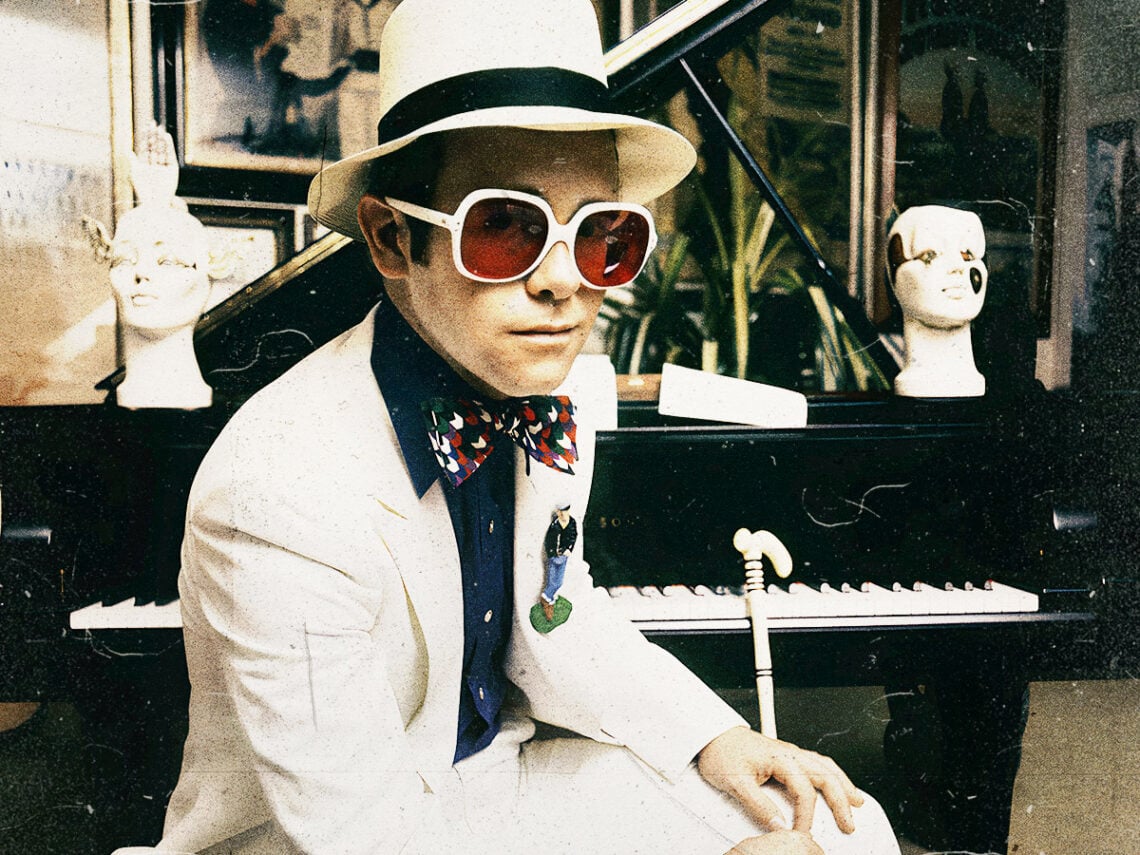
The singer Elton John called the pinnacle of music: “What I wanted to be”

We mere mortals like to think that we have exclusive rights to feelings of imposter syndrome, but the truth is, it comes for everyone at some point. Even the icons as celebrated as Elton John have sat with themselves and questioned the legitimacy of their success.
It’s somewhat hard to believe now, given Elton’s position as an all-time great who can quickly sell out record-breaking crowds, that he ever harboured any insecurity over his talents. But the elaborate and confident performer we see now is one who has developed over time and slowly progressed from shadow-dwelling songwriter to limelight hogging showman.
The showmanship is ultimately what allowed John to become the icon he is. In the 1970s, the music industry was awash with charismatic frontman who had genuinely talented voices that celebrated a broad range of power – think Robert Plant, Freddie Mercury and Marvin Gaye. While they dialled in their showmanship, they had enough vocal talent on the back burner to keep their performances engaging regardless.
While Elton’s vocal chops were perfectly fine, he understood that a more transcendent approach to performing was required. One where the emotion was mined more deeply, to prize out that soulful delivery that became his signature and engage with his piano playing in a more nuanced way. He simply couldn’t turn up to the microphone booth and rely on a bulletproof vocal range to deliver the parts.
So he began to scan around the music industry, and take note of the musicians operating in a slightly different style, by engaging with the personality of their own voice, not replicating the greats leading the way. And so in that pursuit, Elton stumbled on Leon Russell from The Band.
Let’s get one thing straight: Russell was no amateur. But neither was he the sort of showstopping wailer that the industry had become accustomed to, and so his music provided a perfect guideline for Elton, a musician understanding how his vocals could communicate with the soulful sounds of his piano.
He explained, “It was that kind of everything I loved about music, he moulded into one style. The gospel, the country, the soul, the blues and he had it all,” adding, “When I heard Music From Big Pink and The Band album, that changed the way I wrote. When I heard Leon, that was the way I wanted to play. He was the pinnacle for me of what I wanted to be as a piano player.”
Russell guided Elton into a world of heartfelt rock and roll that he later mastered. In the very best Elton tracks, you hear flecks of blues, which quickly traverse into soul, which can similarly flip into a state of raucous rock and roll. But he doesn’t do it with the elaborate grandeur of say a Robert Plant, but with the deep emotional connection of a singer like Russell.
In 2010, the musical gods intervened, and Elton and Russell recorded a joint album together, The Union, where this musical symbiosis was on full display.
