


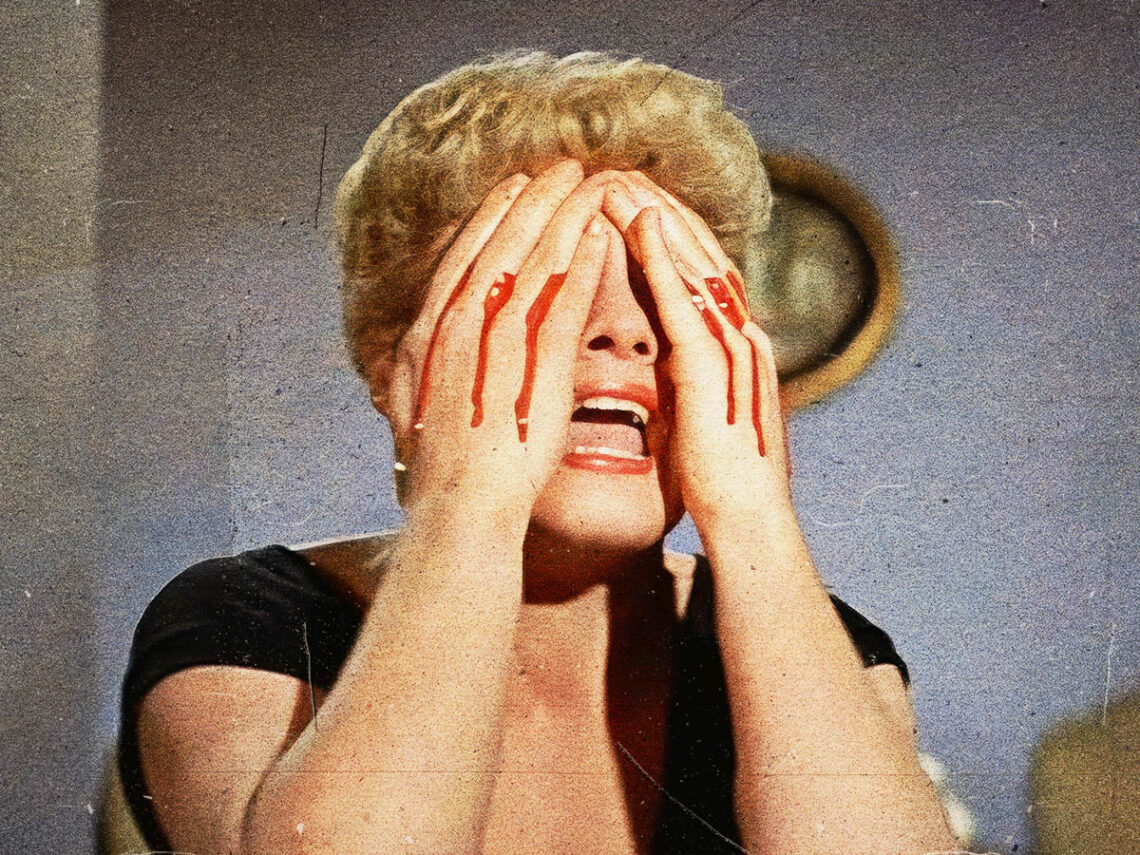
The shocking movie that used hypnosis on its viewers

Way back at the very start of the 20th century, cinema started off as an attraction at a carnival, attracting audiences with the promise of the ethereal ‘moving image’. A century later and this mystical moving image can be found on pretty much every surface you can lay your eyes on, from the phone in your pocket to the watch on your wrist, but cinema still tries to chase the spectacle with the promise of 3D, IMAX and an ‘experience like no other’.
Indeed, modern audiences know what they’re getting into when they purchase a cinema ticket, but throughout the 20th century, the industry was seen as something of a playground of experimentation, where theatres and filmmakers could try out any such gimmick to attract a crowd. The earliest example of this goes all the way back to 1927, when Abel Gance attempted a rudimentary version of widescreen by putting three movie cameras side-by-side for his film Napoleon, resulting in a long horizontal projection separated into three, allowing for multiple points of view.
It’s fair to say that the technique wasn’t exactly loved, but Gance’s audacious attempt at innovation wouldn’t be the first time a maverick filmmaker tried something cinematically revolutionary. Take William Castle’s ‘Emergo’ technique, which involved a plastic skeleton flying above the audience during a scene in 1959’s House On Haunted Hill, or the ‘Smell-O-Vision’ gimmick that was utilised for the appropriately named 1960 film Scent of a Mystery, which speaks for itself in practice.
Still, none of these aforementioned gimmicks compares to how director Arthur Crabtree aimed to lure in audience members to his 1959 film Horrors of the Black Museum, with the filmmaker preceding his film with a 13-minute prologue that featured hypnotist Emile Franchele trying to put the viewer under, donning the gimmick: ‘HypnoVista’.
Speaking about the movie in an old interview, the producer and screenwriter Herman Cohen recalled: “We tested it in a few theaters and the audience went for it like crazy, hokey as it was. It helped make the picture a success, I guess, ’cause people were looking for gimmicks at that time. But when the picture was released on television in this country, we had to take it off because it does hypnotize some people”.
Continuing, Cohen recalled that an unlikely filmmaker was a considerable fan of the schlocky horror movie: “Right now, Martin Scorsese, Steven Spielberg and George Lucas are donating forty pictures to the Museum of Modern Art in New York, and Marty Scorsese has contacted me to tell me that he and the boys want Horrors Of The Black Museum as one of the pictures…They said they grew up on it and just loved it, and they thought there were a lot of inventive things done in the film”.
One of many forgettable horror movies of the era, the horror flick told the story of a frustrated thriller writer who wants something more authentic for his forthcoming novel. In search of something juicy, he decides to hypnotise his assistant to make him commit the crimes that he will profit from. Lacking considerable star power, the film featured the likes of Michael Gough, June Cunningham and Graham Curnow.
