


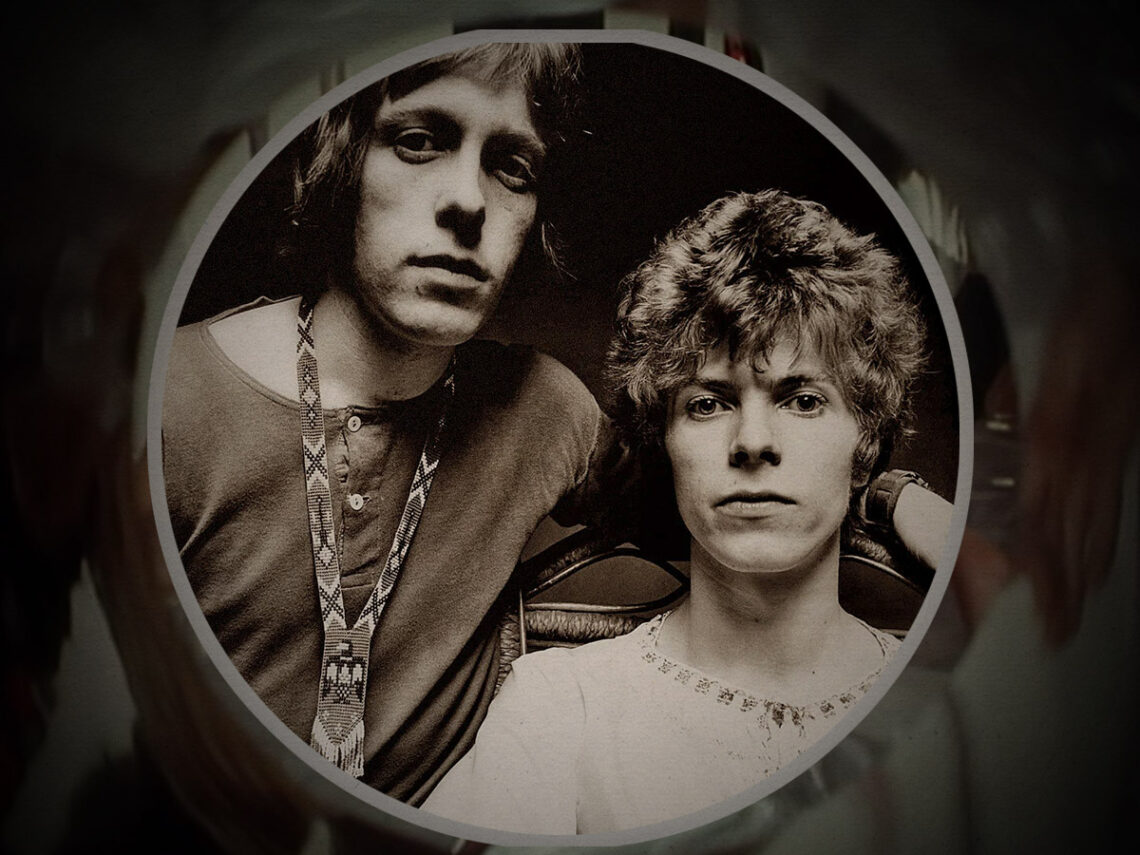
The unassuming Yorkshireman who secretly co-wrote David Bowie’s ‘Space Oddity’

In the humble towns of East Riding, tucked away in the green valleys of Yorkshire’s Northern-Eastern tip, lived a man whose name was not known to many in the wider world, despite the fact that he helped to create one of the most important and best-loved songs in history.
In the mid-1960s, David Bowie was a young man with a burgeoning desire to make an impact. The only thing that matched this internal search for seemingly predestined stardom was an uncompromising artistic will. Granted, it was a core tenet of the whole counterculture movement to defy convention and commercialism in favour of something a little more organically original, but Bowie took that to an extreme.
He was determined to be a star and an “influencer” of the age, but only on his own terms. So, with this unique cacophony of paradoxical motives sounding off in his scrambled psyche, Bowie’s early attempts at making an impact were unmitigated failures.
They might have been failures borne from an unflinching vision, but they were failures all the same. To everyone bar Bowie, the ideas were so dodgy that they seemed predetermined to flop like a walrus from a 20m diving board before they even got off the ground.
One of these ill-conceived outings that Bowie inexplicably thought would launch him to superstardom was the experimental multimedia group Feathers. The project consisted of coupling strange folk-psychedelia songs with mime and dance, performed by a flower-clad trio. Among that trio was Bowie’s first love, Hermione Farthingale (to whom ‘Letter to Hermione’ is dedicated), and John ‘Hutch’ Hutchinson.

Fate had previously brought Hutch and Bowie together through simple happenstance in 1966. A young Hutch left Scarborough behind and ventured to London, as so many did in the mid-60s, with the figurative sun on his back, a guitar under his arm, rambling forwards on a whim of the zeitgeist.
He arrived, as most musicians did, in the famed Marquee Club, where he inquired about whether anyone was looking for a guitarist. It just so happened that Bowie was in need of a lead for his new backing band, The Buzz. Sadly, for David Bowie and The Buzz, gigs dried up as audiences didn’t take to their strange song,s and Hutch had to head home, back to Scarborough, owing to a heavily malnourished wallet.
He saved up a little bit more by picking up odd jobs in East Riding and headed back down to London in 1969, forming Feathers with his old pal. But once Bowie split from Hermione and Feathers were over. Now that they were reduced to a male duo, they set out to be the next Simon and Garfunkel.
During this period, the duo forged an enduring friendship. They also dug deeper into experimental sounds, trying to conjure greater psychedelic depth from the typically humble constitution of two fellows with acoustic guitars. From the outside looking in, an aura of two stoned students fumbling around aimlessly hung over the whole enterprise. But it was during their experiments with diminished chords and cheap cider that they crafted the masterpiece that is ‘Space Oddity’.
While Bowie was always king-in-council over his own ideas, they were often such swirling kaleidoscopes that he relied on the assistance of others to conjure them towards a degree of coherence. This was where Hutch proved invaluable. Although Bowie was a gifted guitarist, Hutch was better and he had enough experience with the jazzier chords to give Bowie the enigmatic sound that he desired.
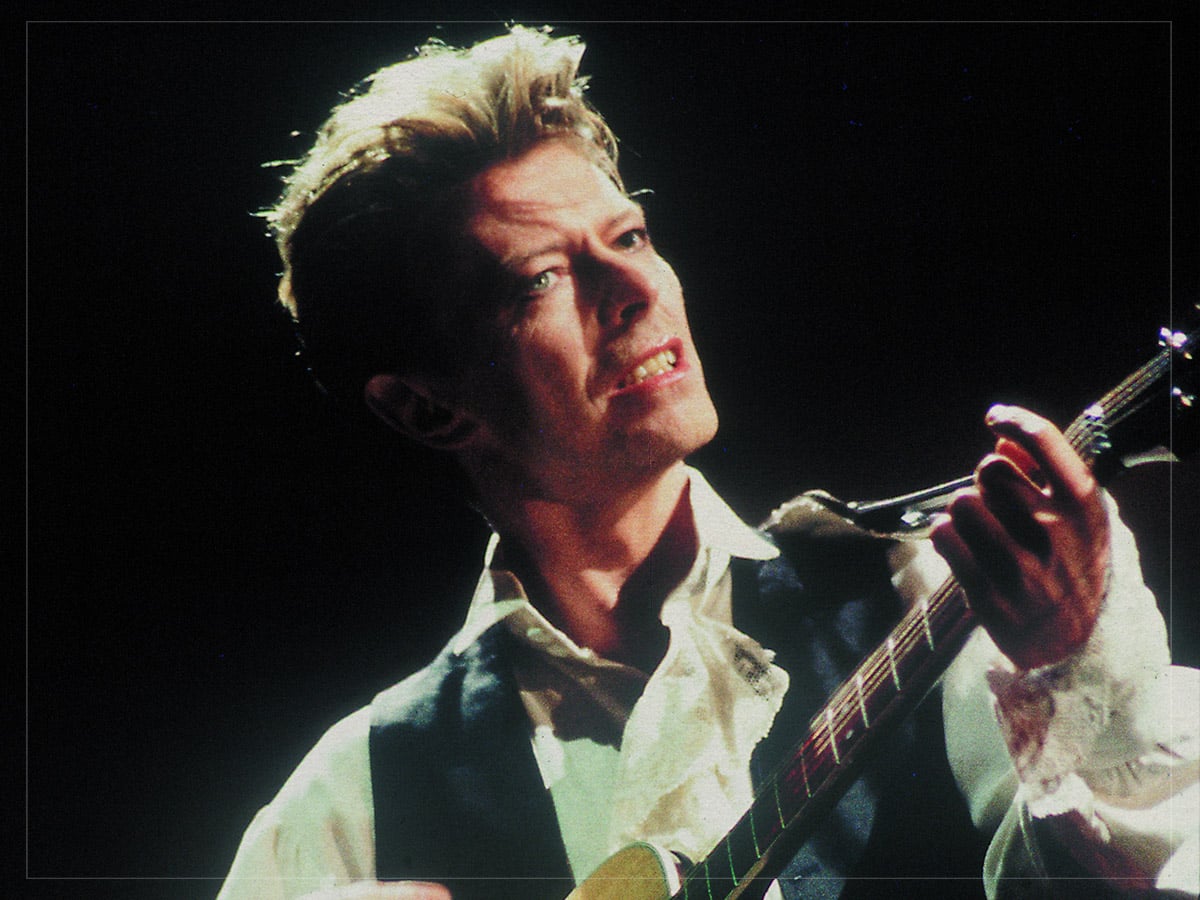
Hutch roused the song to life in the ethereal sonic realm of major sevenths, seemingly befitting of lunar exploration and the launch-off unfurled from there. Right there in the humble setting of a damp-riddled London bedsit, one of Bowie’s budding ideas, that had so often wilted, finally caught the right patch of sun and burst open like some phosphorescent flora from a distant planet. Central to all of this was Hutch, a humble young lad from Yorkshire.
The initial demo of the song is even composed as a duet, whereby Hutch sings the role of ground control and Bowie takes on the eponymous Major Tom. This early take might sound a bit kicked about and in need of some air, but it could still make a naked mole rat’s hair stand on end, and it certainly embodies Bowie’s defiance of mainstream tropes. But it wasn’t quite right, so they kept working on it. That also meant that they weren’t ready to release it as a single and start making money off it.
Hutch would help Bowie out with riffs for several other songs during this period and the pair would often demo tracks of an incandescent folk variety together. Sadly, the fact that pursuing a career in music has never been a reliable engine of income once again played a part and Hutch had to head back home to Scarborough with a starving wallet.
Flash forward a few months and Hutch is at his day job perched idly on a drawing desk when through an open window he inexplicably hears a guy singing “Ground control to Major Tom.” A dumbfounded Hutch fled from his desk and asked the fellow where he’d heard that song he was singing, “Oh it’s on the wireless lad,” was the response.
‘On the wireless,’ Hutch mused. His buddy had made it! That was Bowie on the bastard radio! Hutch, in typical fashion, celebrated rather humbly with a slightly extended lunch break. Many might have hopped back on a train to London to see if they could mosey back in with the breakthrough star that they helped to nurture.
But Hutch just went back to work, content in the knowledge that he had made his own mark on culture after all. Meanwhile, Bowie’s celestial potential began to creep towards superlunary heights clinging to the tail of a rocket in a move that record producer Tony Visconti once called “a gimmick” and a “cheap shot”.
Granted, it may well have been ‘gimmicky’ if it was called ‘Moon Rock Baby’ or something equally glib, but the dark reverie of detachment and the dread of obsolescence are a perfectly Bowie-esque way to tag on to a commercial opportunity like the Moon Landing and disavow its more basic implications with sagacious flair. So, Neil Armstrong might have been taking a giant leap, but it was back in Brixton where a new star was being born.
All the while, Hutch just returned to his desk basking in the sanguine glow of the realisation that his friend finally had a hit… with maybe a slight touch of ‘if only’ zesting the sweet spiritual honey of hearing ‘Space Oddity’ with a touch of bitterness.
Bowie would call on Hutch’s services for tours along the line, and the pair remained friends right up until Bowie’s passing in 2016. Hutch also passed away in 2021. He fleetingly dabbled with music throughout his life, but by and large, he happily resigned himself to being a happy family man in the East Riding area, smiling away every time ‘Space Oddity’ would come on in the local shops and the cashiers wouldn’t have the faintest clue that they were serving a man who co-wrote the classic.
