


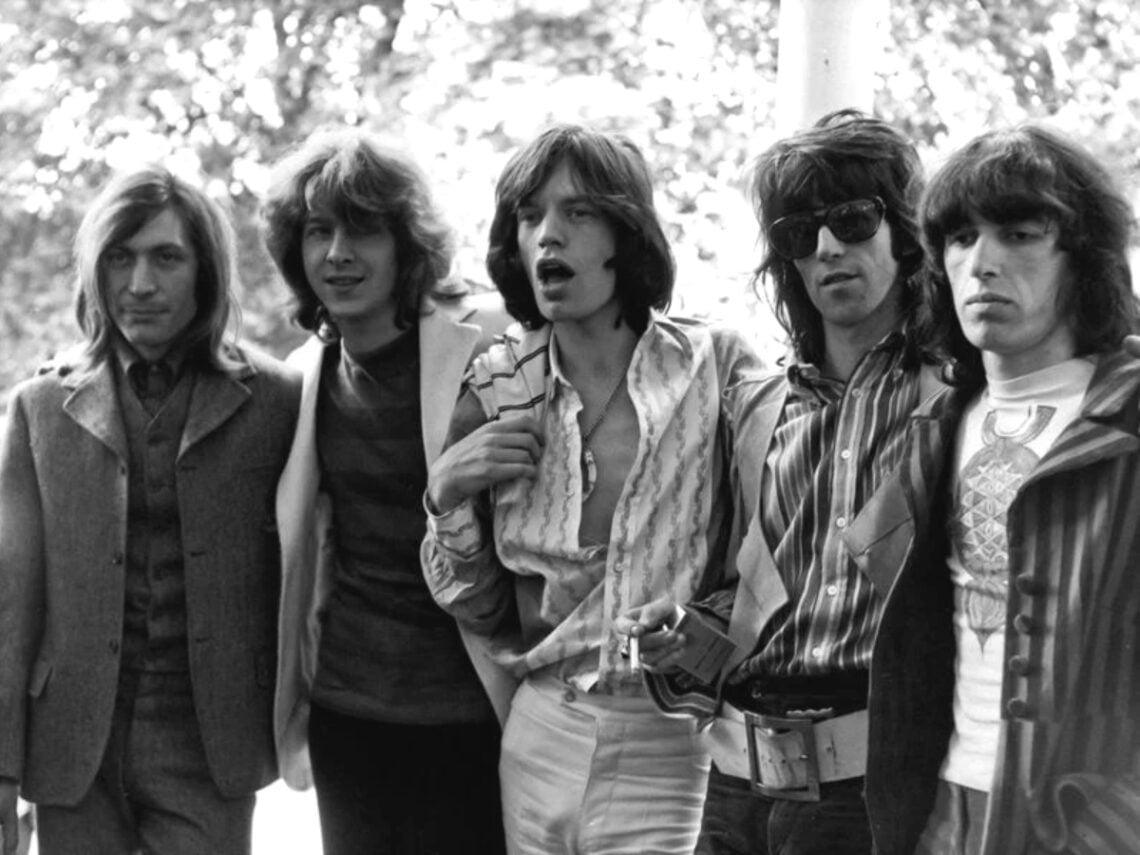
How The Rolling Stones came to be: the journey of each member

In 1963, The Rolling Stones announced themselves on the world stage, a group of ready-made rockstars who had seemingly been plucked out of thin air. However, the truth of the matter paints a different picture, and it was a long road for each band member before they arrived on the scene, even if they looked freshly manufactured from a rock and roll factory.
The first jigsaw piece placed was the meeting of Keith Richards and Mick Jagger, who both lived in the same area as young children. “I can’t remember when I didn’t know him,” Jagger heartwarmingly recalled to Rolling Stone in 1995. “We lived one street away; his mother knew my mother, and we were at primary school together from [ages] 7 to 11. We used to play together, and we weren’t the closest friends, but we were friends,” he continued.
Sadly, their lives took different directions, and they fell out of contact, even though they still lived in close vicinity. “Keith and I went to different schools when we were 11, but he went to a school which was really near where I used to live,” Jagger added. “But I always knew where he lived because my mother would never lose contact with anybody, and she knew where they’d moved. I used to see him coming home from his school, which was less than a mile away from where I lived.”
Due to illness, Richards never sat his eleven-plus exams and was placed at the inferior education institution while Jagger went to the local grammar school. Despite falling out of each other’s lives, their interests continued to align, and they both independently became obsessed with the blues. Then, one day, they bumped into each other at the local train station, and Richards’ noticed the Muddy Waters records in Jagger’s possession.
The records he was grasping became a talking point, and they built a strong relationship forged around their love of music. If they weren’t discussing music, they played it as The Blues Boys, with friends Dick Taylor, Alan Etherington and Bob Beckwith. In 1962, the band first played at Ealing Jazz Club, which became their spiritual home, and played a crucial role in The Rolling Stones’ journey.
While they were at the Jazz Club, Jagger and Richards initiated themselves within the local musical community. Their friends included Blues Incorporated’s slide guitarist Brian Jones, keyboardist Ian Stewart, and drummer Charlie Watts. However, Jones quickly became disillusioned with the group and wanted to start a new project. The only issue was that he needed people to join him on his new adventure. With renewed motivation, the guitarist released an advertisement in Jazz Weekly, alerting the community to his availability. Stewart was the first to sign up for the band, with Jagger, Taylor, and Richards following swiftly afterwards. However, the first rehearsal was a total disaster. The initial line-up included vocalist Brian Knight and guitarist Geoff Bradford, who didn’t fit Jones’ vision. Drummer Tony Chapman completed the line-up alongside Jagger, Richards, Jones, Stewart, and Taylor, who were finally ready to rock ‘n’ roll. First, though, they needed a name, and on a whim, Jones decided upon The Rolling Stones during an interview after seeing a Muddy Waters record of the same name on his floor.
Their first show as The Rolling Stones took place at the Marquee Club in May 1962 with the line-up mentioned above, but it wouldn’t be permanent. Shortly after their official formation, Taylor left the group, and after auditioning for a bassist, Bill Wyman was hired as his replacement.
They were still missing one piece of the puzzle, and Jones knew his former bandmate Watts would be the perfect drummer for the group. However, the late sticksman wasn’t interested in their brand of music and only cared for jazz. After slowly managing to grind him down, Watts finally agreed to play with The Rolling Stones on January 12th, 1963, at the Ealing Jazz Club, and less than a month later, the position became permanent.
Watch the footage below of The Rolling Stones performing live in 1965.
