


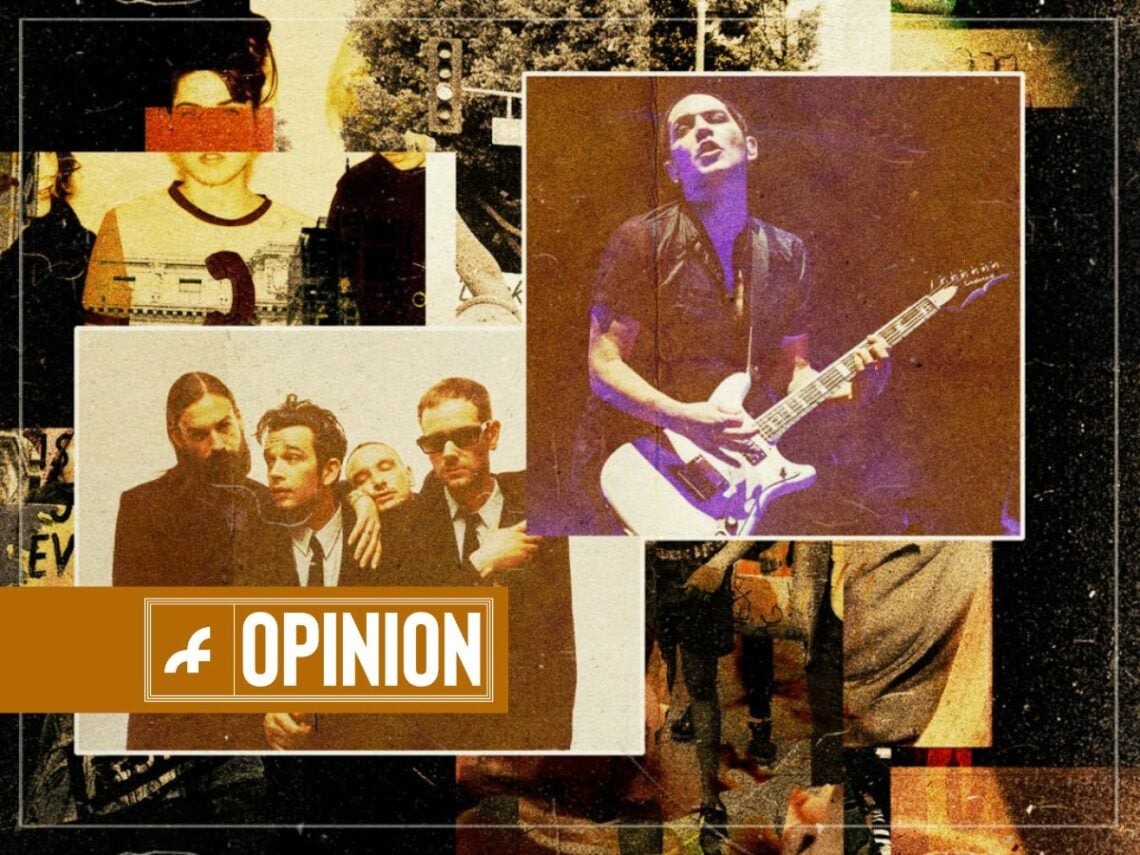
The re-emergence of rock and roll political activism: Is it truly enough?

Georgia Meloni, the current Italian Prime Minister, has an unrelenting approach when it comes to defamation attempts, the most recent being her legal action against Placebo frontman Brian Molko.
Throughout history, influential figures in the music industry have effectively harnessed their platforms to confront right-wing ideologies. However, candidly speaking, rock and roll lost much of its spirit of collective action long ago, so can the current resurgence truly wield the transformative power necessary to ignite substantial change?
In 1983, during an interview with MTV, David Bowie boldly asked DJ Mark Goodman: “I’m just floored by the fact that there’s so few black artists featured on it. Why is that?”. This will be one of Bowie’s many forays into the realm of challenging the norm, but what stood out about this one, in particular, was his candid calling out of such a longstanding issue.
In fact, Bowie’s very existence in mainstream music scenes in and of itself challenged the status quo; his ‘Ziggy Stardust’ persona defied gender stereotypes while his lyrics and views brought rise to queer representation and the idea that, as Mary Gauthier put it, “there was a bigger world out there”.
The truth is, Bowie wasn’t the first to be a living and breathing example of norm-challenging ideology, and he certainly won’t be the last. Before Bowie’s reign, The Beatles took on the challenge of going against prejudice by refusing to play for segregated audiences. Demonstrating their solidarity with the US civil rights movement, the four-member band staunchly declined to participate in a segregated concert at the Gator Bowl in Jacksonville, Florida.
As the resolute stance taken by The Beatles teetered on the edge of provoking a significant response, concert officials eventually yielded to the mounting pressure, culminating in the merging of the previously segregated audience sections. The band members would always stand by their decision, just as Bowie would always defend his image – despite much criticism at the time about both parties undermining tradition in such fearless ways.
During the civil rights movement, music was weaponised as a conduit for empowerment and transformation. Many rock ‘n’ roll artists of this era, both black and white, like Bob Dylan, Nina Simone, Sam Cooke, and Joan Baez, used their music to address issues of racial segregation and inequality. Afterwards, in the 1970s, 1980s, and 1990s, multiple movements underpinned musical subcultures with a view to inciting change – the punk rock movement and riot grrrl bands both sought to critique political establishments, social inequality, and economic issues.
At the time, bands like Bikini Kill were seen as deeply radical; feminist musicians of the 1990s were seen as nothing more than mob-fuelled pariahs to the point where male concert-goers would often verbally and physically assault frontwoman Kathleen Hanna. As a society, we’re far less inclined to let this slide now, but it still happens, which is the problem.
There was a period of time where all of this seemed to dissipate, or at least inflate, leaving room for many of the previously-criticised right-wing conservative institutions and ideologies to reign supreme. Throughout the 2000s, pop music came to the fore, with figures like Britney Spears and Beyoncé leading the way for empowered women singers, but without escaping the all-too-familiar male gaze. Even as chart dominators, they were still objectified and discussed at length in connection with beauty ideals.
With commercialism leading the way and conformity reinstating its power, music, on the whole, became passive. As with all societal phases, however, things naturally ran their course, and thanks to the freedom of speech opportunities brought about by social media, along with many more diverse figures taking centre stage, we’re finally seeing some of that anthemic, enraged, eager-for-change energy that rock ‘n’ roll became known for in its prime.
Fewer artists are succumbing to the inherent hesitancy that comes with authority – Rina Sawayama, for instance, openly displayed her frustration towards Matty Healy on stage at Glastonbury and for being “tired and sick of microaggressions” in spite of Healy being a part of the same label which owns her masters.
This brings us back to Molko. In Turin last month, during Sonic Park Festival, the Placebo frontman took to the stage and yelled in Italian that Meloni was “a piece of shit, fascist, racist”. Afterwards, authorities began investigating Molko, with Meloni now seeking out to sue the singer for defamation. Meloni’s recent triumph in the election propelled her Brothers of Italy party into the spotlight, revealing its underpinnings in neo-fascist origins. Numerous political analysts have drawn comparisons to the current administration and the most right-wing leanings seen since the era of Benito Mussolini’s World War II governance.
While Meloni’s policy framework ostensibly pivots around the resurgence of “Christian family values”, a closer inspection unveils a broader agenda. The Brothers of Italy party has actively pursued the restriction of abortion rights, curtailment of LGBTQ+ rights, and the revocation of surrogacy and adoption privileges for same-sex couples, all the while rallying fervently behind an anti-immigrant discourse.
How can factual information amount to defamation? More to the point: if there’s a tangible purpose in public figures like Molko denouncing right-wing politicians when substantial, concrete actions to address these concerns seem conspicuously absent. We find ourselves in an intriguing juncture where even the subtlest manifestations of bias are met with repercussions, yet substantive actions often remain elusive.
The global landscape is saturated with outspoken critics of right-wing ideologies, yet the individuals who wield true influence – those who possess prominent platforms – while raising their voices prompt introspection about the effectiveness of their impact. Do their words suffice to inspire a collective momentum, urging others to emulate and set a new precedent? Alternatively, should these influential figures pivot from rhetoric to tangible measures, actively working towards genuine transformation of the world for the greater good?
