


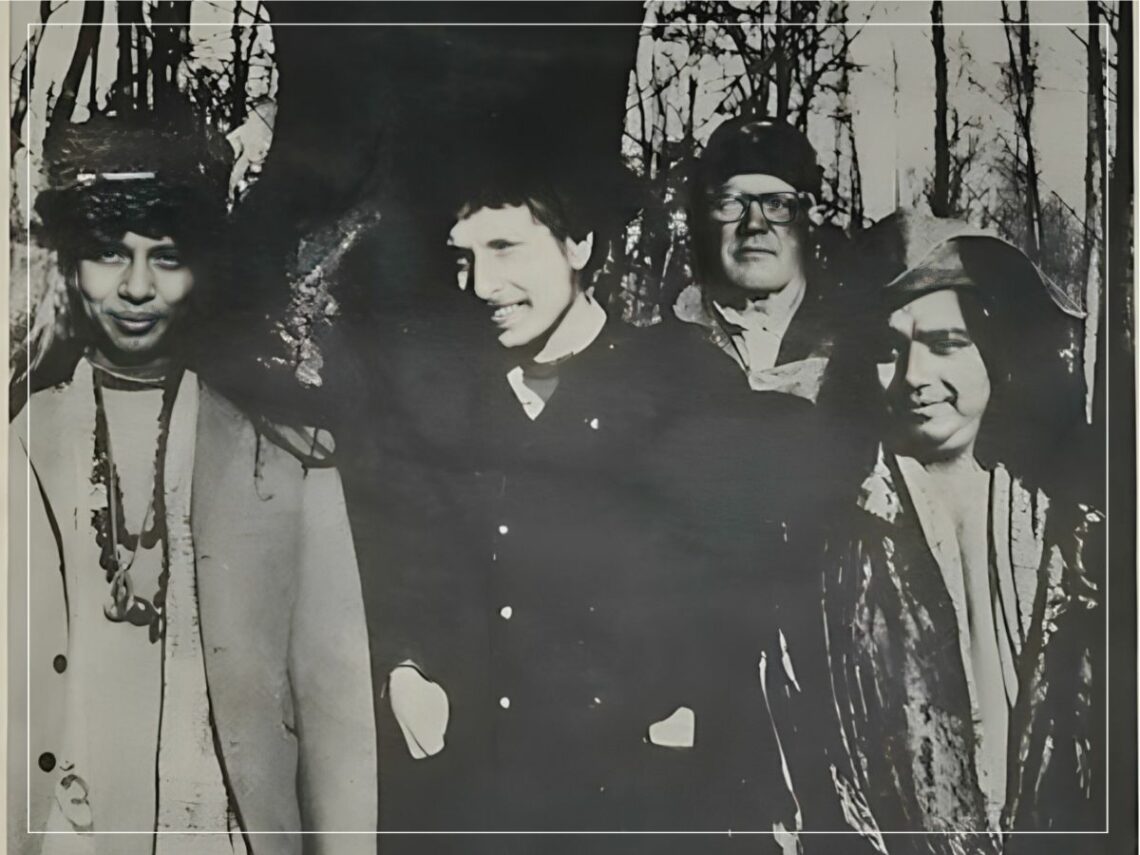
The overlooked star Bob Dylan called “the king of country music”

Not so long ago, the phrase, ‘Is that the banjo player’s Ferrari outside?’ had never once been uttered in human history. Country music in its backwater glory days was as blue-collar and non-commercial as music in capitalist America could possibly get. Now, there are country stars, a misnomer akin to being a grade eight triangle player.
Country music was always meant to be salt of the earth and ragtag, not polished and PR-trained. These newfangled giants of the genre have manicured beards and more than one guitar. All too often, the songs that they sing are designed to hit the top of the charts rather than drive a jaunty musical dagger into the ego of a tyrannical factory boss.
That wasn’t the case in what Bob Dylan calls the glory days of country. Back in those days, you had folks like David ‘Stringbean’ Akeman. Permanently shadowed under a wide-brimmed hat, this skinny maestro was emblematic of the dreamy, never-say-die attitude of America’s rural working class.
In the big, bulging country, this illiterate ne’er-do-well sought his own snippet of the American dream. The humble banjo was his chosen engine to chug him towards this lofty horizon, and with little more than clawhammer skills, quick wit, and personable ways, he damn near arrived there. But storing the $5,700 fortune his music had afforded him within secret pockets sewn into his clothing would prove to be his downfall.
He was murdered when local crooks heard tell that he never used a bank, and as tragic as that may be, it’s a tale indicative of what country music once was. It was a dangerous world filled with an outlaw yet honest spirit. This was proven by the community’s response to this brutal tragedy.
As fellow Opry star Roy Acuff told TV reporters at the time: “This is so sad. Why would anyone want to harm String? He was such a gentle guy, always helping others. Money, I guess. That’s why they did it. Look at that little house. That’s the way String wanted to live. He could have bought ten farms that size, with ten mansions on them, but he preferred to fish, hunt and sit in that rocking chair and look up at the mountains.”
How George Jones defined country’s heyday

Fundraisers, charity concerts, and plenty of reflection followed, and leading the way was George Jones. This dimple-chinned crooner had his own unique set of morals and outlooks, most of which involved bourbon. Perhaps the most indicative anecdote in his arsenal is that following one arrest, his punishment was a court-ordered jail concert. That was the Woodstock for country music in its heyday.
The band that he performed with were equally wild, namely Donny Young, the oft-beaten-up bassist who would go on to perform under the name Johnny Paycheck. As Bob Dylan explains in his book, The Philosophy of Modern Song, “Both George Jones and Donny Young went through a transformation while they played together.”
The original vagabond continues, “Both of them were hopped-up hillbilly singers in the style preferred by country music producer Pappy Daily, favoring Roger Miller–style songs like ‘Tall Tall Trees’ and ‘You Gotta Be My Baby’.” With this unique style and effortless, drunken swagger, they enamoured and slightly unnerved fans.
“George was a hell-raiser, prone to drink and miss a gig,” Dylan recalls, “but Donny was something else. He was a little guy, barely five feet and change. Like a lot of small men, he was wrapped tighter than the inside of a golf ball and hit just about as often. There was a dark cloud and a long rap sheet following Donny Young and that name was sounding too sunshiny for a man who was waking up in alleyways with tattered clothes after a three-day drunk.”
Together, Paycheck and Jones would embrace more scrapes than the first aid office at a sheet metal factory, yet when they performed, Jones always achieved silken perfection. He was, in Dylan’s eyes, the king of country, and those eyes are 20/20 enough for us to take his word for it. He sang songs for the people, inmates or otherwise, with all the charm and sincerity of one of their own. He embodied the genre at its best, and that should be overlooked no longer.
As Dylan concludes, “There was chaos and turmoil and narrow escapes but through it all there was singing that could not be denied. Many people believe that the sound that made George Jones the King of Country Music came about because George listened so closely to his ex–bass player and was more dependable. And when a guy who rides his lawn mower to the liquor store because his wife hid the car keys is more dependable, you have a sense of what country music was like at the time.”

Never Miss A Tale
The Far Out Bob Dylan Newsletter
All the latest stories about Bob Dylan from the independent voice of culture.
Straight to your inbox.