


The origins of Oktoberfest

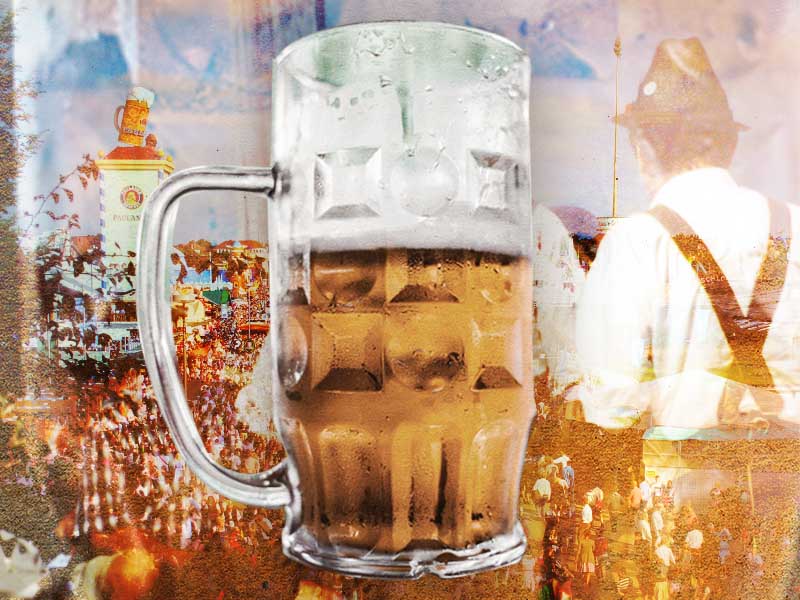
For many Germans, Oktoberfest is the most crucial fortnight in the calendar to celebrate Bavarian traditions. Now, millions of revellers travel from around the world to visit Munich to consume ungodly amounts of pilsner and bratwurst while polka music soundtracks the party.
Remarkably, Oktoberfest is over 200 years old, and the first origin of the festival dates back to 1810. It began with the marriage of Prince Regent Ludwig of Bavaria, the later King Ludwig I, and Princess Therese of Saxony-Hildburghausen on October 12th. Andreas Michael Dall’Armi, of the Bavarian National Guard felt they were an extraordinary couple deserving of a unique ceremony and suggested honouring the couple with a horse race.
Although in 1810, it was an incredibly different event compared to today, it started an annual ritual of having a party in October. In 1824, Dall’Armi was honoured by Munich city and given the first gold citizen’s medal for dreaming up Oktoberfest.
The event was first paused in 1813 due to the Napoleonic wars and was subsequently taken under government ownership. When they reintroduced the festival in 1819, they saw it not only as an opportunity for locals to congregate and celebrate, but the economic benefits were also significant.
Slowly, over the 19th century, Oktoberfest grew into the beast it is today, and one crucial moment came in 1850 when they unveiled the statue of Bavaria. Around this time, roast chicken began getting served too, and it’s a German delicacy you can still buy if you attend in 2022.
Günter Werner is Oktoberfest’s equivalent of the old guy propping up the bar in an English pub, and he hasn’t missed a day of the event for over 60 years. Speaking to Munich Travel, Werner revealed he first started attending the event in 1959 as a 16-year-old, and it’s been a staple of his calendar ever since.
Werner was there in 1980 when Oktoberfest was harrowingly at the centre of a terrorist attack, which killed 13 people. Hundreds more were wounded, and many suffered life-lasting injuries. “The attack happened after ten o’clock at night, and I was already on a tram, heading to the Park Café with friends,” he recalled. “We heard a loud bang – but it was the next day before we read the news and found out where the noise had come from. After that happened, I felt a bit nervous going into the tent. But something can always happen – you can’t let it get in the way of enjoying life.”
It’s a cultural custom that has successfully survived two World Wars, a heartbreaking tragedy, and plenty more adversity since its incarnation in 1810. After two painful years of consecutive cancellations due to the pandemic, the Bavarian festival is finally back in 2022, and it’s estimated over 7.5 litres of beer will be guzzled, which is much deserved after 70 months of Oktoberfest abstinence.
