


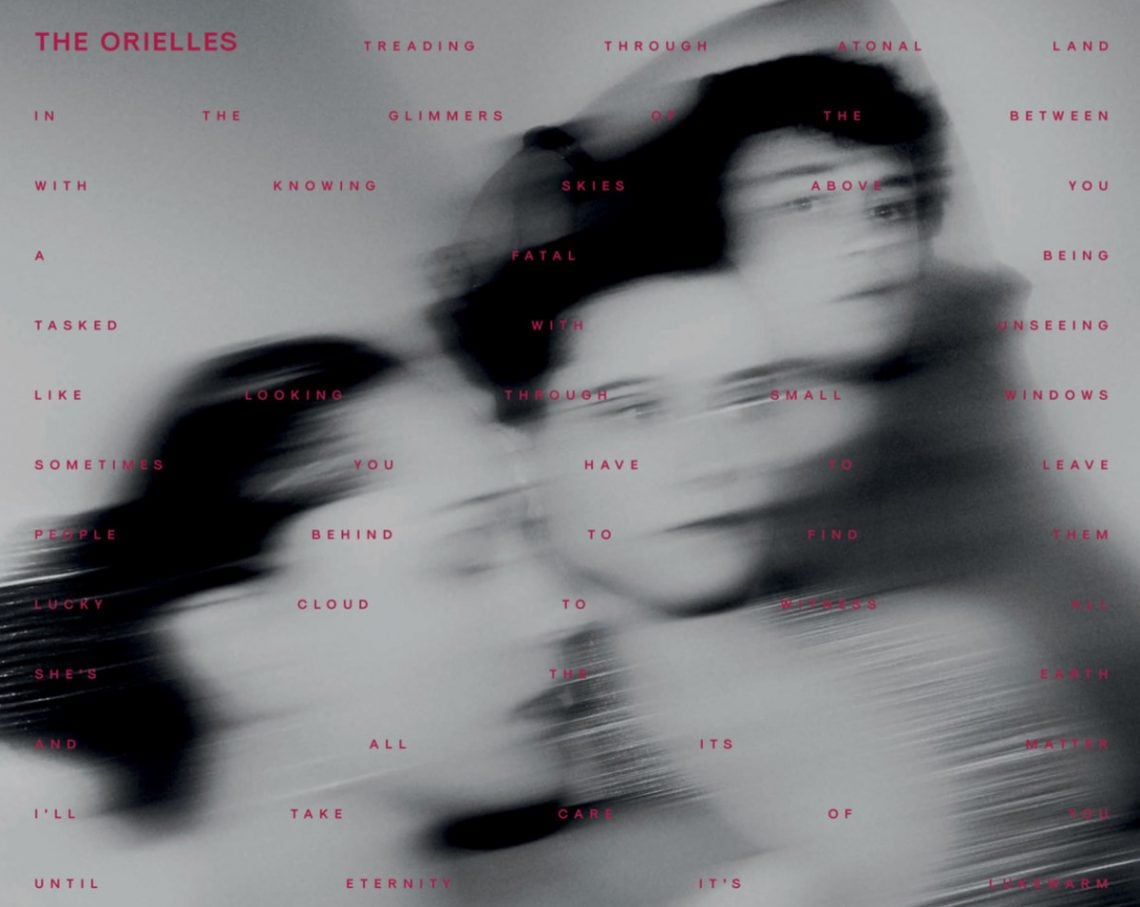
The Orielles transform into experimental geniuses on ‘Tableau’

After forming in their early teens over a decade ago, The Orielles, a band made up of sisters Esme and Sidonie Hand-Halford and their friend Henry Carlyle-Wade, have become regulars of the UK indie rock scene.
Known for their energetic disco and pop-influenced take on the genre, the trio released their debut album, Silver Dollar Moment, in 2018, which featured groove-inducing cuts such as ‘Old Stuff, New Glass’ and ‘Let Your Dog Tooth Grow’. The album was praised for its charm and distinctive, cohesive sound, radiating summery, youthful energy tinged with nostalgia.
They followed the album up with 2020’s Disco Volador, a cosmic journey of synths and poppy psychedelia that still retained the sound of their debut. The group was also joined by keyboardist Alex Stephens, who added an extra layer to their shimmering sound. However, The Orielles are back to being a trio after Stephens left to pursue his TikTok-famous solo project, Strawberry Guy.
Returning to the studio in the summer of 2021, the three-piece decided to rid themselves of their indie-pop sound and take experimentation and improvisation in their stride. Also ditching demos, The Orielles headed to the studio to co-produce their new project alongside producer and friend Joel Anthony Patchett (King Krule, Tim Burgess).
The result is Tableau – a significant departure from their previous sound yet one that exudes maturity and refinement. If it wasn’t for Esme’s distinctive voice, listeners might mistake Tableau as belonging to a completely different band. But this is no bad thing. The Orielles demonstrate their versatility and true capabilities as musicians through 16 tracks, which is easily their best work to date.
Tableau floats between minimal electronica, cosmic ambience, garage-rock guitars and lush string arrangements. Opening with ‘Chromo I’ and ‘Chromo II’, the album seamlessly moves from murky yet mesmeric ambient depths into a Strokes-esque guitar and bassline.
The band have experimented with autotuned vocals, yet it never falls into the gimmicky territory; instead, Esme’s voice melds with the electronics of the soundscape. Demonstrating that they are not afraid to abandon classic song structure, the band treat us to an almost nine-minute-long piece called ‘The Improvisation 001’ that is mainly instrumental, apart from haunting backing vocals that linger behind percussion, twinkling synths and violins.
Although the album sometimes feels a little drawn out, with certain tracks paling in comparison to the ones they are sandwiched between, Tableau maintains a solid sound throughout, with every track transitioning into the next with perfect clarity. The album’s standout track is definitely ‘Beam/s’, which sees the band at their most emotive and attentive. Beginning slowly, with spacey sounds drifting in and out, the sound of gorgeous strings becomes more prominent as the song progresses, culminating in a breakdown of drums and an explosion of synths.
More album highlights include the dark and primitive ‘To Offer, To Erase’, energetic 1980s-esque ‘The Room’, and hypnotic ‘Some Day Later’. However, the band enter uncharted territory with ‘Stones’, a tender spoken-word piece that initially feels out of place. However, subsequent listens reveal it to be the perfect closer to an album that so heavily explores emotion through abstract sounds.
The Orielles have outdone themselves with their latest offering, which was informed by Brian Eno’s Oblique Strategy cards (“before each song, we’d pick out a card and that would be our motif for playing that take,” says Sidonie) and a stint hosting a monthly radio show. Tableau is an immersive and rewarding listen that teases an exciting future for the band.

Never Miss A Beat
The Far Out New Music Newsletter
All the latest New Music from the independent voice of culture.
Straight to your inbox.