


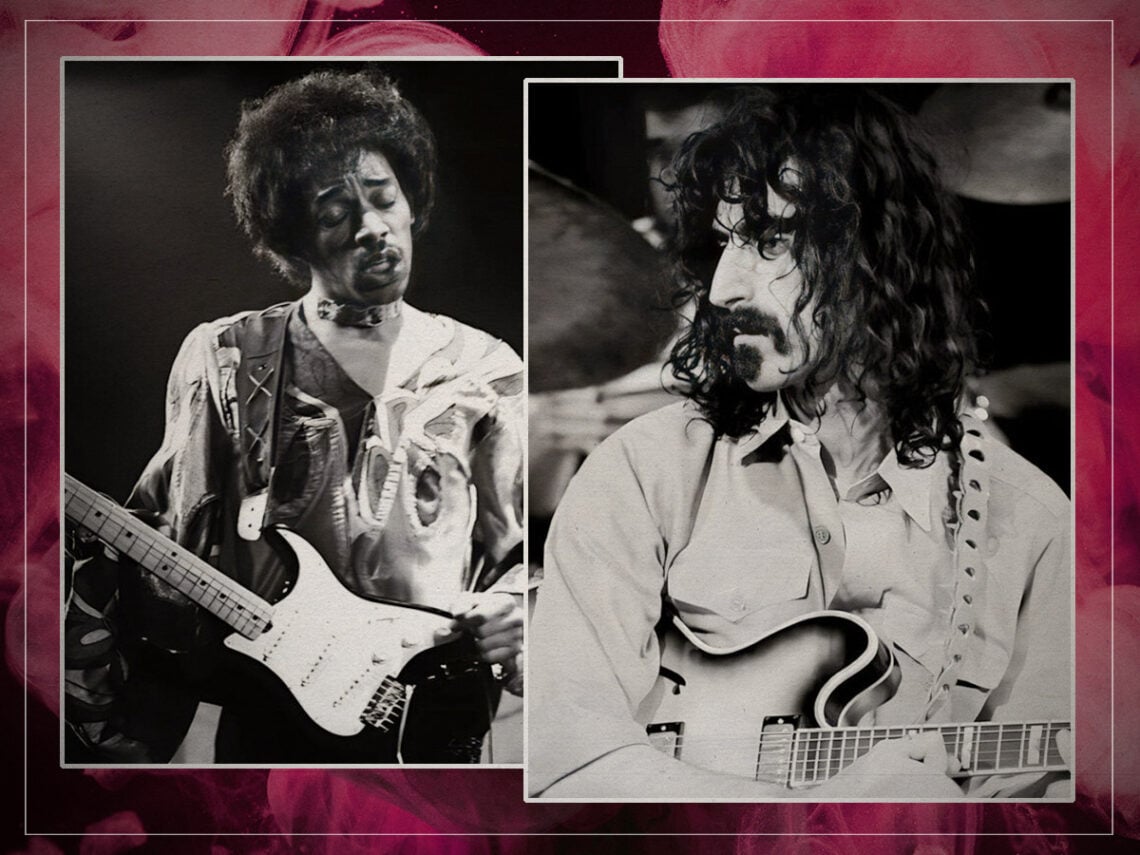
The one thing Frank Zappa said Jimi Hendrix was missing: “He couldn’t write it down”

The funny thing about musicians in the 1960s is that had most of them existed in any other era, they would have likely been remembered as the very best of the time.
Within the world of guitar playing alone, the decade gave way to some true icons. Jimmy Page, Jeff Beck, Eric Clapton, Peter Green and Frank Zappa. And that’s not even mentioning any of The Beatles.
In any other period of time, the last name of that list might be remembered as the true genius of esoterica, taking music where it had never been before. But as I said, this was the 1960s, a time when the music gods decided to create enough ‘genius’ to fill a lifetime. Zappa was one of them, but he, like many others, lived under the perennial shadow of one Jimi Hendrix.
Hendrix was the undisputed king of the era. As Clapton said, “In those days, anybody could get up with anybody if you were convincing enough that you could play. He got up and blew everyone’s mind. It’s something that no one is ever going to beat; that incident, that night, it’s historic in my mind but only a few people are alive that would remember it.”
The essence of magic that Clapton was privy to that night was Hendrix’s naturality. It was almost as if the guitar was an extension of his arm; no amount of studying or mastery could ever raise someone to his level, for his ability to express himself with the guitar was otherworldly and transcendent.
But ever the contrarian, Zappa wanted to challenge this idea of Hendrix being the all-encompassing genius he was. Fuelled by what can only be considered as a mixed sense of pride and purism, Zappa questioned whether or not Hendrix truly maximised his talent because of what I call naturality and he calls musical illiteracy.
In 1993, nearly two decades after Hendrix’s world domination, Zappa stood firmly on his point, saying, “I had written in articles at that time that I thought what should be done since he wasn’t musically literate, he couldn’t write it down himself, that he should be put in some sort of working relationship with somebody who could write his ideas.”


Zappa realised that if Hendrix’s playing were written down in musical form, then the rest of the world could have profited from his creation. Could ‘Little Wing’ have been transposed into soul, jazz or maybe even the classic worlds had he looked beyond his trusted instrument?
Zappa continued that had he engaged with the theory of his own genius, he could have had his songs “scored for instruments other than the electric guitar. I think that would have been something worthwhile to do. But no, he was too busy doing other things to ever sit down and take that approach.”
It’s a typically detailed view from Zappa, who, truth be told, spent far too much time pursuing contrarianism than he should have. Hendrix fulfilled his artistic purpose just fine, from the safety of his electric guitar and in doing so, helped popularise the world of psychedelic rock that has influenced the world enough without it being written down.
