


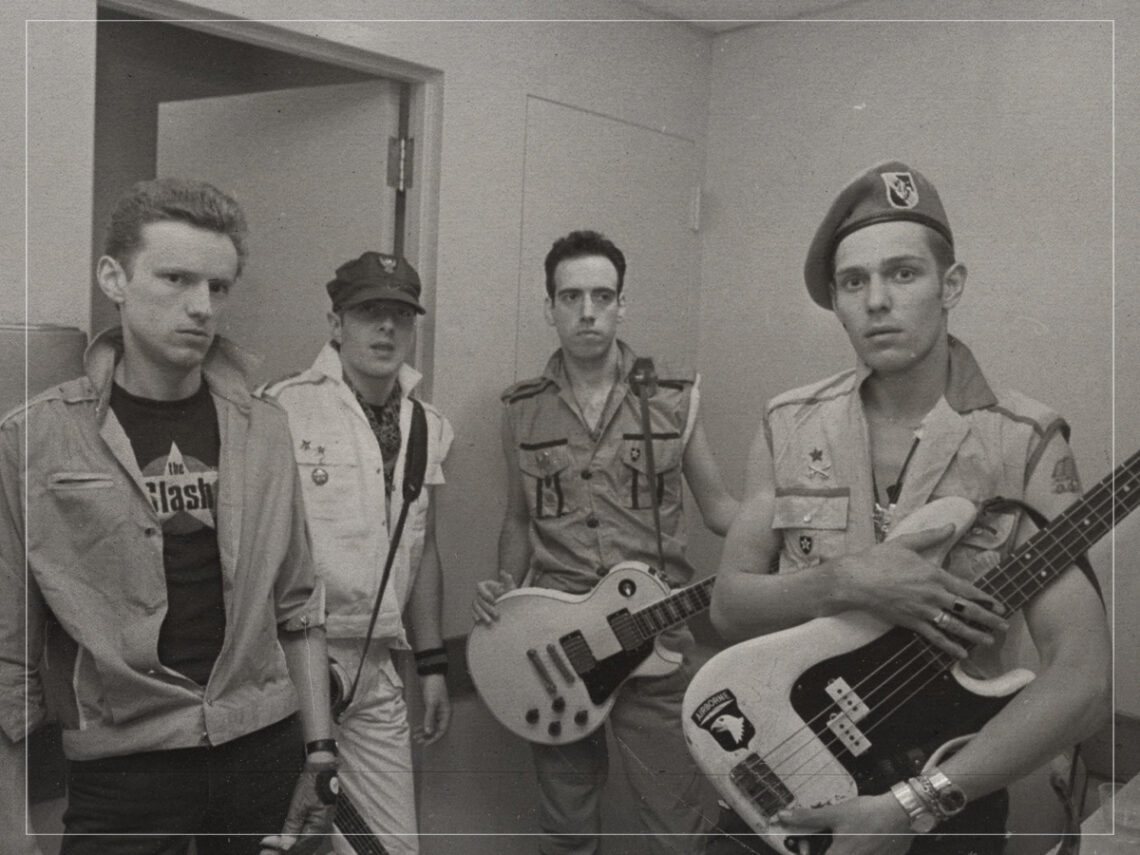
The one person The Clash begged to work with: “We were so stupid”

It is difficult to imagine anybody refusing the opportunity to work alongside The Clash, particularly during their most prolific period back in the early 1980s.
After all, Joe Strummer’s outfit certainly lived up to their moniker of being ‘the only band that matters’, both during their punk origins and the expansive repertoire of revolutionary sounds that struck upon in the years that followed.
Nowadays, it is easy to look back upon the discography of The Clash – minus that godawful final album, Cut the Crap – as being utterly flawless. Whether it was the masterful anti-establishment material of their self-titled debut, or the experimental jazz-tinged exploration of an album like Sandinista!, Strummer’s group always stood in a league entirely of their own making. Nevertheless, The Clash itself was rarely a harmonious place to be.
Although, as opposed to many of their contemporaries from London’s punk explosion, the bandmembers themselves – by and large – managed to get on with each other, at least until the later days of the group’s existence, they were routinely plagued by the difficulties of the music industry. At their core, after all, The Clash were a DIY band operating on a global scale, which is something of a paradoxical situation, worsened by their disastrous deal with CBS Records, which saw them immediately plunged into insurmountable debt.
Coupled with their exhaustive touring schedule, their commitment to churning about as much material for CBS as humanly possible certainly took its toll on the band as they progressed. Those difficulties were particularly prevalent, for instance, during the early production of what is inarguably among their greatest works, Combat Rock.
“We were so stupid. Things got jammed up again,” Strummer told Uncut back in 1999. “The company needed another album, so we ended up recording on tour. At first, it was just us knocking it out in Electric Ladyland, trying to mix it, and it sucked.”
Inevitably, though, that on-the-move recording process wasn’t much better. “We toured Australia, and each night after the show in Sydney, we’d go down and mix the album. But, of course, that sucked as well”.
The Clash needed a miracle to get Combat Rock off the ground, but that miracle wasn’t overly keen on the idea. “We got back home and then we just bought Glyn Johns in. We had to beg him, really, because he didn’t like producing stuff he hadn’t recorded.”
If there was anybody capable of saving the record, Johns was it. With his extensive CV crossing paths with the likes of The Rolling Stones, Bob Dylan, and Led Zeppelin, to name only a handful, it is fair to say that he knew his way around the production desk.
Luckily, then, The Clash managed to convince him to take a crack at Combat Rock, eventually. “He gave it a go and got it into a listenable shape. He saved it at the 11th hour, really. But otherwise no one knew what they were doing,” Strummer recalled. In the end, Johns transformed the album from a ramshackle collection of rather lacklustre recordings into one of the greatest albums of the 1980s – a testament to his apparently infallible skills.
If only for that one album, then Glyn Johns became an utterly essential member of The Clash, and his influence is splashed all over that legendary 1982 album, showing once and for all just how drastically good production can transform the quality and legacy of an album.
